Grouper
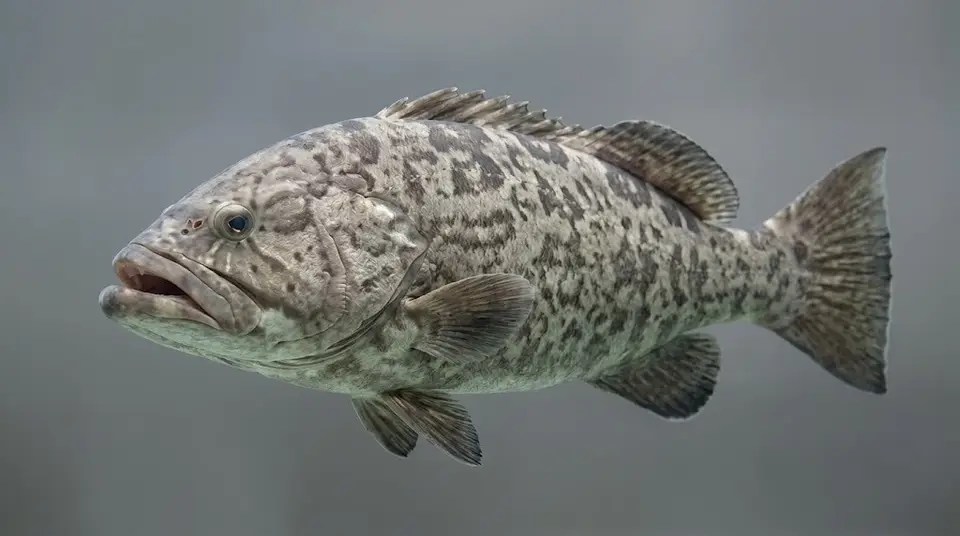
Groupers are reef fish of the sea bass family; the Florida Museum describes the gag as oblong, with a long head, a large mouth and a protruding lower jaw.
Last reviewed: November 2026
Overview
Groupers are reef fish of the sea bass family; the Florida Museum describes the gag as oblong, with a long head, a large mouth and a protruding lower jaw. The museum places the gag in the family Serranidae (Florida Museum) and calls the goliath grouper the biggest member of the sea bass family found in the Atlantic (Florida Museum).
This page covers five groupers - gag, red, black, goliath and Nassau grouper - and the first four also have their own profiles: gag grouper, red grouper, black grouper and goliath grouper. NOAA Fisheries gives "Grouper" as another name for the gag (NOAA Fisheries), the red grouper (NOAA Fisheries) and the black grouper (NOAA Fisheries). NOAA Fisheries says gag are a large part of what recreational anglers harvest in the South Atlantic and the Gulf of Mexico (NOAA Fisheries). In its Gulf summary, NOAA Fisheries groups scamp with black grouper among the other shallow-water groupers, and snowy and Warsaw grouper among the deep-water groupers (NOAA Fisheries).
Identification
The Florida Museum says gag are often confused with black grouper and tells the two apart by the tail, the cheek bone and the edges of the fins. NOAA Fisheries describes gag as long and compressed; large gag are brownish-gray and dark on the back, paler underneath, with faint dark wavy markings, while small gag are much lighter, with dark kiss-like marks on their sides (NOAA Fisheries). NOAA Fisheries says black grouper look like gag and share their habitats; they are olive or gray with black blotches and brassy spots, and their cheeks are gently rounded (NOAA Fisheries).
The Florida Museum describes the gag's tail edge as slightly concave, its cheek bone (preopercle) as angular, with a small notch and a distinct lobe, and its anal and tail fins as edged in white, which black grouper lack (Florida Museum). On the black grouper, the museum describes a squared-off tail and a rounded preopercle with no notch (Florida Museum).
Red grouper, NOAA Fisheries says, have robust bodies with small scales, a dark reddish-brown head and body that shade to pink or reddish below, and a large mouth whose lower jaw often juts slightly past the upper jaw (NOAA Fisheries). The Florida Museum separates the red grouper from other Epinephelus groupers by its large dorsal fin with no notch in the membrane between the spines, and notes that a resting red grouper looks banded, resembling a Nassau grouper (Florida Museum).
The museum describes the goliath grouper as robust and elongate, with a broad head, small eyes and a rounded tail, colored brownish yellow, gray or olive and dotted with small dark spots (Florida Museum). Adult Nassau grouper are generally light beige, with five vertical dark brown bars and a big black saddle on top of the tail base, and NOAA Fisheries says the bars and the saddle tell them apart from other groupers (NOAA Fisheries).
Range & Habitat
All five groupers on this page occur in the western Atlantic, NOAA Fisheries says. NOAA Fisheries places gag mainly from North Carolina to Mexico's Yucatan Peninsula, the Gulf of Mexico included (NOAA Fisheries), red grouper from Massachusetts through the Gulf to Brazil (NOAA Fisheries), and black grouper from Massachusetts to Brazil, with the U.S. stock mostly in the Florida Keys (NOAA Fisheries).
Goliath grouper live mostly in shallow tropical waters around coral and artificial reefs, from the Gulf of Mexico and the Florida Keys to the Bahamas, the Caribbean and Brazil; NOAA Fisheries notes occasional catches as far north as Massachusetts and Maine, and goliath grouper also live in the eastern Atlantic off Africa, from the Congo to Senegal (NOAA Fisheries). Nassau grouper range through tropical and subtropical waters of the Caribbean and the western North Atlantic, including south Florida, Puerto Rico, Bermuda and the Bahamas, and NOAA Fisheries knows of one verified report of a Nassau grouper in the Gulf of Mexico, at Flower Garden Banks (NOAA Fisheries).
The Florida Museum gives gag a depth range to 500 feet (152 m) and says they are common along rocky ledges in the eastern Gulf of Mexico (Florida Museum). NOAA Fisheries calls red grouper a shallow-water grouper, common at 10 to 60 feet (3 to 18 m) (NOAA Fisheries), while the Florida Museum gives a wider range of 16 to 1,083 feet (5 to 330 m) (Florida Museum). For black grouper, NOAA Fisheries gives depths to 656 feet (200 m) and says they are fairly sedentary and move deeper as they age (NOAA Fisheries), while the Florida Museum gives 19 to 108 feet (6 to 33 m) (Florida Museum).
The Florida Museum gives goliath grouper depths to 150 feet (46 m) over rock, coral and mud bottoms, with juveniles in mangroves and brackish estuaries, often near oyster bars (Florida Museum). NOAA Fisheries says Nassau grouper usually live on shallow reefs but reach 426 feet (130 m) (NOAA Fisheries), and the Florida Museum gives at least 295 feet (90 m) (Florida Museum).
History & Name
In the 1980s spawning aggregations of goliath grouper (Epinephelus itajara) fell below 10 fish per site under fishing pressure (Florida Museum). Federal waters off the southeastern United States were closed to its harvest in 1990, and in 1991 NOAA Fisheries identified the species, previously known as jewfish, as a candidate under the Endangered Species Act (NOAA Fisheries). After protection the aggregations rose to 20-40 fish per location (Florida Museum). In 2006 NOAA Fisheries took goliath grouper in the continental United States off its species of concern list (NOAA Fisheries).
For gag (Mycteroperca microlepis), the targeting of spawning aggregations started in the 1970s (Florida State University). A Gulf reef fish regulatory amendment implemented on June 19, 2000 set up two marine reserves off west-central Florida, on sites suited to spawning gatherings of gag and other reef fish (NOAA Fisheries). Red grouper (Epinephelus morio) in the Gulf of Mexico got a ten-year rebuilding plan, implemented on July 15, 2004 (NOAA Fisheries).
The Florida Museum says Goode and Bean first described the gag in 1879 as Trisotropis microlepis, a name later changed to Mycteroperca microlepis; Mycteroperca comes from Greek words for nose and perch, and microlepis means small scale, after the small scales on its body (Florida Museum). Valenciennes described the red grouper in 1828 as Serranus morio, and the genus name Epinephelus comes from a Greek word meaning cloudy (Florida Museum). Lichtenstein named the goliath grouper Serranus itajara in 1822, and David Starr Jordan moved it to Epinephelus in 1884 (Florida Museum). Bloch described the Nassau grouper, Epinephelus striatus, in 1792; striatus is Latin and refers to the striped color pattern (Florida Museum).
Behavior & Diet
NOAA Fisheries says red grouper engulf prey whole: they open their large mouths, flare their gill covers and quickly pull in water along with the food (NOAA Fisheries). Nassau grouper are ambush predators that swallow prey whole by suction from their protruding mouth; adults eat only fish, while juveniles also take shrimp and crabs (NOAA Fisheries).
NOAA Fisheries lists fish, crabs, shrimp and squid for gag (NOAA Fisheries), fish, octopus and crustaceans such as shrimp, lobsters and mantis shrimp for red grouper (NOAA Fisheries), and mostly shrimp for young black grouper but fish and squid for adults (NOAA Fisheries). The Florida Museum lists spiny lobsters, shrimps and crabs, fish such as stingrays and parrotfishes, and also octopus and young sea turtles in the goliath grouper's diet (Florida Museum).
Black grouper mostly live alone until the spawning season, when they gather in huge numbers (NOAA Fisheries). Adult gag form schools of 5 to 50 fish or live alone (Florida Museum). Gag (NOAA Fisheries), red grouper (NOAA Fisheries) and black grouper (NOAA Fisheries) begin life as females, and some of them later change to males. For Nassau grouper, NOAA Fisheries says natural sex change has not been confirmed (NOAA Fisheries), and for goliath grouper the Florida Museum notes that sex change is still debated (Florida Museum).
The museum describes goliath grouper as solitary and territorial near caves, wrecks and ledges, where they warn intruders with an open mouth, a quivering body and an audible rumbling sound made with the swim bladder, and it says very large goliaths have stalked divers (Florida Museum).
NOAA Fisheries and the Florida Museum place most grouper spawning in winter and spring. NOAA Fisheries dates gag spawning to mid-January through early May in the South Atlantic, and late January through mid-April in the Gulf of Mexico, in large groups on the continental shelf (NOAA Fisheries). For gag, the Florida Museum names the months January to May, in both the South Atlantic Bight and the Gulf of Mexico, and places a major spawning area on the west Florida Shelf (Florida Museum).
For red grouper the sources differ: NOAA Fisheries says they spawn in shallow water from February through June, close to 26 times a year (NOAA Fisheries), and the Florida Museum gives January to April for the Caribbean and the Gulf of Mexico (Florida Museum). The Florida Museum says black grouper are reproductively active from November through May (Florida Museum), and that goliath grouper spawn in July, August and September, strongly influenced by the lunar cycle, in offshore groups of up to 100 or more fish (Florida Museum). NOAA Fisheries says Nassau grouper spawning gatherings form near the full moon between November and February (NOAA Fisheries).
Best Seasons
The spawning times of each species are given under Behavior & Diet above. Data on when Nassau grouper feed are limited, NOAA Fisheries says, but they make use of the lower light at dawn and dusk (NOAA Fisheries). Open seasons and seasonal closures are listed on the current NOAA Fisheries pages for the Gulf and the South Atlantic; this page does not repeat them.
Where to Find Them
Grouper habitat changes with age, NOAA Fisheries says: young gag live in estuaries among seagrass beds, oyster reefs and shipwrecks, and adults move offshore to hard bottom such as reefs, wrecks, live bottom, depressions and ledges (NOAA Fisheries). Juvenile red grouper use shallow nearshore grass beds, rocks and reefs, moving offshore as they mature, and adults are most often found at ledges, crevices and caverns in rocky limestone reefs (NOAA Fisheries). NOAA Fisheries also calls red grouper "marine engineers" that dig out flat bottom and create habitat used by other species, including spiny lobster and black grouper (NOAA Fisheries).
Adult black grouper prefer rocky bottom, ledges, drop-off walls, caves and crevices, and coral or artificial reefs (NOAA Fisheries). Adult goliath grouper keep to small home ranges near shelter such as caves, wrecks and ledges, the Florida Museum says (Florida Museum). Florida State University researchers describe gag spawning areas as usually 35 to 100 miles (56 to 161 km) offshore (Florida State University).
NOAA Fisheries says some areas are shut to all fishing to protect snapper and grouper (NOAA Fisheries), so the area rules matter as much as the structure. To read bottom structure on a sounder, see our guide to reading sonar.
Tackle & Rigs
NOAA Fisheries says commercial fishermen take gag mainly with vertical hook-and-line gear, and that some also fish with longlines and spears (NOAA Fisheries). In certain areas, NOAA Fisheries says, circle hooks are required, to raise the survival of fish caught by accident and to cut down on hooked sea turtles (NOAA Fisheries). Sea turtles and other reef fish can be caught by accident while fishing for gag (NOAA Fisheries).
A 2020 NOAA Fisheries bulletin on South Atlantic snapper-grouper gear explains that non-offset circle hooks can reduce hooking deaths compared with offset circle hooks and J-hooks, and that hooks not made of stainless steel break down faster, which gives a fish released with a hook still in it a better chance (NOAA Fisheries). Hook and gear requirements differ by area and change, so this page points to the bulletin and the NOAA Fisheries regulation pages instead of repeating them.
For rigs that hold a bait near the bottom, see the knocker rig, the fishfinder rig and our overview of bottom rigs; the hook itself has its own page, the circle hook.
Best Baits
Groupers take a wide range of prey, from fish and squid to crabs, shrimp and lobsters, NOAA Fisheries says. NOAA Fisheries calls red grouper unspecialized and opportunistic feeders that take any convenient prey (NOAA Fisheries). Nassau grouper are not choosy either, NOAA Fisheries says, and the size of their mouth sets the size of the fish they eat (NOAA Fisheries).
NOAA Fisheries notes that black grouper use the spawning gatherings of other species as a chance to feed (NOAA Fisheries). The Florida Museum lists grunts, snappers and herrings among the smaller reef fish that adult black grouper eat, along with crustaceans (Florida Museum). The sources used here describe what groupers eat; none of them ranks baits. For the baits themselves, see live bait, cut bait, squid and shrimp.
Techniques - How to Catch Them
Hook and line fished over hard bottom is the main method the sources describe for groupers. NOAA Fisheries says commercial fishermen catch red grouper mainly with hook-and-line gear, including longlines and handlines (NOAA Fisheries), and the Florida Museum says gag are caught with hook and line (Florida Museum).
The Florida Museum says goliath grouper were traditionally caught mostly by hook and line, traps and trawls, and that spear fishers find them easy to approach, so their numbers fell where divers could reach them (Florida Museum). For how bottom fishing works in general, see bottom fishing explained.
Landing, Handling & Release
Groupers reeled up fast from deep water can suffer barotrauma: NOAA Fisheries explains that the gas in the swim bladder expands when a reef fish is brought quickly to the surface on hook and line (NOAA Fisheries). NOAA Fisheries encourages venting tools or fish descenders for fish that show signs of barotrauma; venting tools deflate the swollen belly, so the fish is less injured and can return to deep water more easily (NOAA Fisheries).
The 2020 NOAA Fisheries bulletin lists why some released fish die - hooking in the stomach or throat, barotrauma, handling damage, stress and predators - and calls short surface time critical for survival (NOAA Fisheries). The same bulletin says descending devices are meant for fish that may have barotrauma, for example fish from deep water or with a protruding stomach, and that venting stays open to people trained to do it, such as crews on charter boats and headboats (NOAA Fisheries). It describes three kinds of descending devices: weighted hooks, lip clamps and box-type containers lowered on a rope (NOAA Fisheries). For general release steps, see catch and release.
Mistakes to Avoid
One mistake is mixing up gag and black grouper: the Florida Museum says the two are often confused (Florida Museum), NOAA Fisheries says gag is sometimes sold by mistake as black grouper (NOAA Fisheries), and the NOAA Fisheries Gulf summary lists them in separate rows - gag on its own, black grouper with the other shallow-water groupers (NOAA Fisheries).
Another is keeping a goliath or a Nassau grouper: the NOAA Fisheries Gulf summary marks both as harvest prohibited (NOAA Fisheries), and NOAA Fisheries says Nassau grouper may not be harvested anywhere in the United States (NOAA Fisheries).
Keeping a fish at the surface too long works against its survival: the NOAA Fisheries bulletin calls short surface time critical (NOAA Fisheries). Fishing on spawning gatherings hurts gag in a particular way: Florida State University researchers found that males stay on the spawning sites all year and take bait more aggressively than females, so fishing those sites takes out males more than females (Florida State University).
Size & Growth
Sizes differ widely between the five groupers on this page, and NOAA Fisheries and the Florida Museum do not always agree. NOAA Fisheries says gag grow slowly and can reach more than 3 feet (0.9 m), weigh up to 50 pounds (23 kg) and live as long as 30 years (NOAA Fisheries). Gag mature as females at about 4 years old and change to males at about 8 years old, NOAA Fisheries says (NOAA Fisheries). The Florida Museum puts the gag's maximum at 4.75 feet (1.45 m) in length and 80.5 pounds (36.5 kg) in weight and says the species is believed to live 16 years, so the two sources differ on how long gag live (Florida Museum). According to the museum, gag change sex at 10 to 11 years, at 37 to 39 inches (95 to 100 cm), which is later than the NOAA Fisheries figure (Florida Museum).
NOAA Fisheries says red grouper grow slowly to almost 50 inches (127 cm) and more than 50 pounds (23 kg); the oldest it reports were 26 years old in the South Atlantic and 29 years old in the Gulf of Mexico (NOAA Fisheries). The Florida Museum gives a maximum of 4 feet (125 cm) and 51 pounds (23.0 kg) for red grouper and a lifespan of about 25 to 30 years (Florida Museum).
NOAA Fisheries gives black grouper up to 5 feet (1.5 m), 180 pounds (82 kg) and 30 years (NOAA Fisheries). The Florida Museum gives up to 52 inches (133 cm) and 179 pounds (81 kg) and a life of more than 30 years, and says most black grouper caught average a little over 2 feet (70 cm) (Florida Museum).
Goliath grouper are the largest groupers in the Atlantic: NOAA Fisheries gives up to 800 pounds (363 kg), 8 feet (2.4 m) and more than 30 years (NOAA Fisheries). The Florida Museum gives 8.2 feet (2.5 m) and 800 pounds (363 kg), and says the largest goliath grouper caught on hook and line in Florida weighed 680 pounds (309 kg) (Florida Museum). The oldest verifiable goliath grouper the museum reports was 37 years old, and it projects that the species may live much longer, perhaps 50 years (Florida Museum).
Nassau grouper reach up to 4 feet (1.2 m) and 55 pounds (25 kg) and live up to 29 years, NOAA Fisheries says (NOAA Fisheries), while the Florida Museum gives a maximum age of 16 years (Florida Museum).
Table Quality
NOAA Fisheries describes gag, red and black grouper as mild in flavor and firm and flaky in texture. For gag, NOAA Fisheries gives a mild but distinct flavor that sits between bass and halibut, a firm, moist and flaky texture, and meat that is white both raw and cooked (NOAA Fisheries). NOAA Fisheries calls red grouper sweeter and milder than black grouper and says many rate it the tastier of the pair (NOAA Fisheries), and it notes that gag is sometimes sold by mistake as black grouper, the two being very similar in taste and texture (NOAA Fisheries). NOAA Fisheries rates U.S. wild-caught gag a "smart seafood choice", citing sustainable management and responsible harvest under U.S. rules (NOAA Fisheries).
The FDA lists grouper as a "Good Choice" in its advice about eating fish, which it addresses "For Those Who Might Become or Are Pregnant or Breastfeeding and Children Ages 1 - 11 Years" (FDA). The FDA says ciguatera poisoning is commonly linked to subtropical and tropical reef fish, which can build up naturally occurring ciguatoxins through their diet, and it lists grouper among the fish associated with it (FDA). The Florida Department of Health says cooking does not get rid of ciguatoxin, nor do freezing, smoking, canning, salting or pickling, and that the toxin does not change a fish's texture, taste or smell; it advises avoiding reef fish where ciguatera has been reported until the advisory is lifted (Florida Department of Health). At NOAA's Flower Garden Banks National Marine Sanctuary, the FDA reported in May 2007 a confirmed ciguatera case from a gag grouper caught there, which led the FDA in 2008 to issue guidance to seafood processors; the sanctuary reports no cases since 2007 (NOAA Flower Garden Banks National Marine Sanctuary). We do not give food-safety advice; the FDA and Florida Department of Health pages linked here are the official guides.
Before you eat what you catch, read the FDA and EPA advice about eating fish (written for pregnant people and young children) and the advisories that states, territories and Tribes issue for fish from local waters (listed by the EPA). We do not give food-safety advice.
Regulations & Conservation
In federal waters, NOAA Fisheries manages these fisheries together with the Gulf Council in the Gulf of Mexico (NOAA Fisheries) and with the South Atlantic Fishery Management Council in the South Atlantic (NOAA Fisheries). The Gulf reef fish management plan dates from 1984 and aims to rebuild reef fish stocks that had declined and to support their sustainable use (NOAA Fisheries); under the South Atlantic snapper-grouper plan, first put in place in 1983, the council manages 55 species (NOAA Fisheries).
NOAA Fisheries reports both gag stocks, in the South Atlantic and in the Gulf of Mexico, as overfished in 2021 assessments, though not subject to overfishing on 2024 catch data, with rebuilding plans meant to let the population grow (NOAA Fisheries). For red grouper, NOAA Fisheries lists the Gulf stock as neither overfished nor subject to overfishing (2025 assessment) and the South Atlantic stock as overfished (2017 assessment) but not subject to overfishing on 2024 catch data (NOAA Fisheries). The black grouper stock of the Gulf of Mexico and South Atlantic is not overfished (2010 assessment) and not subject to overfishing on 2023 catch data, NOAA Fisheries says (NOAA Fisheries).
Goliath grouper have been closed to harvest in federal waters of the southeastern United States since 1990 and remain closed under the South Atlantic, Gulf and Caribbean councils, while NOAA Fisheries notes that a limited harvest is permitted in Florida state waters (NOAA Fisheries). Under the Endangered Species Act, Nassau grouper are listed as threatened, and NOAA Fisheries says harvesting it is prohibited in the United States (NOAA Fisheries).
NOAA Fisheries calls its Gulf summary general information that can change, and says the Federal Register wins wherever the two differ (NOAA Fisheries); for the South Atlantic it says anglers must follow both federal and state rules and get any state license required (NOAA Fisheries). See also our overview of fishing licenses by state. We do not repeat bag limits, size limits, seasons or permit rules here; check the current NOAA Fisheries and state rules before you fish. We do not give legal advice.
FAQ
Can you eat grouper? The FDA lists grouper as a "Good Choice" in its advice on eating fish, written "For Those Who Might Become or Are Pregnant or Breastfeeding and Children Ages 1 - 11 Years" (FDA). The FDA also names grouper among the reef fish linked to ciguatera (FDA), and the Florida Department of Health says cooking or freezing does not remove the toxin (Florida Department of Health). We do not give food-safety advice; follow the FDA and your state health department.
How do you tell a gag from a black grouper? The Florida Museum points to three features: the gag's tail edge is slightly concave where the black grouper's is square, the gag's cheek bone is angular with a notch where the black grouper's is rounded, and the gag has white edges on the anal and tail fins (Florida Museum). NOAA Fisheries adds that gag is sometimes sold by mistake as black grouper (NOAA Fisheries).
Can I keep a goliath grouper or a Nassau grouper? The NOAA Fisheries Gulf summary marks both as harvest prohibited (NOAA Fisheries). Goliath grouper remain closed to harvest in federal waters, with a limited harvest permitted in Florida state waters (NOAA Fisheries), and NOAA Fisheries says Nassau grouper may not be harvested anywhere in the United States (NOAA Fisheries). Check the current federal and state rules before you fish. We do not give legal advice.
How big do groupers get? Goliath grouper are the largest: NOAA Fisheries gives up to 800 pounds (363 kg) and 8 feet (2.4 m) (NOAA Fisheries). Black grouper reach up to 180 pounds (82 kg) by NOAA's figures (NOAA Fisheries), and gag reach 50 pounds (23 kg) by NOAA's figures (NOAA Fisheries) and 80.5 pounds (36.5 kg) by the Florida Museum's (Florida Museum).
What do groupers eat? NOAA Fisheries lists fish, crabs, shrimp and squid for gag (NOAA Fisheries) and fish, octopus and crustaceans such as shrimp, lobsters and mantis shrimp for red grouper (NOAA Fisheries). The Florida Museum adds spiny lobsters, stingrays, parrotfishes, octopus and young sea turtles for goliath grouper (Florida Museum).
What is barotrauma in groupers? Barotrauma is the injury a reef fish suffers when it is brought up quickly and the gas in its swim bladder expands; NOAA Fisheries encourages venting tools or fish descenders for fish showing its signs (NOAA Fisheries). Its 2020 bulletin says descending devices are meant for fish that may have barotrauma, and that venting is for people trained to do it (NOAA Fisheries).
Sources
All sources were checked on 14 November 2026.
- NOAA Fisheries: Gag Grouper
- NOAA Fisheries: Red Grouper
- NOAA Fisheries: Black Grouper
- NOAA Fisheries: Atlantic Goliath Grouper
- NOAA Fisheries: Nassau Grouper
- NOAA Fisheries: Gulf of Mexico Reef Fish Historical Amendments and Rulemaking (1983-2017)
- NOAA Fisheries: Gulf Reef Fish Fishery Management Plan
- NOAA Fisheries: South Atlantic Snapper-Grouper Fishery Management Plan
- NOAA Fisheries: Fishing Regulations and Seasonal Closures in the Gulf of America
- NOAA Fisheries: Current Fishing Regulations - South Atlantic
- NOAA Fisheries: Gear Modifications for the Snapper-Grouper Fishery (bulletin FB20-038, 2020)
- NOAA Flower Garden Banks National Marine Sanctuary: Ciguatera Fish Poisoning
- Florida Museum of Natural History: Gag Grouper
- Florida Museum of Natural History: Red Grouper
- Florida Museum of Natural History: Black Grouper
- Florida Museum of Natural History: Goliath Grouper
- Florida Museum of Natural History: Nassau Grouper
- Florida State University Coastal and Marine Laboratory: Gag (Coleman and Koenig Research Group)
- FDA: Advice about Eating Fish
- FDA: How to Report Seafood-Related Toxin and Scombrotoxin Fish Poisoning Illnesses
- Florida Department of Health: Seafood Poisoning
Tackle for grouper
As an Amazon Associate we may earn from qualifying purchases - at no extra cost to you. We link gear types, not sponsors' picks: you choose the exact product. The partner-store link may earn us a commission too.