The flies worth knowing.
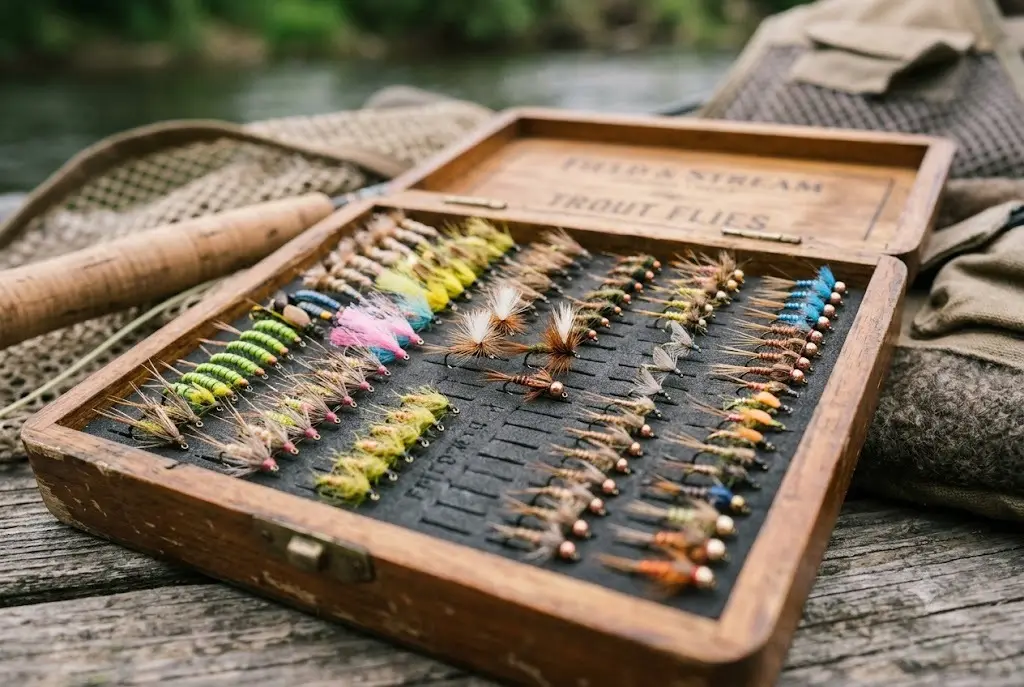
A fly shop can sell you a thousand patterns. You don't need them. A handful of proven flies, in a few sizes, will catch fish almost anywhere - once you understand the job each one does. Here are 18 to build a first box around, grouped by what they imitate and how you fish them.
Full pattern guides 55
Every pattern below now has its own deep-dive - what it imitates, when it wins, how to fish it, sizes and tying notes.
 Dry
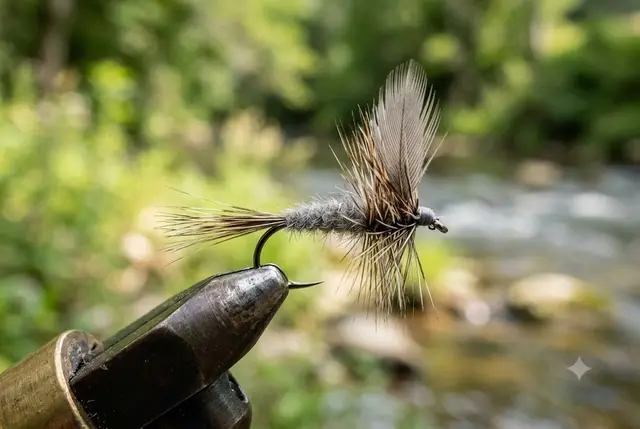
Dry Adams
 Dry
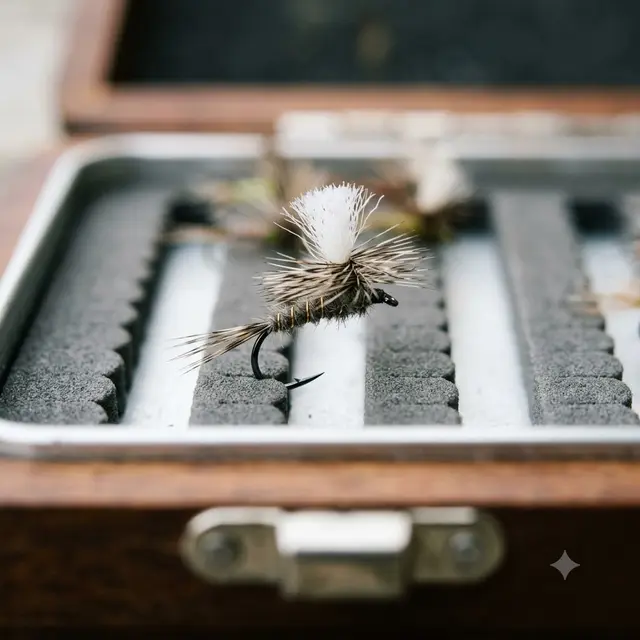
Dry Parachute Adams
 Dry
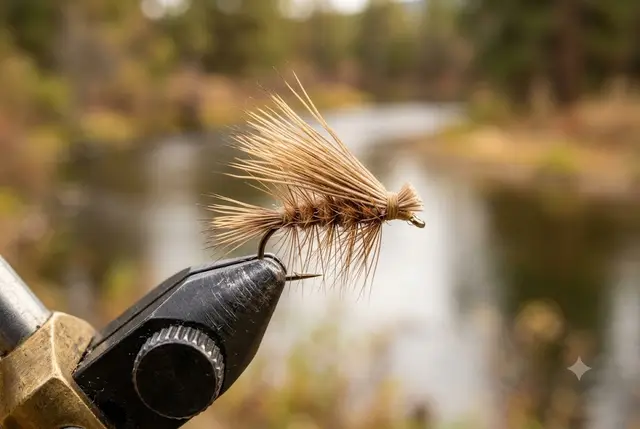
Dry Elk Hair Caddis
 Dry
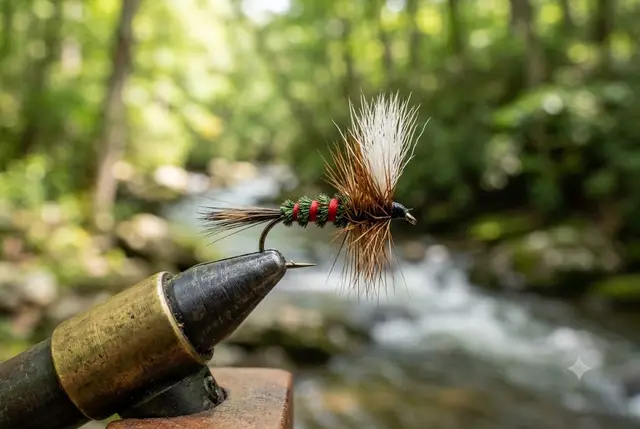
Dry Royal Wulff
 Dry
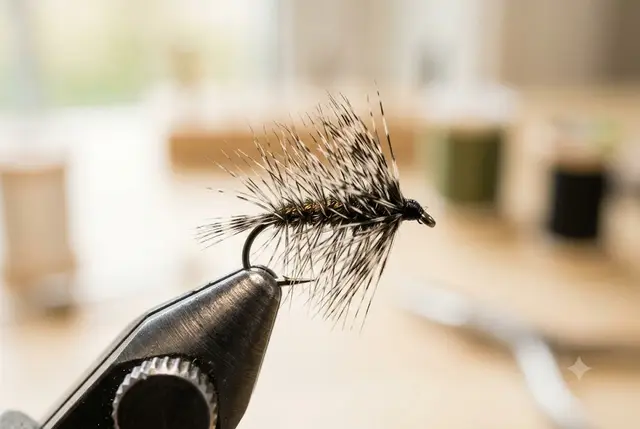
Dry Griffith's Gnat
 Dry
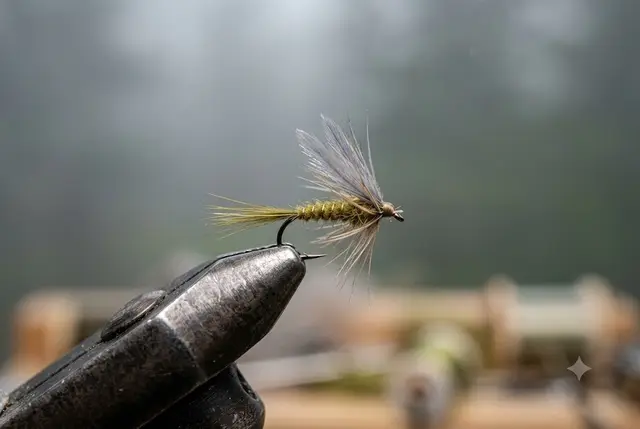
Dry Blue-Winged Olive
 Dry
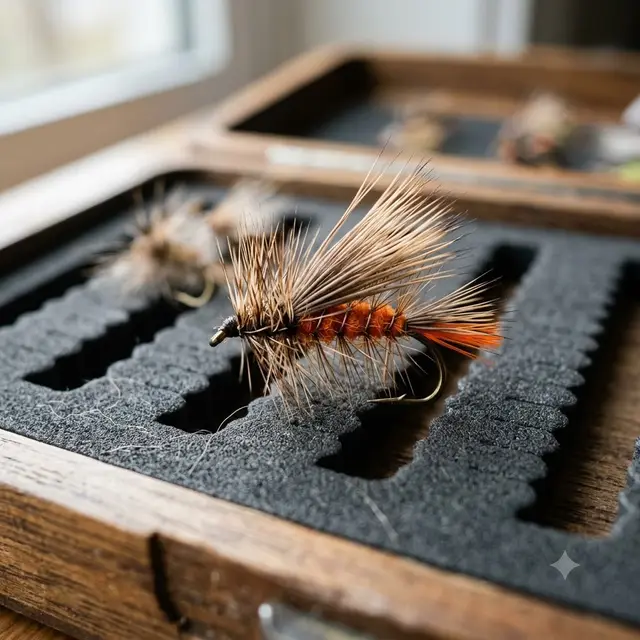
Dry Stimulator
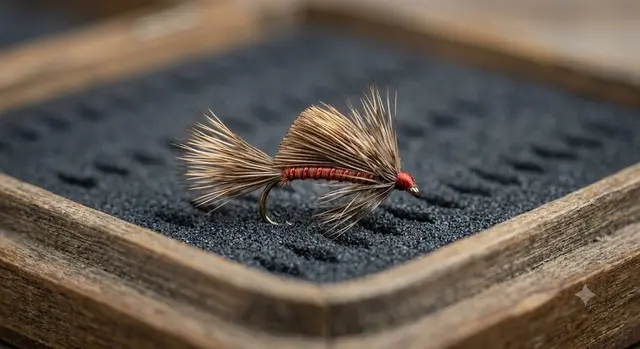 Dry
Dry Humpy
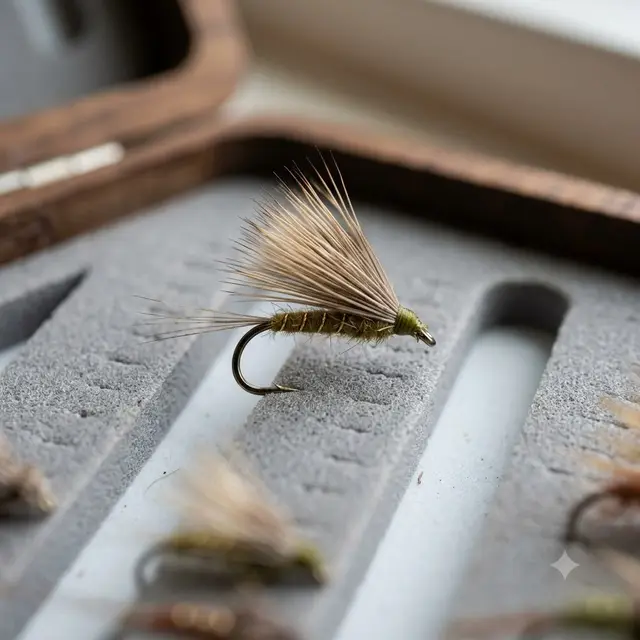 Dry
Dry Comparadun
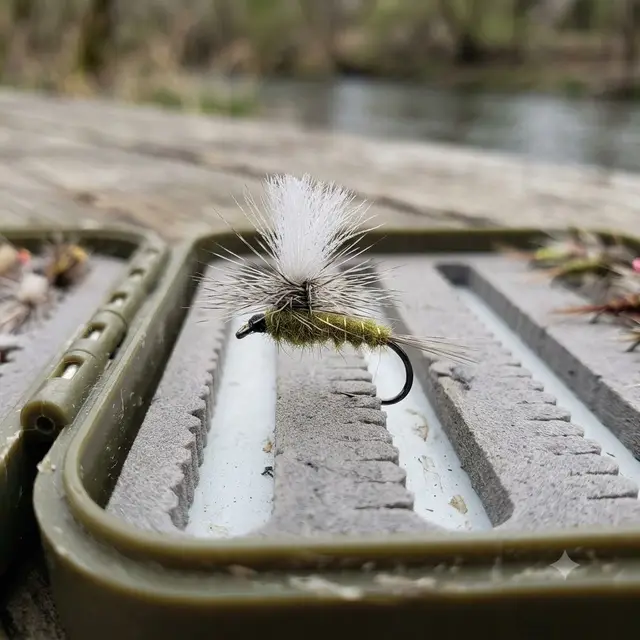 Dry
Dry Klinkhammer
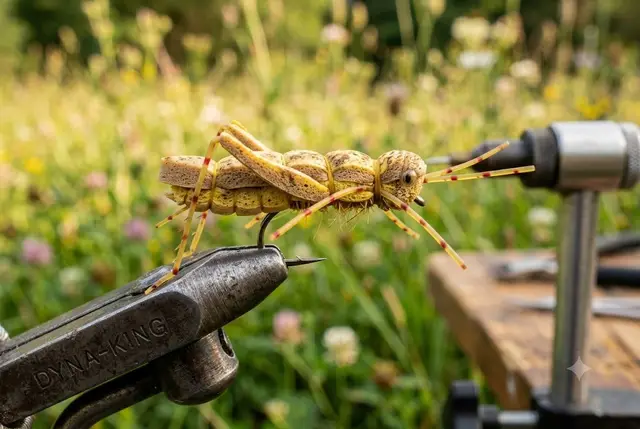 Terrestrial
 Foam Hopper
 Terrestrial
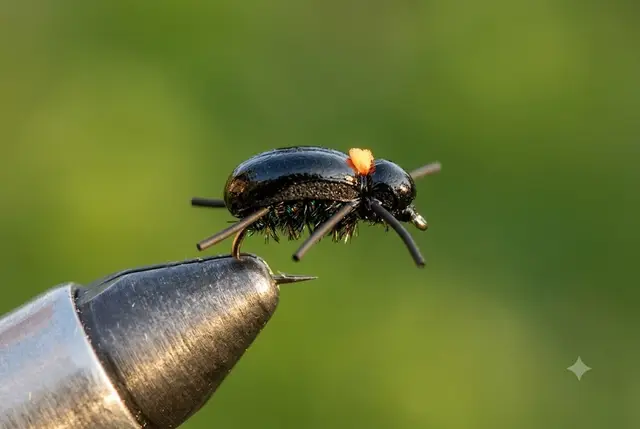
 Foam Beetle
 Terrestrial
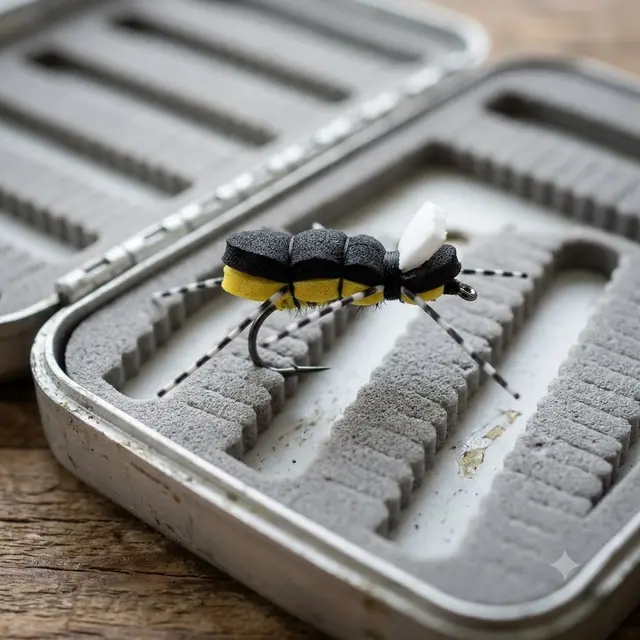
 Chernobyl Ant
 Nymph
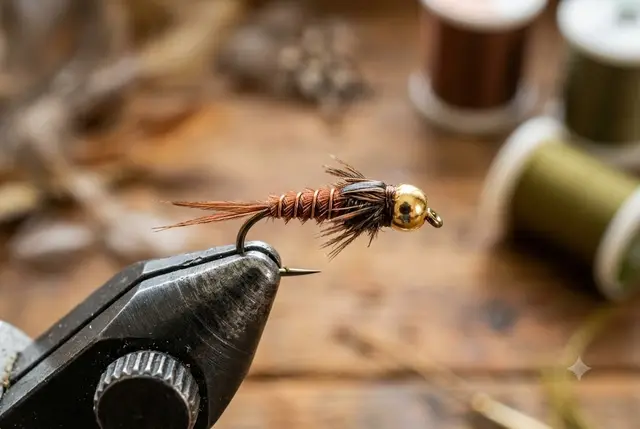
Nymph Pheasant Tail Nymph
 Nymph
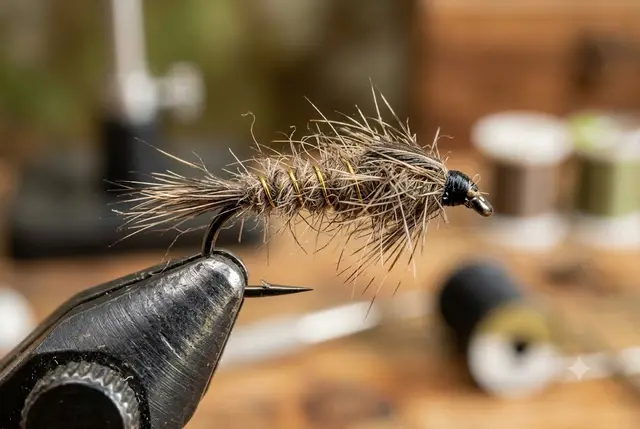
Nymph Hare's Ear Nymph
 Nymph
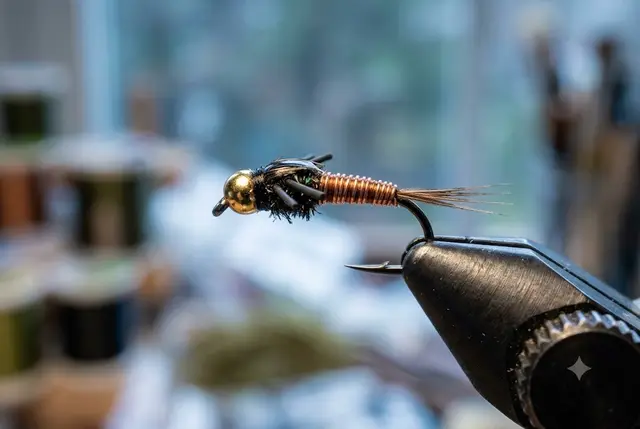
Nymph Copper John
 Nymph
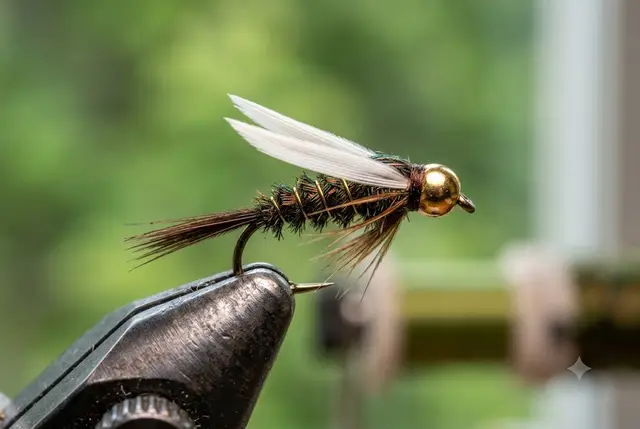
Nymph Prince Nymph
 Nymph
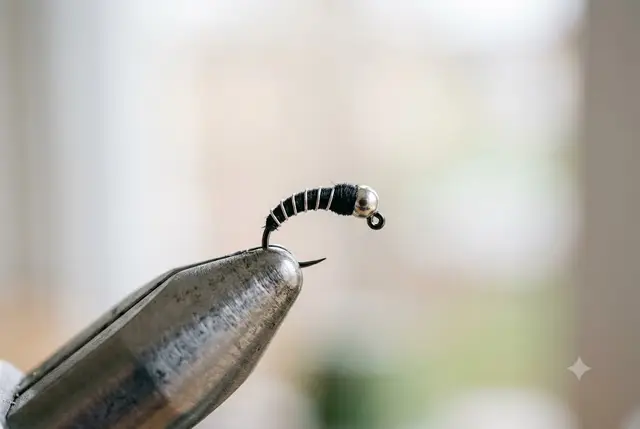
Nymph Zebra Midge
 Nymph
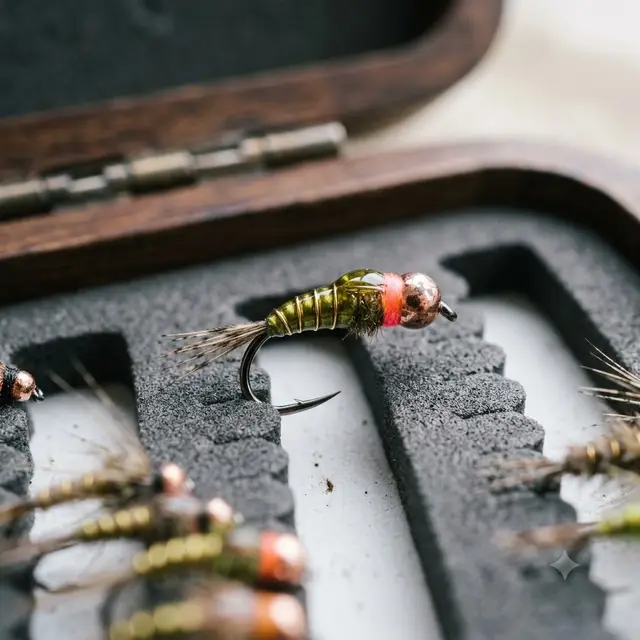
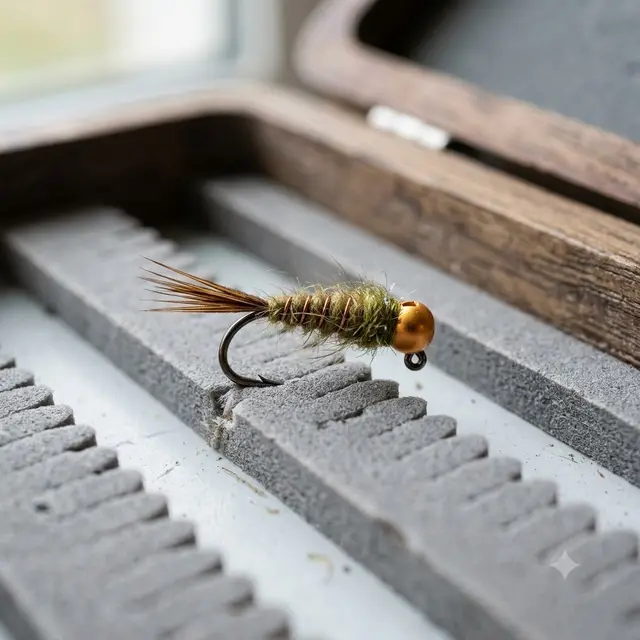
Nymph Perdigón
 Nymph
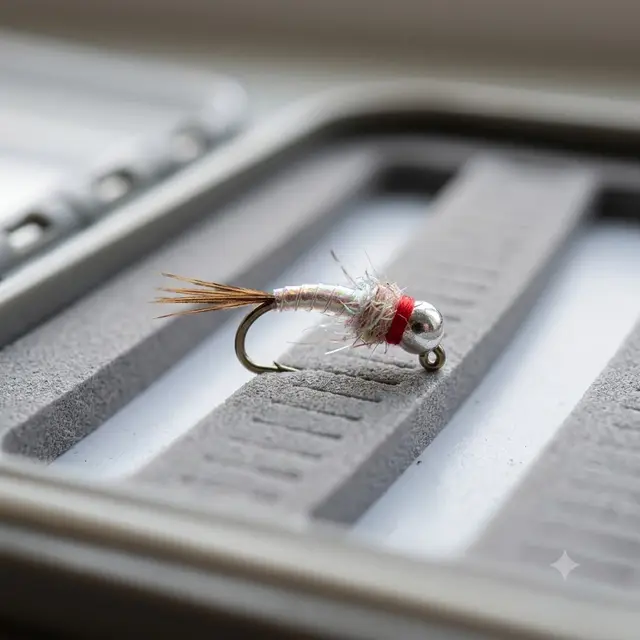
Nymph Frenchie
 Nymph
Nymph Rainbow Warrior
 Nymph
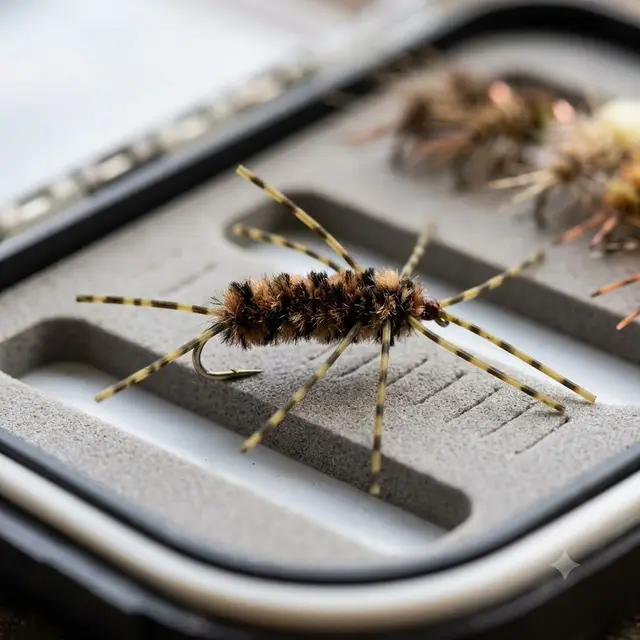
Nymph Pat's Rubber Legs
 Nymph
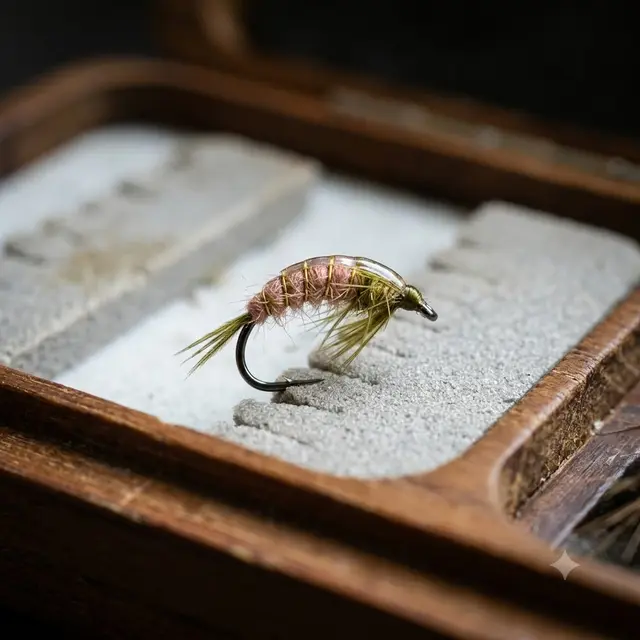
Nymph Scud
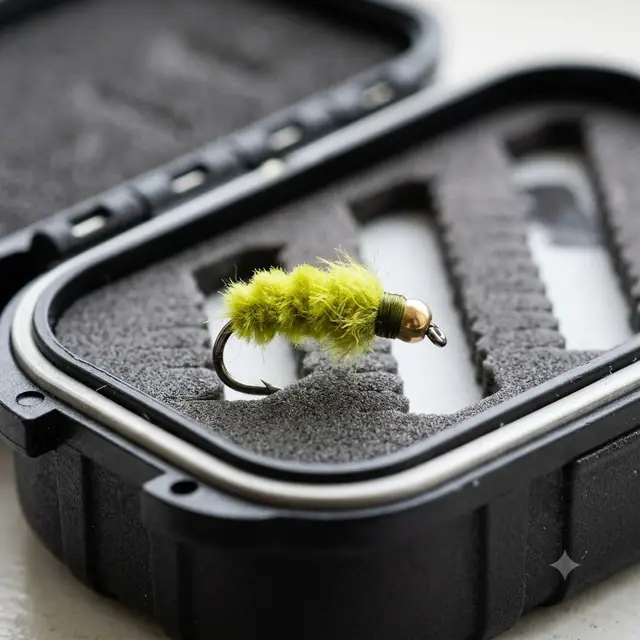 Junk
Junk Mop Fly
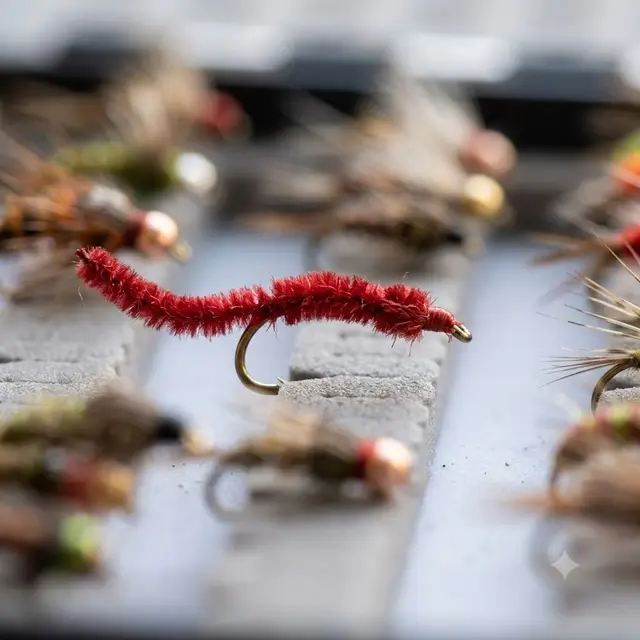 Junk
Junk San Juan Worm
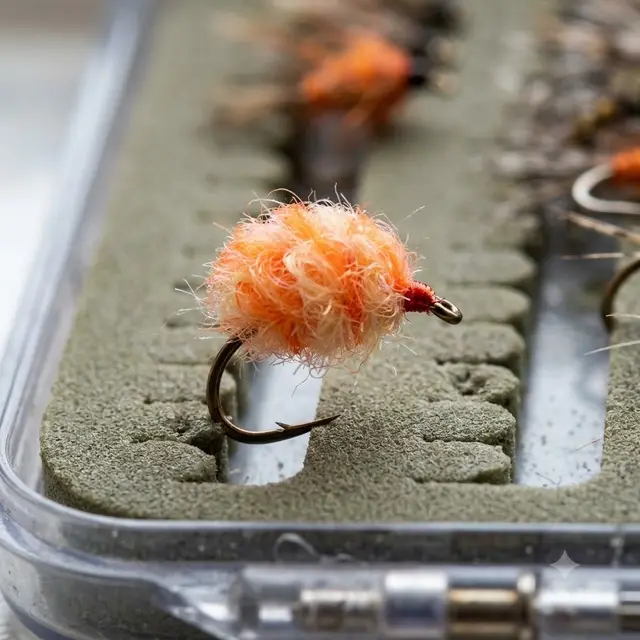 Junk
Junk Egg Fly (Glo Bug)
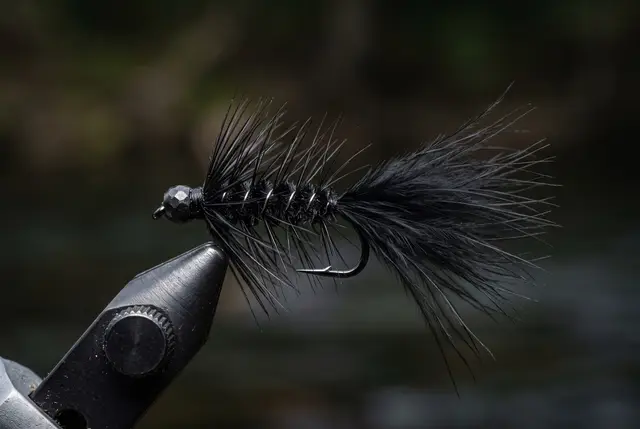 Streamer
 Woolly Bugger
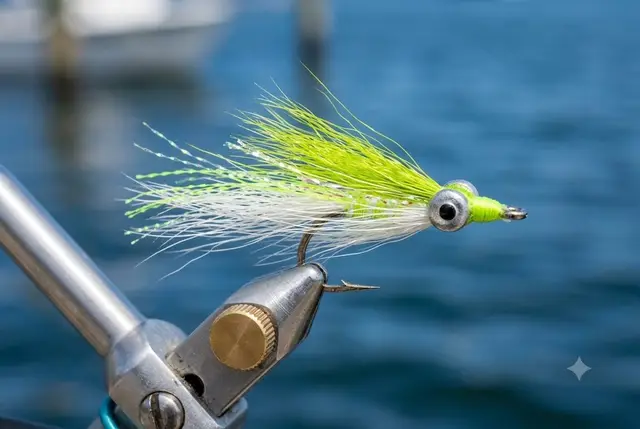 Streamer
 Clouser Minnow
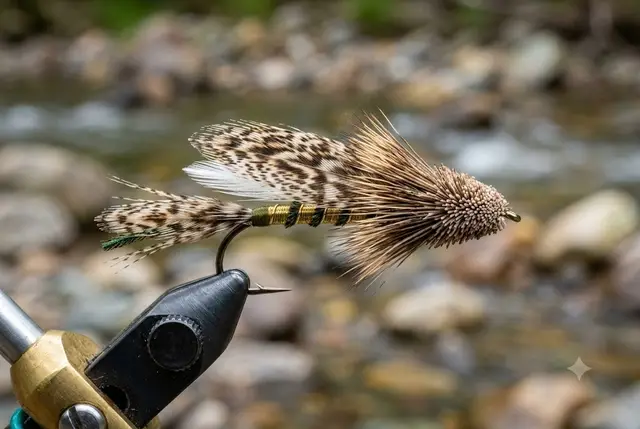 Streamer
 Muddler Minnow
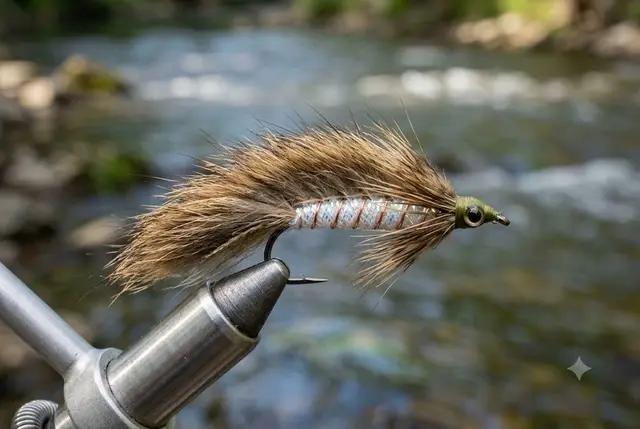 Streamer
 Zonker
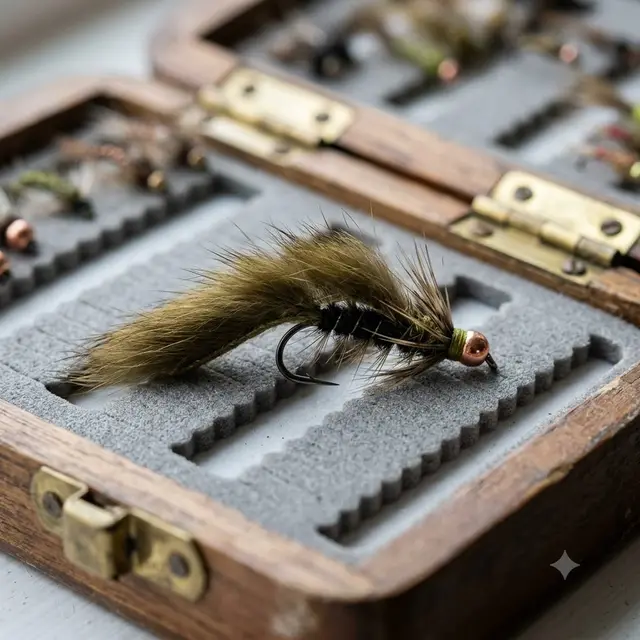 Streamer
 Bunny Leech
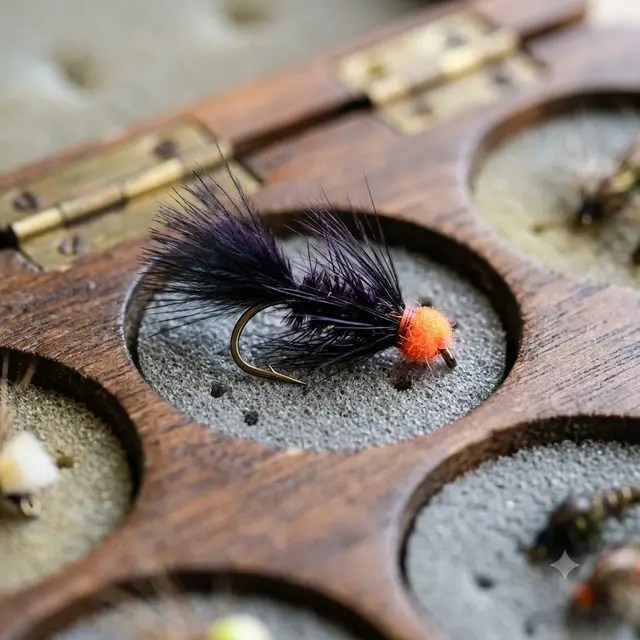 Streamer
 Egg-Sucking Leech
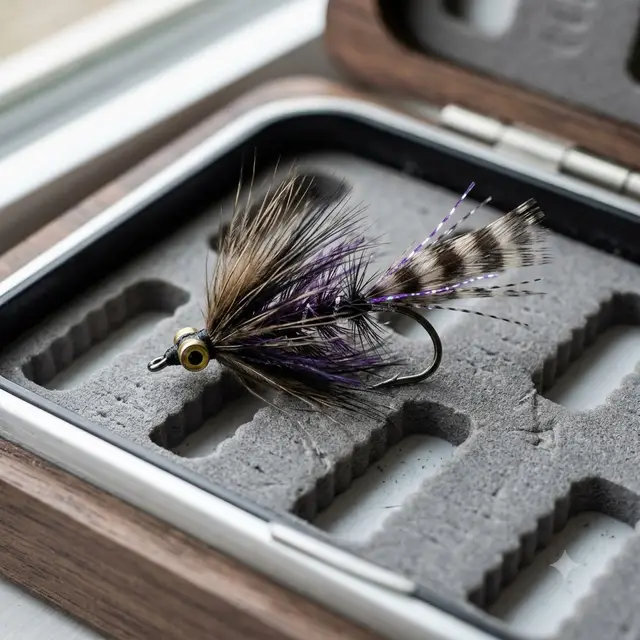 Streamer
 Intruder
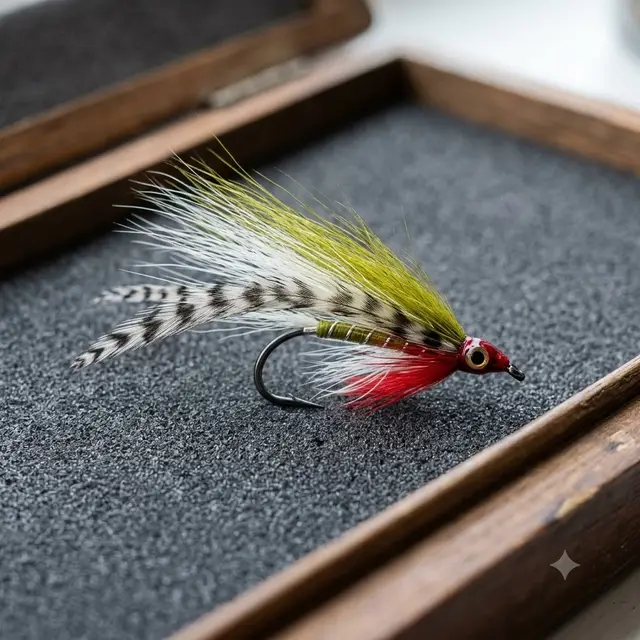 Salt
Salt Lefty's Deceiver
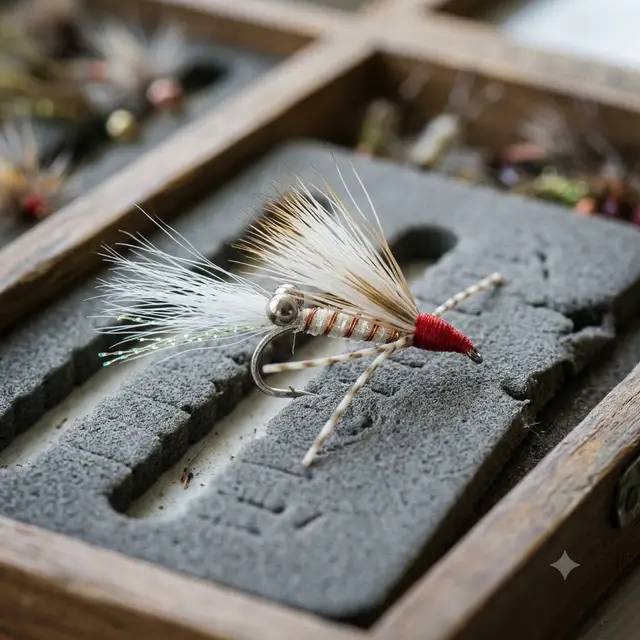 Salt
Salt Crazy Charlie
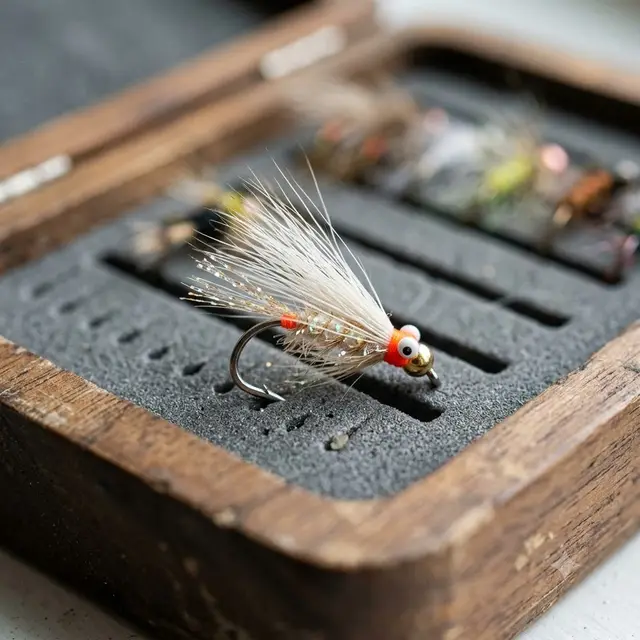 Salt
Salt Gotcha
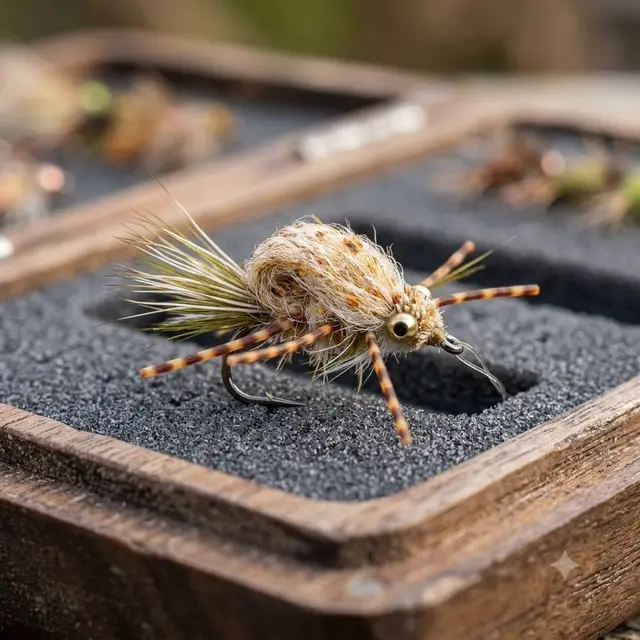 Salt
Salt Merkin Crab
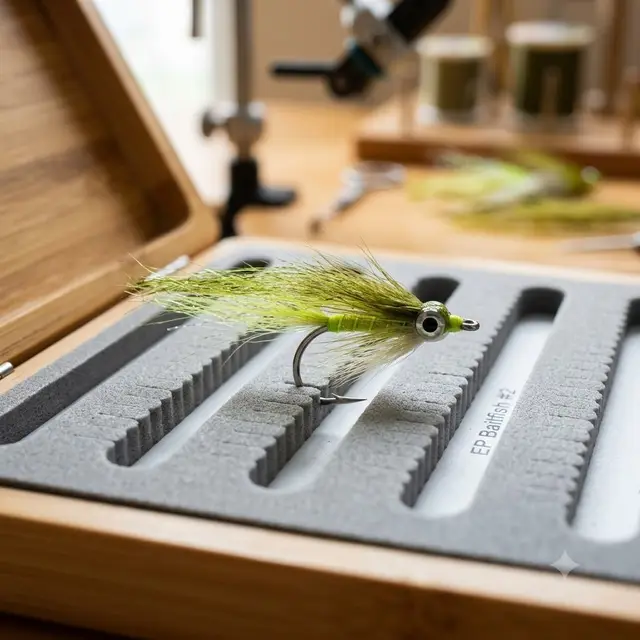 Salt
Salt EP Baitfish
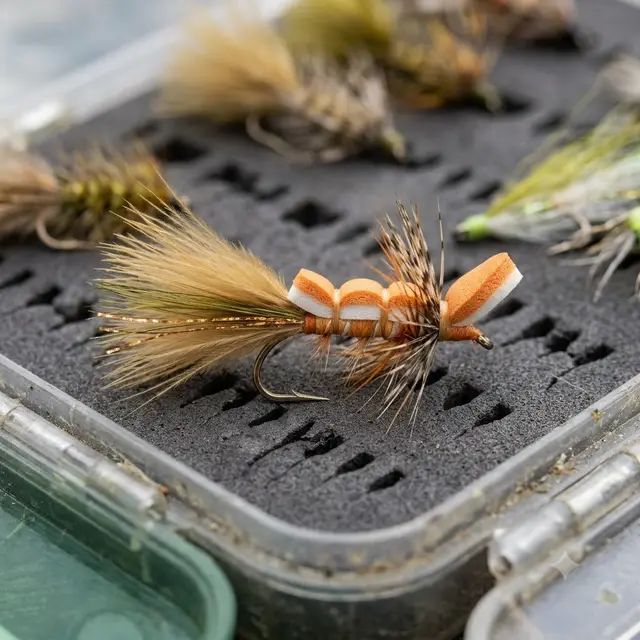 Salt
Salt Gartside Gurgler
 Salt
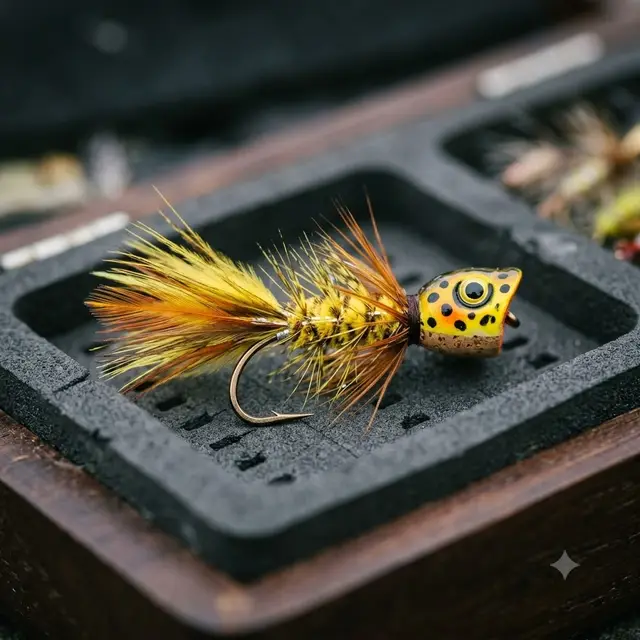
Salt Bass Popper
 Dry
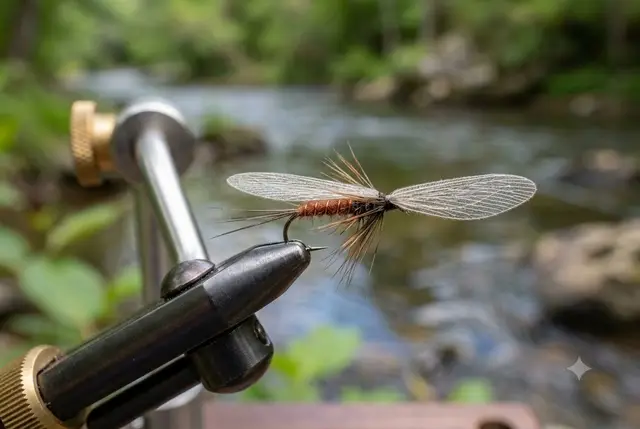
Dry Rusty Spinner
 Dry
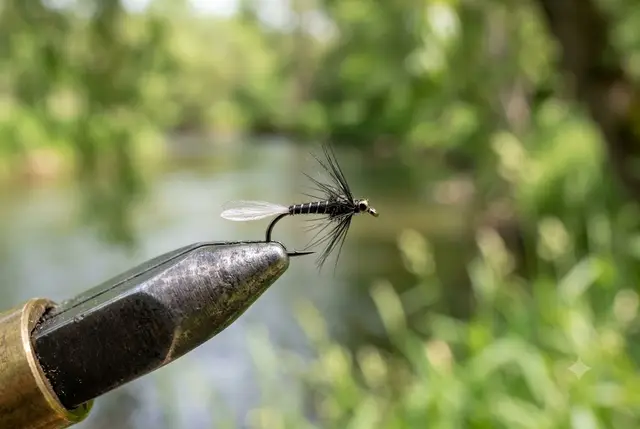
Dry Trico Spinner
 Dry
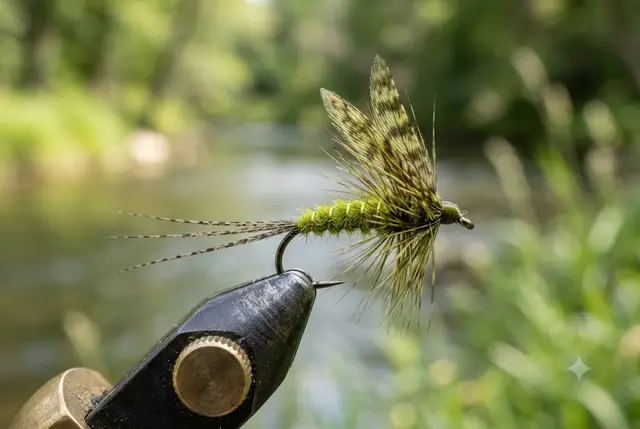
Dry Green Drake
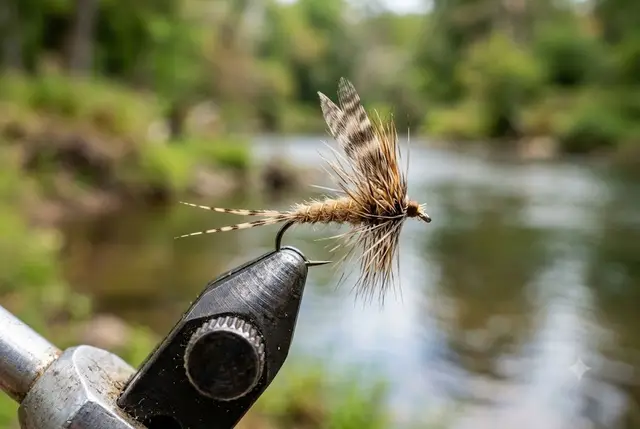 Dry
Dry March Brown
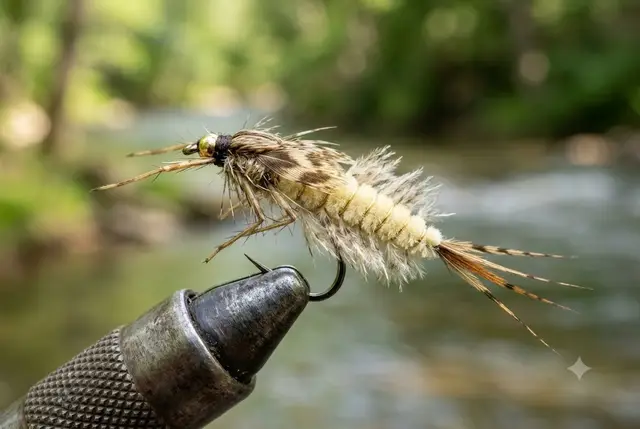 Nymph
Nymph Hex Nymph
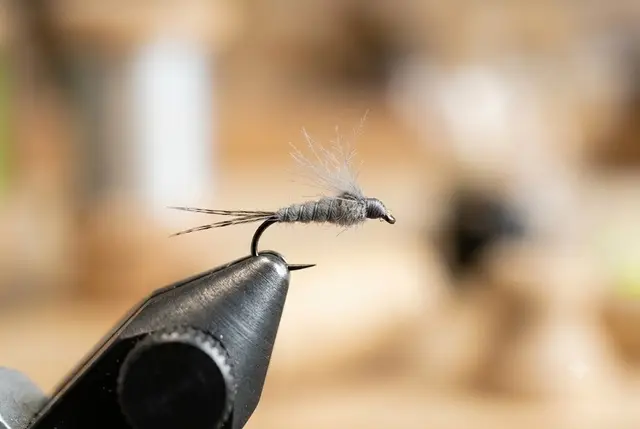 Nymph
Nymph RS2
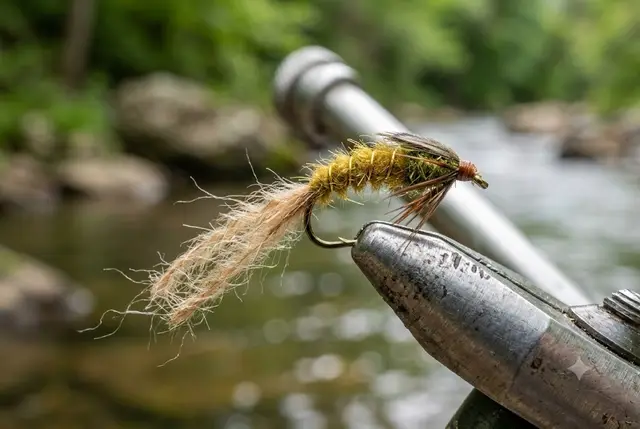 Nymph
Nymph Sparkle Pupa
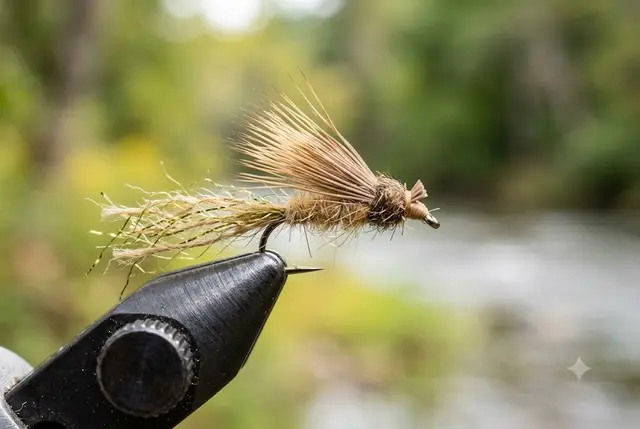 Dry
Dry X-Caddis
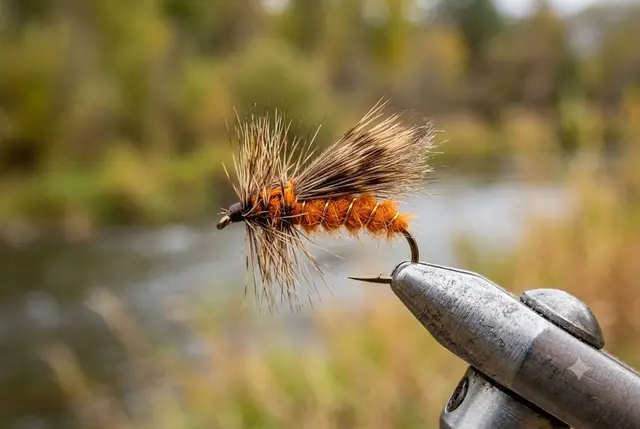 Dry
Dry October Caddis
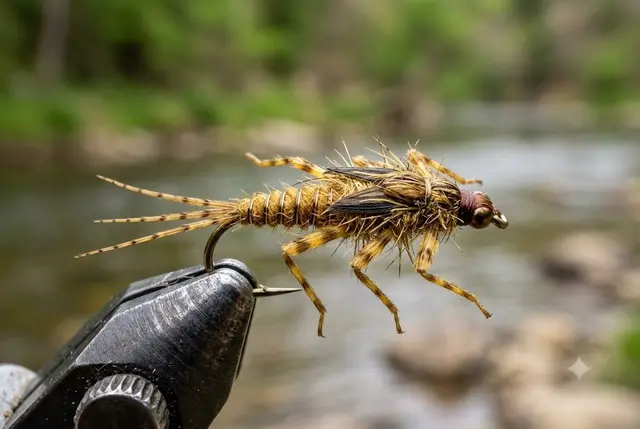 Nymph
Nymph Golden Stone Nymph
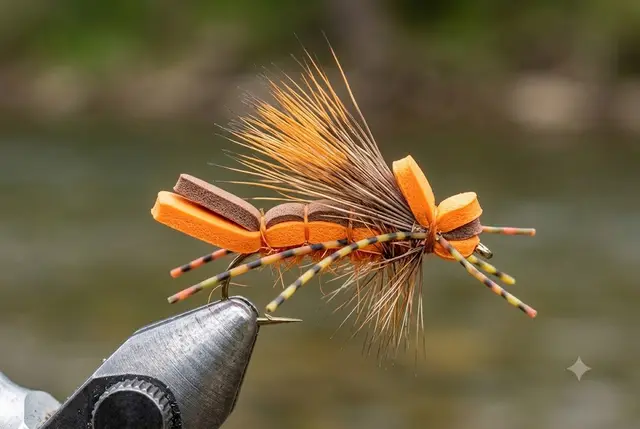 Dry
Dry Salmonfly Dry
 Nymph
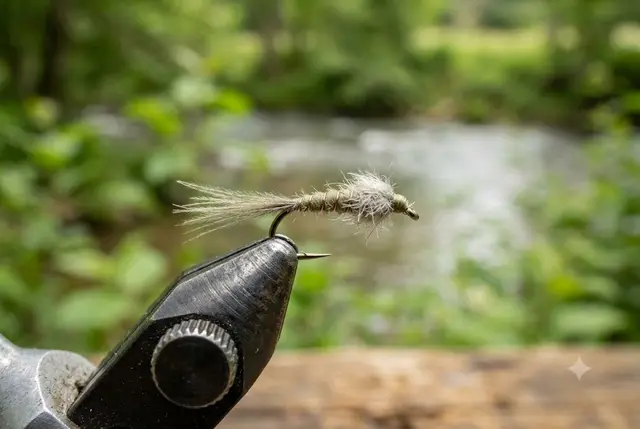
Nymph WD-40
 Terrestrial
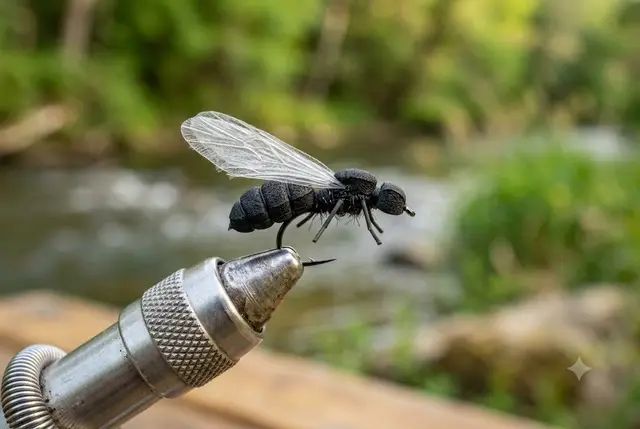
 Flying Ant
 Terrestrial
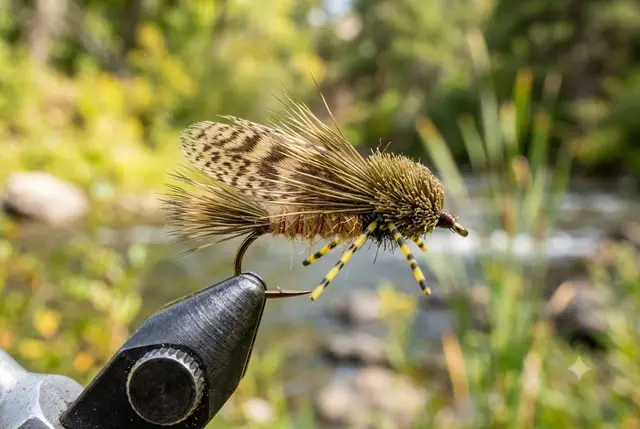
 Dave's Hopper
 Terrestrial
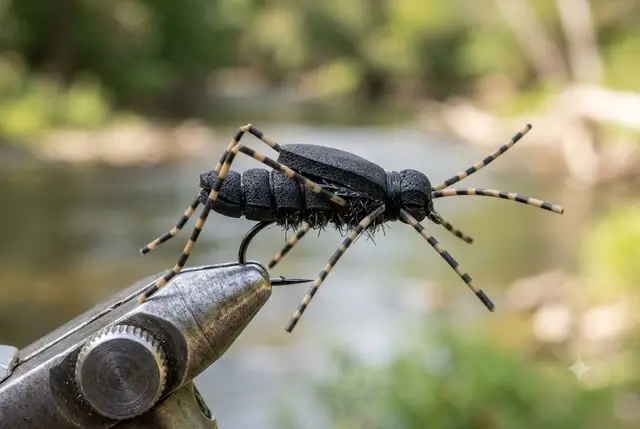
 Foam Cricket
How a fly box is organised
Real trout food falls into a few groups, and flies copy them. Match the fly to what fish are eating and where in the water they're eating it:
- 🌤️ Dry flies ride on the surface - adult insects the fish take off the top.
- 🪨 Nymphs drift below the surface - larval insects, and where most feeding happens.
- 🐟 Streamers are stripped and swum - baitfish, leeches and crayfish, for bigger fish.
- 💧 Wet flies & emergers sit in the film - insects caught mid-hatch.
- 🦗 Terrestrials are land bugs that fall in - hoppers, ants and beetles in summer.
Rule of thumb for a beginner: when nothing's rising, fish a nymph deep. When you see rises, match a dry to the size of what's hatching. When you want the biggest fish in the pool, swim a streamer.
🌤️Dry flies - on the surface
These float on top and imitate an adult insect the fish takes off the surface. The thrilling ones: you watch the take. Fish them dead-drift, drag-free, over a rising fish.
ImitatesA general adult mayfly - the grey, buggy silhouette covers dozens of real hatches.
WhenThe first dry fly to tie on when you see fish rising but can't tell to what. Works almost everywhere, all season.
How to fishDead-drift, drag-free, over a riser.
ImitatesAn adult caddisfly skittering on the surface.
WhenRiffly, broken water and summer evenings when caddis are about. The elk hair floats it high in rough currents.
How to fishDead-drift, or twitch it lightly to imitate a skating caddis.
ImitatesNothing in particular - it's an attractor, a high-visibility 'searching' fly.
WhenFast pocket water and days with no obvious hatch. The white wing is easy to track in glare and foam.
How to fishDead-drift through likely lies; great as the dry in a dry-dropper.
ImitatesA cluster of tiny midges bunched on the surface.
WhenFlat, still water and fussy fish sipping something you can barely see. A cold-season staple.
How to fishDead-drift with a long, fine tippet; watch for the sip.
ImitatesA small olive-bodied mayfly (the 'BWO').
WhenCool, grey, drizzly days - exactly when other anglers go home. One of the most reliable mayfly hatches.
How to fishDead-drift over rising fish; match the small size before the exact colour.
🪨Nymphs - down where they feed
The unglamorous workhorses. Trout take most of their food below the surface, so a nymph drifting near the bottom outfishes everything else on an average day. Add weight or a bead to get them down.
ImitatesA slim mayfly nymph crawling and drifting near the bed.
WhenThe all-purpose confidence nymph - if you carry one subsurface fly, carry this.
How to fishDead-drift under an indicator or as the dropper in a dry-dropper.
ImitatesA scruffy, general 'something alive' - mayfly and caddis larvae both.
WhenWhen you don't know what's hatching. The rough, buggy body suggests life better than a neat one.
How to fishDead-drift near the bottom; a bead-head version sinks faster.
ImitatesA weighted mayfly/stonefly nymph - and a flash of attraction.
WhenFast or deep water where you need to get down NOW. Often tied on as the heavy point fly.
How to fishAs the anchor in a two-nymph rig; its weight drags a lighter fly down too.
ImitatesAn attractor nymph - peacock body, white wings, no exact match.
WhenA great searching nymph in freestone streams when nothing specific is going on.
How to fishDead-drift; the peacock herl and flash pull curious fish.
ImitatesA tiny midge larva - the smallest food that's always available.
WhenTailwaters and winter, when midges are often the only thing hatching.
How to fishDead-drift deep on fine tippet; often the trailing fly.
🐟Streamers - the big meal
Big, meaty flies you strip and swim to imitate baitfish, leeches and crayfish. Fewer takes, but they move the biggest fish in the river - and they're deadly for bass and pike too.
ImitatesLeeches, baitfish, crayfish, big nymphs - almost anything, depending on how you fish it.
WhenThe single most versatile fly there is. If you own one streamer, own this. Every species eats it.
How to fishStrip it, swing it, or dead-drift it deep - all three work.
ImitatesA sculpin or small baitfish, thanks to its clipped deer-hair head.
WhenRivers with sculpins on the bottom; also floats as a big hopper when greased.
How to fishStrip along the bottom, or swing it across and down.
ImitatesA darting baitfish - the dumbbell eyes make it jig up and down.
WhenThe go-to for smallmouth bass and saltwater flats. Rides hook-up, so it snags less.
How to fishStrip in short jerks; let it drop on the pause - takes come as it sinks.
ImitatesA wounded baitfish, with a rabbit-strip tail that breathes and shimmers.
WhenColoured or high water when fish hunt by movement and flash more than shape.
How to fishStrip with pauses; the rabbit strip pulses on the drop.
💧Wet flies & emergers - in the film
Fished just under, or right in, the surface film - imitating an insect struggling to hatch, the moment it's most vulnerable. An old, forgiving style that catches fish when the dry won't.
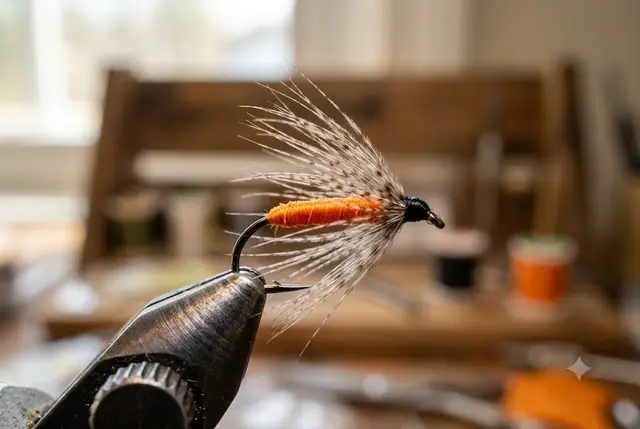
ImitatesAn emerging caddis or mayfly, its soft hackle pulsing like legs and wings.
WhenThe classic swung wet fly - simple, ancient, and it just works during a hatch.
How to fishCast across and let it swing below you on a tight line; feel the grab.
ImitatesA tiny mayfly or midge emerger hanging in the film.
WhenTailwaters and picky risers during a BWO or midge hatch.
How to fishDead-drift in or just under the surface film, often as a trailer.
🦗Terrestrials - fallen from the bank
Land insects - hoppers, ants, beetles - that tumble onto the water in high summer. Big, clumsy, and full of protein, so fish rarely pass them up. Best along grassy, tree-lined banks.
ImitatesA grasshopper that's blundered onto the water.
WhenHot, breezy summer days along meadow banks. A big, high-floating target.
How to fishPlop it near the bank; a small twitch imitates a kicking hopper. Great dry in a hopper-dropper.
ImitatesA beetle or flying ant sitting flush in the film.
WhenSummer, and after a rain or an ant swarm. Small, dark, and trout are suckers for them.
How to fishDead-drift tight to the bank; hard to see, so watch the area, not the fly.
New to the long rod? Start with fly fishing for beginners, put together a fly-tying beginner kit, or read up on streamer fishing for trout. Then tie it all onto the right knots and check the best fishing times before you head out.
⚠️ A plain reference to well-known fly patterns, not a substitute for time on the water. Hatches, sizes and colours vary hugely by region and season, so treat every "when" here as a starting point and match what you actually see in front of you. Always check local regulations - some waters are fly-only, barbless, or catch-and-release.
🎣 Fly-box staples
As an Amazon Associate we may earn from qualifying purchases - at no extra cost to you. We link gear types, not sponsors' picks: you choose the exact product.