The maker side of fishing.
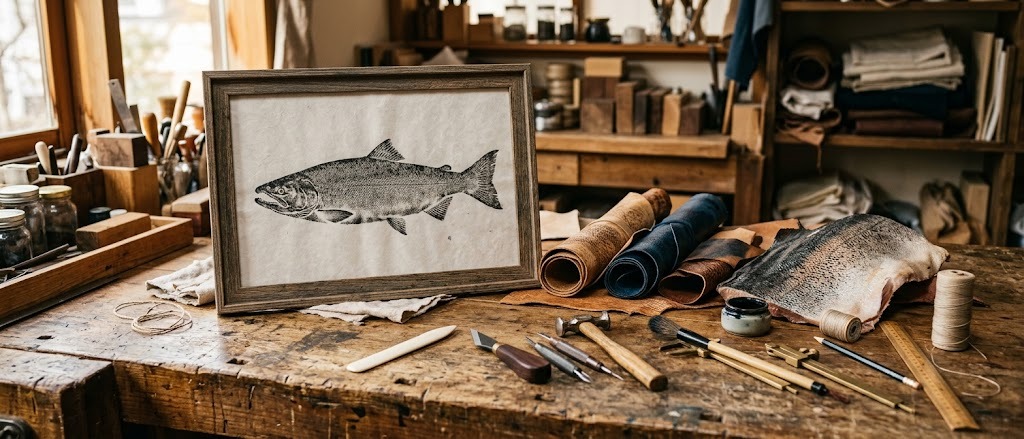
Fishing has always had a workshop attached: anglers printed their catches before cameras existed, tanned the skins, carved the lures and cooked on the bank. These crafts are cheap to start, use what you already catch, and give a day on the water a second life on the wall or the workbench.
The crafts
Gyotaku - Japanese fish printing
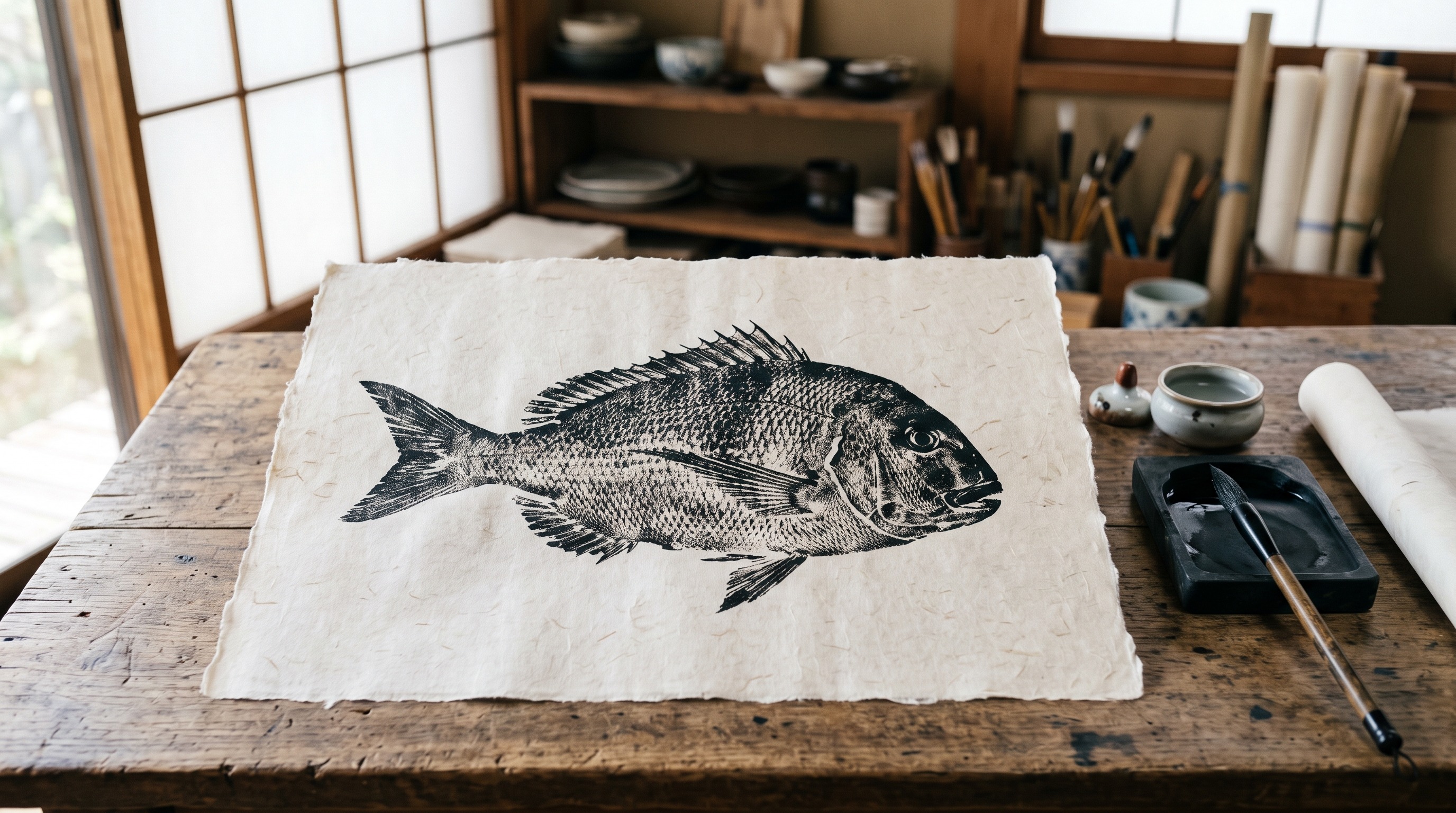
The 19th-century Japanese art of printing a fish itself onto paper - born as an angler's proof of catch.
The craftThe direct method: pat the fish dry, brush a thin, even coat of non-toxic ink or paint over one side, lay rice paper on top and press gently from the centre out. Lift, and you have a life-size, one-of-a-kind record of the catch - fins, scales and all. The eye is painted in by hand afterwards, traditionally the only brushwork on the print.
Worth knowingWith food-safe inks (sumi ink, or acrylics washed off promptly) the fish can still be cleaned and cooked afterwards - the print and the dinner are not either-or.
People make: Framed catch records, trophy prints of a personal best, t-shirt prints, cards.
Fish leather
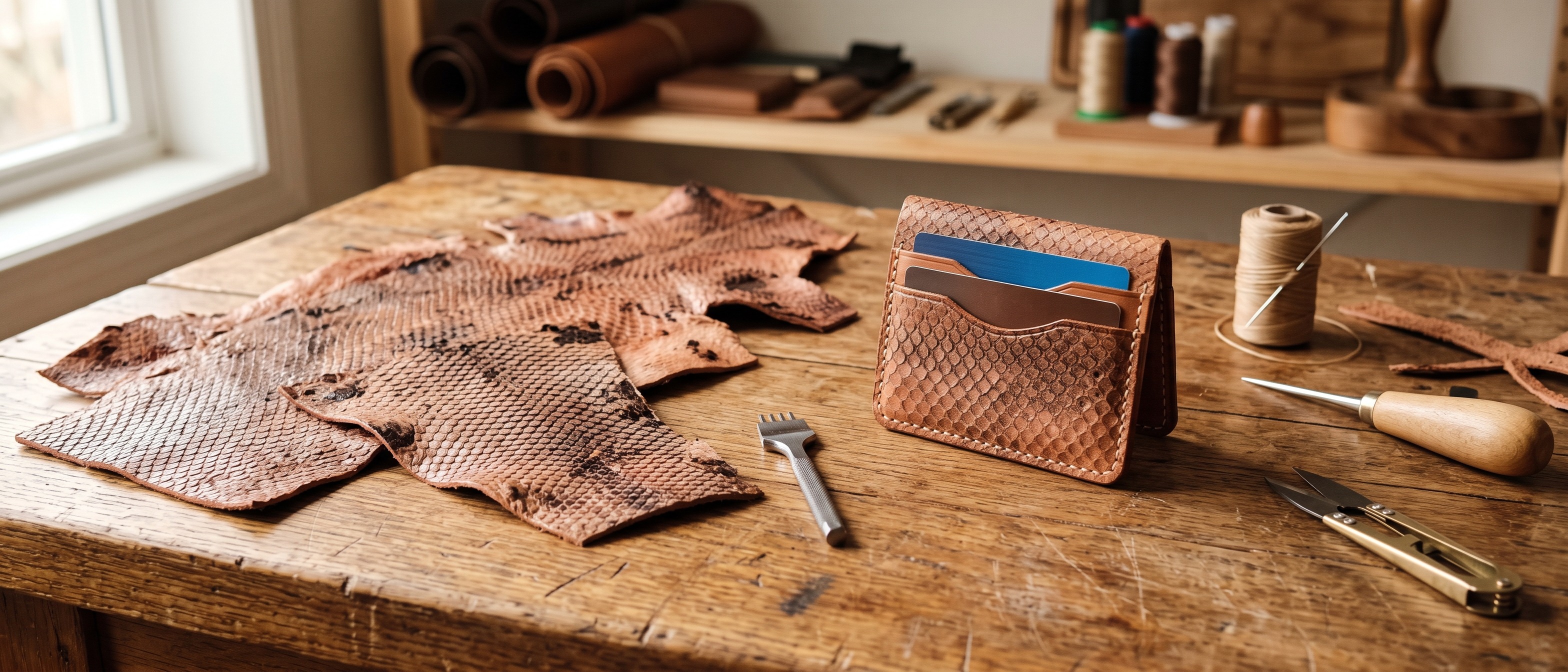
Salmon, carp and cod skins tan into surprisingly strong, beautifully textured leather.
The craftSkins that usually go in the bin are cleaned, descaled and tanned - traditional methods use tea or bark tannins, and hobby kits exist too. Fish leather is thin but, weight for weight, stronger than cow hide, with a scale pattern no two skins repeat. Salmon gives the classic fine texture; carp and pike give bolder patterns.
Worth knowingHome tanning with tea or bark is slow but simple; commercial kits involve stronger chemistry - follow the product sheet exactly. A skin from a single large salmon makes a wallet.
People make: Wallets, card holders, watch straps, knife sheath inlays, jewellery.
Scale & bone details
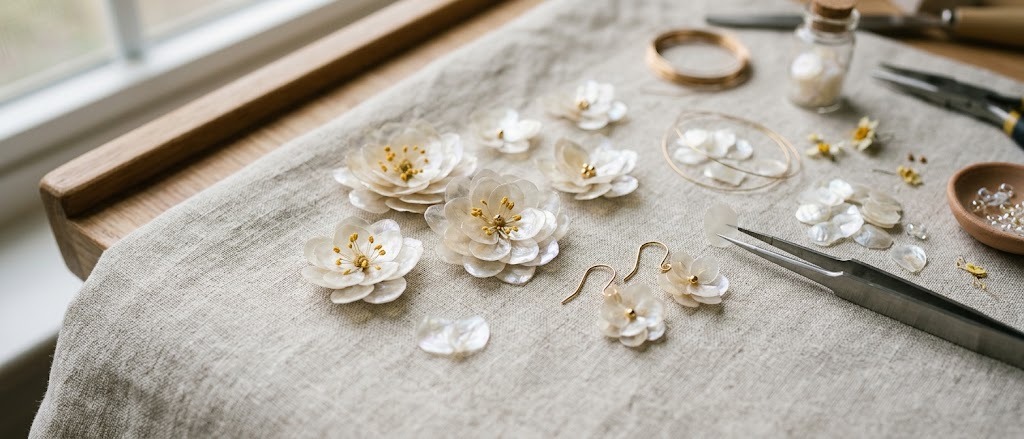
Small, patient crafts from the parts nobody keeps.
The craftLarge scales from carp or tarpon dry into translucent discs used in earrings, flower art and fly-box decorations. Cleaned otoliths (ear bones) are natural curiosities - every species has its own shape. Vertebrae strings were the original fishing-village bead necklace.
Worth knowingSimmer and dry everything thoroughly. Otoliths from a memorable catch make a quietly great keepsake in a small frame.
People make: Earrings and pendants, framed curiosities, fly-box lid art.
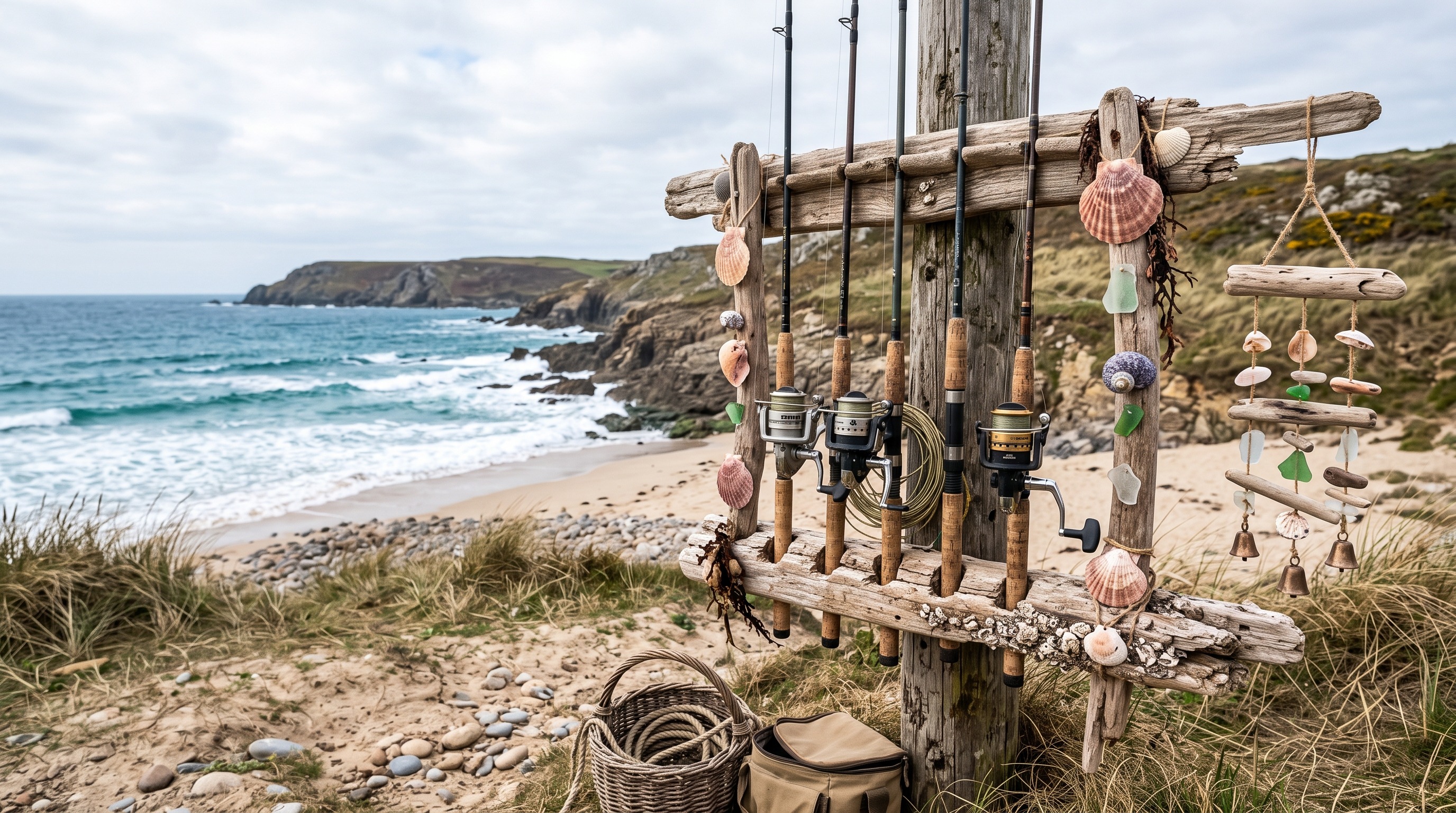
Driftwood & shell work
The beachcombing half of the hobby - what the water leaves behind.
The craftDriftwood becomes rod racks, lamp bases, picture frames and mounting boards for gyotaku prints. Shells from a coastal trip become wind chimes and bait-box mosaics. It costs nothing and pairs naturally with surf and shore fishing days when the bite is slow.
Worth knowingRinse driftwood in fresh water and dry it fully before bringing it indoors. Check local rules on shell collecting in protected areas.
People make: Rod racks, lamps, frames for prints, wind chimes.
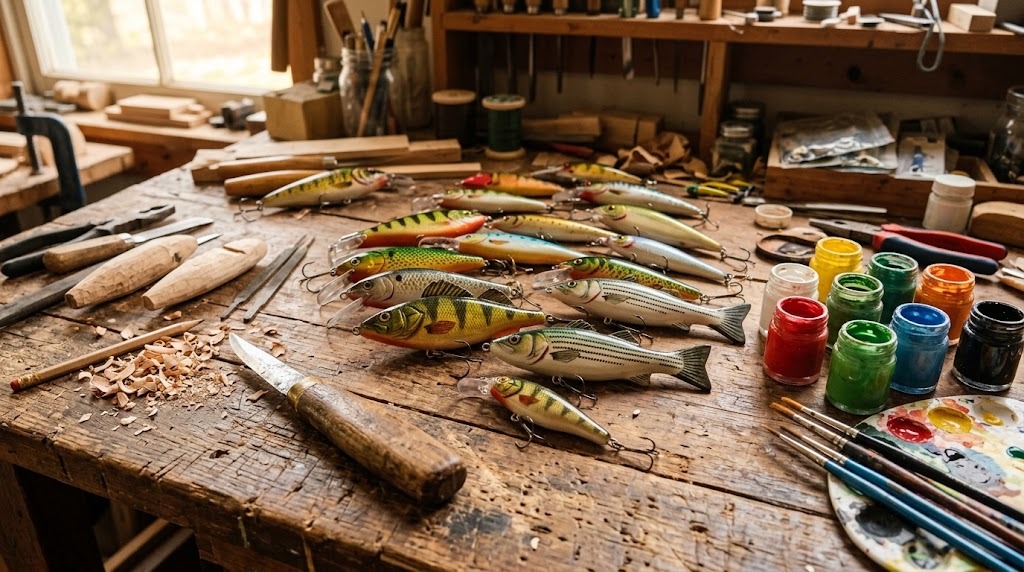
Lure & net crafts
Making the tackle itself - the deepest rabbit hole in fishing.
The craftWhittling and painting wooden plugs, pouring soft plastics in moulds, wrapping custom rods and tying your own leaders and nets. Every one of these has a full community behind it, and catching a fish on a lure you made is a genuine milestone. Our fly-tying and rod-building guides go deeper on the two biggest branches.
Worth knowingStart with a simple wooden popper or a hand-tied leader - one evening, basic tools. There are now full guides here on carving wooden lures and on nets, knots and rope work.
People make: Wooden plugs, poured soft baits, custom rods, hand-tied nets and leaders.
Wooden lure making guide →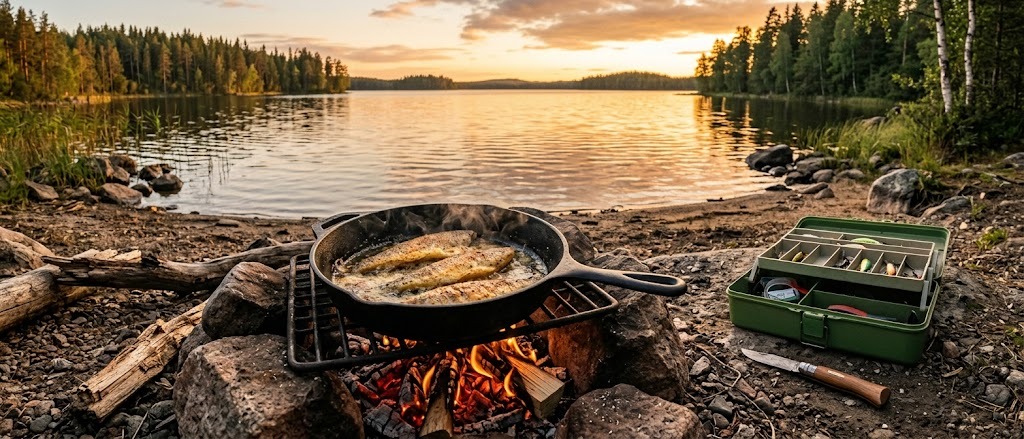
The shore lunch tradition
Less a craft than a ritual - but it belongs on this page.
The craftThe old guide's tradition: fillet the morning's catch on a board, fry it in a cast-iron pan on the bank, eat it feet from the water it came out of. Our catch-and-cook guides cover the food-safety side; the craft side is building your own shore-lunch box - pan, oil, seasoned flour, spatula, all in one ammo tin.
Worth knowingKnow your local consumption advisories for the water you fish - the cooking guides cover this properly.
People make: A packed shore-lunch kit, a carved filleting board, camp recipes.
Cooking your catch →