Horse-Eye Jack
The horse-eye jack is a hard-pulling member of the jack family (Carangidae) prized by inshore and nearshore anglers for its dogged, bulldog fight far out of proportion to its size.
Last reviewed: October 2026
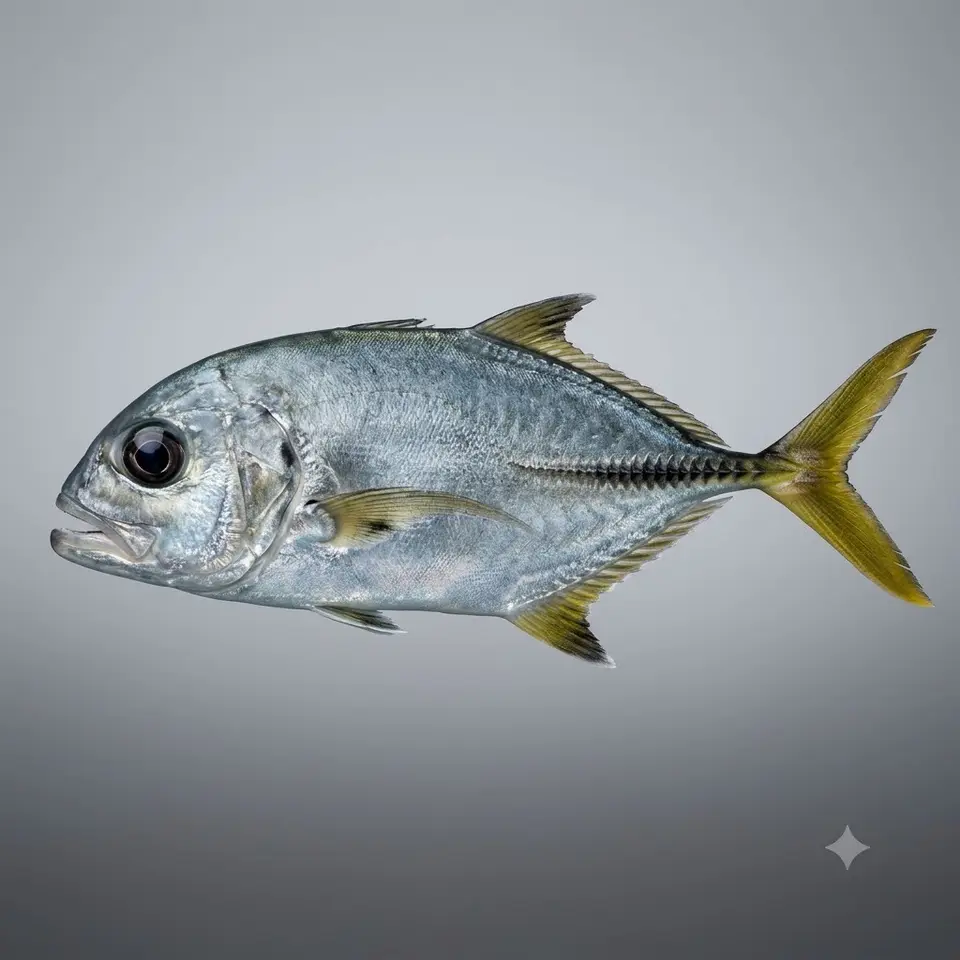 AI illustration
 Overview
The horse-eye jack is a hard-pulling member of the jack family (Carangidae) prized by inshore and nearshore anglers for its dogged, bulldog fight far out of proportion to its size. Named for its notably large eye, it schools over reefs, wrecks, and around inlets throughout the warmer waters of the U.S. Atlantic and Gulf. Most anglers treat it as a sport-only catch and release it, largely because of ciguatera risk in tropical regions.
Identification
Look for a silvery, blue-gray to olive body, a deeply forked tail that is often dusky to yellowish, and a distinctly large eye. It is frequently confused with the crevalle jack, but the horse-eye has a fully scaled breast, no black blotch on the pectoral fin, and typically lacks the crevalle's bold dark spot on the gill cover. A row of hard, keeled scutes runs along the rear of the body toward the tail.
Range & Habitat
It is common in U.S. waters from Florida through the Gulf of Mexico, and it ranges more broadly through the Caribbean, straying north along the Atlantic coast in warm months. Adults favor reefs, wrecks, deeper structure, and open nearshore water, while juveniles push into estuaries, mangroves, and even brackish or fresh canal systems. Inlets, passes, bridges, and jetties concentrate feeding fish.
Behavior & Diet
Horse-eye jacks are fast, aggressive schooling predators that hunt smaller baitfish, shrimp, and crabs, often feeding hardest at dawn, dusk, and after dark. Roaming schools push bait to the surface, creating visible blitzes. They strike fast-moving offerings with authority.
Best Seasons
Fishing is best in the warm months, roughly spring through fall in Florida and the northern Gulf, with year-round action in the tropics. Warming water triggers active schools moving through inlets and along structure.
How to Catch Them
Sight-cast to schools or work structure with topwater plugs, spoons, bucktails, and jigs retrieved quickly. Live or cut baitfish and shrimp fished around bridges, passes, and reefs also produce well, and chumming can fire up a school. They readily take flies and fast, erratic lures.
Tackle & Rigs
Medium spinning gear with 15-30 lb braid and a 30-40 lb fluorocarbon or mono leader handles most fish and the abrasion of nearby structure. Use circle hooks with live bait and beefier gear for larger specimens. No wire is needed since they lack large cutting teeth.
Landing, Handling & Release
Expect long, stubborn runs and dive-bombing near the boat. Use wet hands, support the body, and mind the sharp caudal scutes when gripping the tail. Revive the fish facing into current and release it promptly.
Table Quality
Table quality is generally considered poor to mediocre, with dark, strong bloodline meat. More importantly, larger horse-eye jacks from tropical reef areas carry a real ciguatera poisoning risk, so most anglers release them rather than eat them.
Mistakes That Cost You Fish
Common errors include mistaking it for a crevalle jack, fishing gear too light for its endurance, and keeping large tropical fish despite ciguatera danger. Slow lure retrieves also draw fewer strikes.
Regulations & Conservation
The species is widespread and not considered threatened, and it is lightly regulated in most U.S. jurisdictions. Always confirm current state bag and size rules before keeping any fish, and default to release given the ciguatera concern.
FAQ
Q: How do I tell it apart from a crevalle jack? The horse-eye has a larger eye, a fully scaled breast, and no black pectoral blotch, while the crevalle shows a dark gill-cover spot and a naked chest patch.
Q: Is a horse-eye jack safe to eat? Larger fish from tropical reef zones can carry ciguatera toxin, so caution is warranted and many anglers release them.
Q: Can I catch them in fresh or brackish water? Yes, juveniles routinely enter estuaries and low-salinity canals, though adults stay near coastal reefs and structure.
Tackle for horse-eye jack
As an Amazon Associate we may earn from qualifying purchases - at no extra cost to you. We link gear types, not sponsors' picks: you choose the exact product. The partner-store link may earn us a commission too.