Warsaw Grouper
The Warsaw Grouper is one of the largest groupers in the western Atlantic and the biggest of the deep-water groupers, a giant capable of exceeding several hundred pounds and living for many decades.
Last reviewed: October 2026
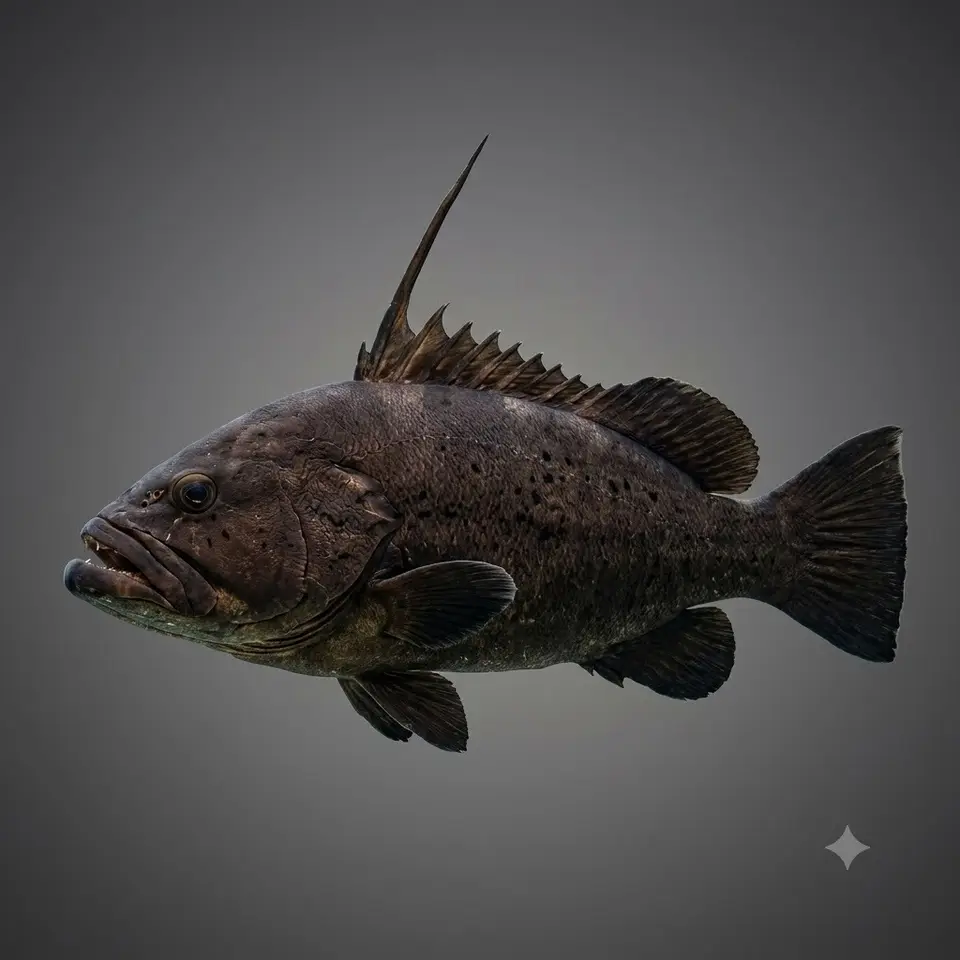 AI illustration
 Overview
The Warsaw Grouper is one of the largest groupers in the western Atlantic and the biggest of the deep-water groupers, a giant capable of exceeding several hundred pounds and living for many decades. It is slow-growing, late-maturing, and highly vulnerable to overfishing, so most conservation-minded anglers now treat it as a catch-photo-release fish. If you hook a big one, understand up front that it is a heavyweight brawler pulled from deep reefs and rock.
Identification
Warsaw Grouper are dark brown to nearly black overall, often with a slightly paler belly and sometimes faint pale blotches on juveniles. The standout feature is the second dorsal spine, which is greatly elongated and much longer than the others, unlike any other Atlantic grouper. The body is robust with a large mouth, and the tail is squared-off to slightly rounded.
Range & Habitat
They range through the western Atlantic from the northeastern US and Gulf of Mexico down toward South America, including areas off Florida and the Gulf, with the main fishery in the southeastern US and Gulf. This is a deep-dwelling species, typically found over rocky ledges, drop-offs, wrecks, and hard bottom in deep water, often hundreds of feet down. Adults favor deeper structure than most reef grouper, while smaller juveniles occasionally show up shallower.
Behavior & Diet
Warsaw Grouper are solitary, structure-oriented ambush predators that hold tight to rock and ledges. They eat fish, crustaceans like crabs and lobster, and cephalopods, engulfing prey with a powerful suction strike. When hooked they immediately dive for cover, so the fight is won or lost in the first few seconds.
Best Seasons
They can be caught year-round because deep water stays relatively stable in temperature. Many anglers target them in cooler months when the fish may hold on slightly shallower structure, but availability depends far more on finding the right deep hard bottom than on the calendar. Sea conditions, not season, usually dictate whether a deep-drop trip is feasible.
How to Catch Them
This is deep-drop fishing over marked structure: find a ledge, wreck, or rock pile in deep water and drop big baits right on it. Whole or large cut baits such as bonito, squid, or whole small fish work well. Because they are uncommon and slow to recover, most captures are incidental to deep-drop grouper or tilefish trips, and thoughtful anglers release them.
Tackle & Rigs
Use heavy stand-up gear or electric reels with 80 to 130 pound class rods, braided line, and a heavy mono or fluorocarbon leader. A standard deep-drop dropper-loop rig or a heavy fish-finder rig with a large circle hook and one to several pounds of lead handles the depth and current. Lock the drag hard; you cannot let a big one reach the rocks.
Landing, Handling & Release
Fish brought up from deep water suffer barotrauma, so keep any fish you intend to release rigged for rapid return. Use a descending device to send it back to depth, which dramatically improves survival over venting alone. Support large fish horizontally, minimize air exposure, and avoid boating a fish you plan to let go.
Table Quality
Warsaw Grouper are considered excellent eating, with firm, white, mild fillets typical of grouper. However, large deep-water grouper can carry higher levels of mercury, so large individuals are best eaten sparingly. Conservation concerns are the stronger reason many anglers now release them rather than harvest.
What Costs Anglers Bites
The biggest mistake is fishing too light and losing the fish into structure in the first surge. Anglers also skip descending devices, dooming released fish to barotrauma death at the surface. Finally, many misidentify Warsaw Grouper as other dark grouper and overlook the diagnostic long second dorsal spine.
Regulations & Conservation
Warsaw Grouper are strictly managed in US waters: harvest and possession are prohibited in South Atlantic federal waters, and the Gulf allows only a very low limit within broader grouper regulations. Rules change, so always check current NOAA and state regulations before keeping one. The species is a NOAA Species of Concern and is regarded as vulnerable due to slow growth and late maturity. Best practice is to release them carefully with a descending device.
FAQ
Q: How big do Warsaw Grouper get? They are one of the largest groupers in the western Atlantic (only the goliath grouper grows larger) and the biggest of the deep-water groupers, capable of exceeding several hundred pounds, with fish validated at more than 50 years old.
Q: Do I need to release Warsaw Grouper? In South Atlantic federal waters, yes - harvest is prohibited. Elsewhere regulations are strict and the species is vulnerable, so careful catch-and-release with a descending device is strongly encouraged.
Q: Are Warsaw Grouper good to eat? Yes, the meat is excellent, but large deep-water fish may carry more mercury and conservation concerns favor release.
Tackle for warsaw grouper
As an Amazon Associate we may earn from qualifying purchases - at no extra cost to you. We link gear types, not sponsors' picks: you choose the exact product. The partner-store link may earn us a commission too.