Haddock
Haddock is a cold-water cousin of the cod and one of the North Atlantic's most important and best-eating bottom fish.
🗓️ Last reviewed: July 2026
Overview
Haddock is a cold-water cousin of the cod and one of the North Atlantic's most important and best-eating bottom fish. A staple of New England party-boat fishing, it offers steady action over offshore banks and some of the finest white fillets in the sea.
Identification
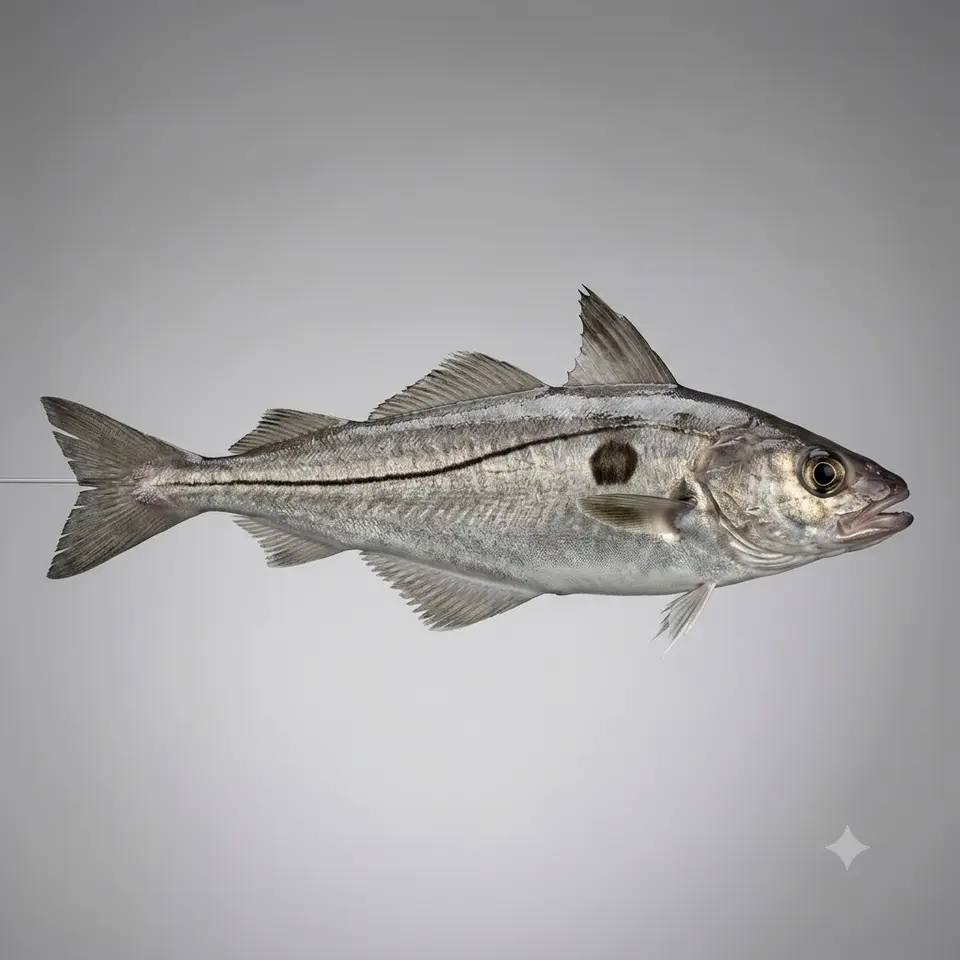
Haddock are silvery-gray with a black lateral line and a distinctive dark "thumbprint" or St. Peter's mark above the pectoral fin. They are slimmer than cod and lack the cod's pale lateral line.
Range & Habitat
They live over sand, gravel and mud on offshore banks of the North Atlantic, from the Gulf of Maine and Georges Bank northward, in cold, deep water.
Behavior & Diet
Haddock feed on the bottom on invertebrates, small fish and fish eggs, holding in schools over hard offshore structure.
Best Seasons
Fishing is best from spring through fall on the offshore banks, with party boats running dedicated haddock trips when the fish are stacked.
How to Catch Them
Drop baited high-low rigs or jigs to the bottom over the banks; clams and cut bait on circle hooks are standard, tipped on shining teasers.
Tackle & Rigs
Conventional bottom gear, braided line, sinkers heavy enough to hold in the current, and high-low bait rigs or diamond jigs.
Landing, Handling & Release
Crank steadily off the bottom, watch for undersized fish, and bleed and ice keepers immediately for the best fillets.
Table Quality
Haddock is superb - mild, flaky, snow-white and the classic fish for chowder and fish-and-chips.
Common Mistakes
Not getting bait to the bottom in current and keeping short fish - strict size limits apply.
Regulations & Conservation
Haddock are tightly managed with size and bag limits and seasonal closures. Always confirm the current federal and state regulations before keeping fish. We do not give legal advice.
FAQ
Cod or haddock? Haddock show the dark thumbprint and black lateral line; cod are heavier with a pale line.
Best use? Chowder and fish-and-chips - it is a top table fish.
🎣 Tackle for haddock
As an Amazon Associate we may earn from qualifying purchases - at no extra cost to you. We link gear types, not sponsors' picks: you choose the exact product. The partner-store link may earn us a commission too.