Shrimp (as bait)
Shrimp are to saltwater what nightcrawlers are to fresh - the universal inshore bait: live under a popping cork for trout and reds, dead on the bottom for everything with a mouth.
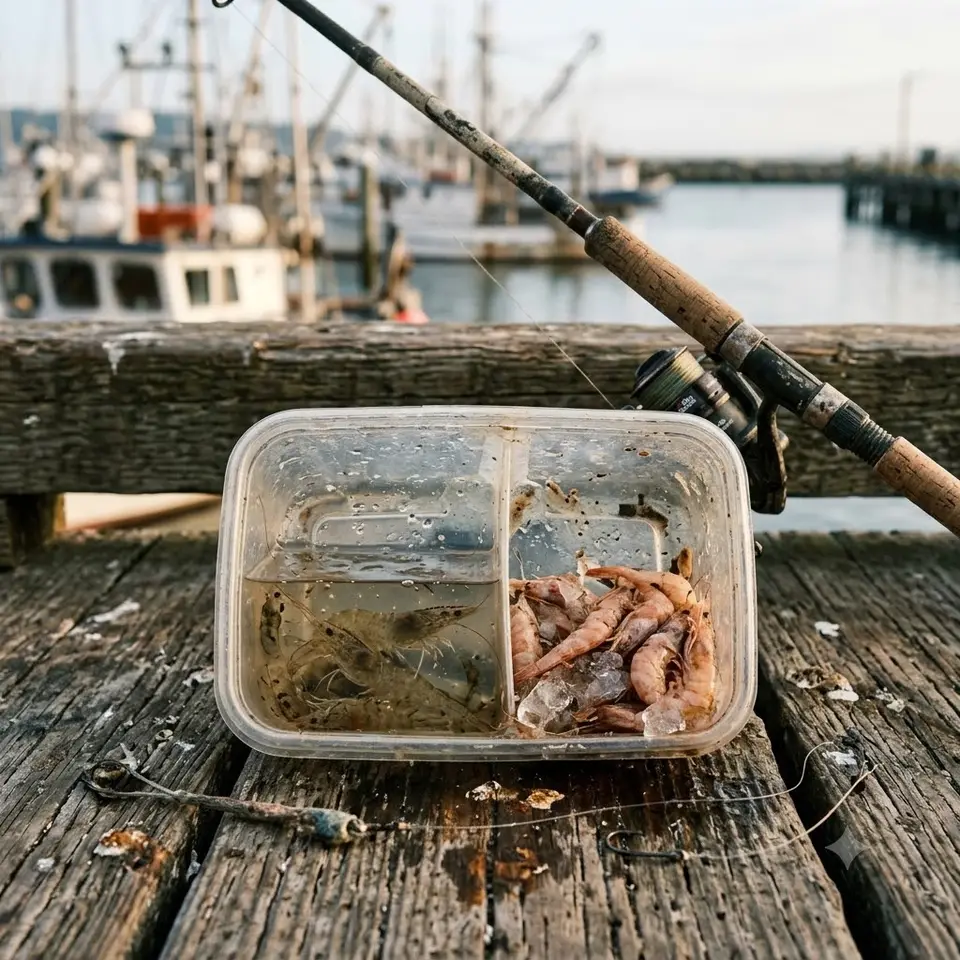
If it swims inshore, it eats shrimp: speckled trout, redfish, flounder, snook, sheepshead, drum, snapper, whiting - the entire coastal cast. Live shrimp under a popping cork is the Gulf Coast's default setting; a fresh dead shrimp on a bottom rig is the universal 'what's biting today' survey; and the bait counter at any coastal shop sells both by the dozen and the pound.
What it catches
Everything inshore, genuinely: specks, reds, flounder, snook, black drum, sheepshead, pompano, whiting, snapper - the shortest answer in salt.
Getting & keeping it
Live from bait shops (aerated bucket or livewell; they die fast in warm still water), fresh-dead on ice from the same counter. Skip grocery-store shrimp that may be imported: Washington's wildlife agency warns that using frozen, uncooked shrimp from infected sources as bait is a pathway for white spot syndrome virus to be transferred worldwide - the virus kills shrimp, crabs and crayfish, and freezing may not kill it.
How to rig it
Live: hook under the horn (avoiding the dark brain spot) or through the tail; popping-cork rigs are the inshore standard. Dead: tail sections threaded on jigheads or fish-finder rigs; sheepshead demand a small strong hook near structure.
When it shines
Always - shrimp are inshore ecosystems' currency; especially moving tides on grass flats, dock lights at night (shrimp swarm them), winter when other bait thins.
Field tips
POP the cork - the splash-and-click imitates feeding activity and calls fish to your shrimp; match hook size to shrimp size (oversized hardware kills the drift); frozen shrimp fish softer - fresh-dead beats frozen.
Mistakes with this bait
Hooking through the brain spot (instant death, limp bait), still corks (the pop IS the technique), and peeled shrimp - fish read shell and scent as real.
Bait-fishing kit
As an Amazon Associate we may earn from qualifying purchases - at no extra cost to you. We link gear types, not sponsors' picks: you choose the exact product.