How to Fish a Swimbait
A swimbait catches fish by being boring in the right way - steady, slow, and the size of what the fish is already eating. How to pick between paddle tails, jointed baits and glide baits, the retrieve speeds that matter by season, and why most beginners fish them far too fast.
Water safety and local rules come first. Swimbait fishing pulls people onto boats, banks and cold autumn water. The life jacket, cold-water and boating requirements that apply to you come from your national or state boating authority; licences, seasons, size limits and any restrictions on lure or hook type come from your state or provincial fisheries agency. They are the authority, not this article. We do not give safety or legal advice - when in doubt, ask them.
The short version: a swimbait is a baitfish imitation you retrieve steadily rather than working with the rod, and the two mistakes that account for most blank sessions are retrieving too fast and fishing a bait the wrong size for what the fish are actually eating. A swimbait does not need action imparted by you. The tail or the joint does the work; your job is speed, depth and staying in contact. It is the least athletic lure in the box and one of the hardest to fish with real discipline.
Autumn is the season that makes the case for it. Baitfish school heavily, predators feed on whole schools rather than picking individuals, and a lure that simply looks like one more member of the school moving at school speed gets eaten without inspection.
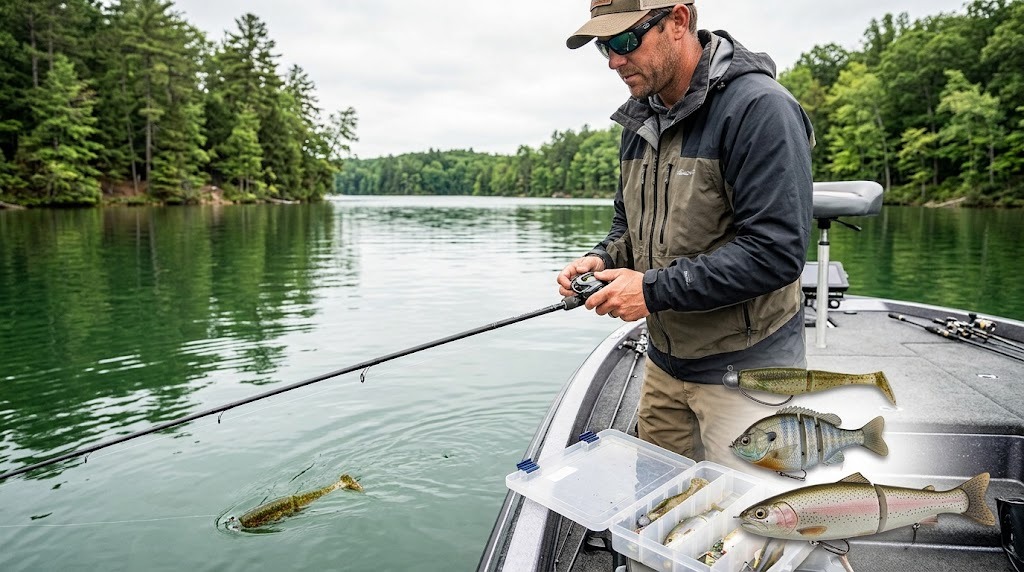
The three families, and which one you want
“Swimbait” covers three quite different lures that share a name.
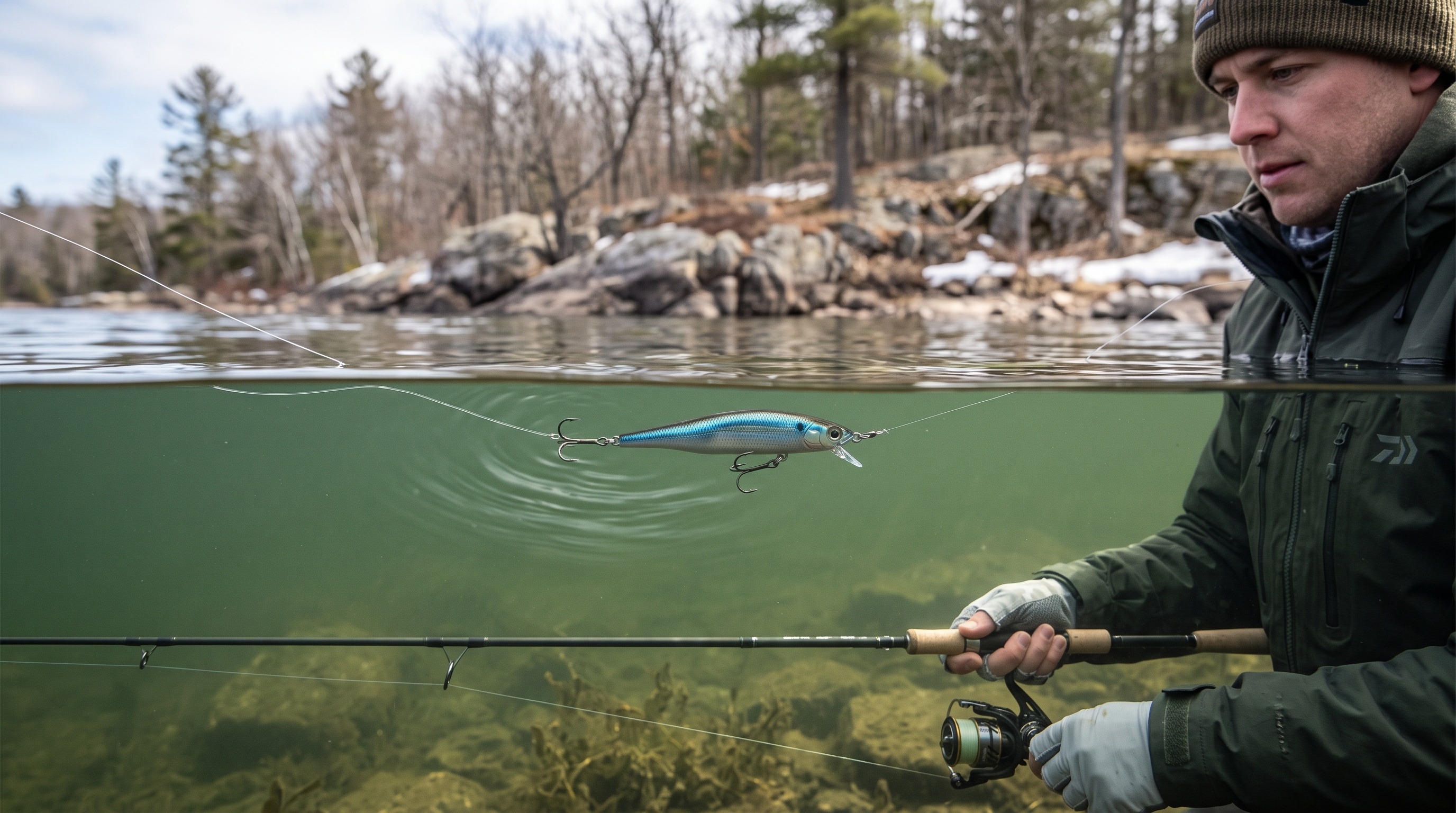
Paddle tails are soft plastic bodies with a flat-faced tail that kicks under tension. These are the workhorses - cheap, snag-tolerant on a weedless hook, and effective from 7 cm to 20 cm. If you own one swimbait, own this. A paddle tail swimbait rigged on a weighted swimbait hook covers the whole water column by weight choice alone, and it is the version that catches fish for beginners.
Jointed swimbaits are multi-segment hard or soft baits that produce a wider, looser S-track. They shine when fish are eating larger prey and when a straight paddle tail is getting followed but not hit. A jointed swimbait also handles a stop-and-go retrieve better, because the segments keep moving for a moment after the reel stops.
Glide baits are single-jointed big baits that track side to side in wide sweeps. They are a low-numbers, high-average-size proposition and demand heavy tackle. Fish a glide bait when you are specifically hunting a better fish and are willing to go a session without a bite.
For most anglers, most days, the answer is a paddle tail. Reach for the other two when you have a reason.
Match the size before you match the colour
Colour arguments are endless and mostly beside the point. Size is not. Predators in autumn key on a particular class of baitfish, and a swimbait two sizes off gets ignored regardless of how good it looks.
Find out what is there before you choose. Watch for bait flicking on the surface, check what the birds are working, look at your electronics if you have them, and pay attention to anything a hooked fish spits up - that last one is the single most reliable piece of information you will get all day. Then pick a bait within about 20 percent of that length.
The general size pattern in freshwater:
- 7-10 cm: the default for mixed bags, pressured water, and any day where a bite is more important than a big fish.
- 11-15 cm: the autumn standard where shad, herring or roach have grown through the summer. This range covers most serious largemouth bass fishing.
- 17 cm and up: big-bait territory. Fewer bites, larger average size, heavier gear, and a real commitment to fishing it all day.
Colour then follows water clarity rather than fashion. Clear water and visible bait: translucent, natural, silver or pearl. Stained water: something with more contrast, a solid back, or a chartreuse element. Muddy water: do not rely on sight at all - go darker and larger so the profile and the vibration do the work.
Retrieve: slower than you think, and steady
Cast, let the bait fall to the depth you want, and reel at a constant speed. That is the whole retrieve, and the discipline is in not adding anything to it.
The reference point is the bait’s own speed. Baitfish in cool water do not sprint; they cruise. A retrieve that feels almost too slow to keep the tail kicking is usually correct. You should feel a steady thrum through the rod - that vibration is your depth and speed gauge, and losing it means either the bait has fouled or you have slowed below the tail’s working speed.
Adjust by water temperature:
- Warm water, above about 18C: a moderate steady retrieve. Fish will chase.
- Cooling water, 10-18C: slow, steady, and deeper. This is prime swimbait season.
- Cold water, below 10C: as slow as the bait will still swim, and consider a heavier head so you can keep it near bottom at that speed.
Two variations are worth adding once the basic retrieve is working. The stop-and-go - a brief pause every ten to fifteen turns - triggers followers, because a baitfish that suddenly stops looks wounded. And the bottom-contact retrieve, where you use a heavier head and let the bait tick the bottom occasionally, works when fish are holding deep and tight to structure, which is how smallmouth bass often set up in autumn.
Where to put it
Swimbaits reward covering water, but not randomly. Fish the same places you would read for any predator - the edges, the transitions, the places where bait gets pinned. Points, the outside bends of channels, bluff walls, the deep sides of weed lines, and anywhere bait is schooling with fish underneath it.
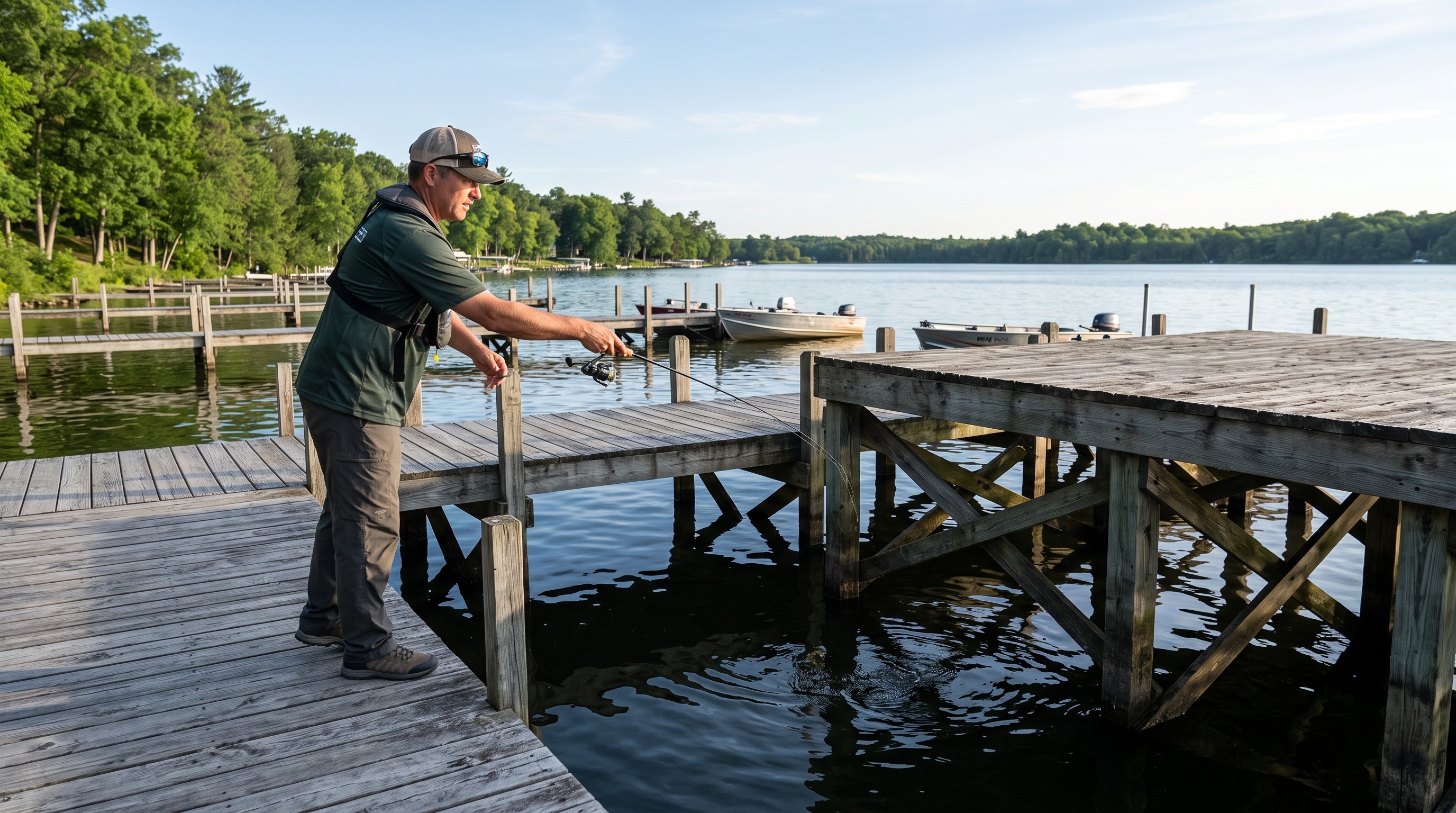
The single highest-percentage presentation is a long cast parallel to an edge - a weed line, a rocky bank, a dock line - so the bait stays in the strike zone for the whole retrieve instead of crossing it once. Reading those edges properly is most of the skill, and how to read water covers it in more depth than this piece can.
Gear, hooksets and landing
A swimbait needs a rod with enough backbone to move a bigger hook and enough tip to avoid ripping the bait away from a fish that eats on a slack-ish line. For 7-15 cm baits, a medium-heavy rod of 2.1 m or so with a moderate action is the sensible middle ground. Braid with a fluorocarbon leader gives you contact and abrasion resistance; straight fluorocarbon gives you a slightly more forgiving stretch. Our notes on choosing fishing line cover the trade-off properly.
The hookset is the part most people get wrong. Swimbait eats are often soft - the bait simply stops swimming, or the rod loads up like you have hooked a plastic bag. Do not swing at that. Keep reeling and lean into the fish until the rod is loaded, then set. A hard, fast hookset on a bait that a fish has only partly taken pulls it straight out of the mouth.
After that, the usual rules apply: steady pressure, no pumping, and get the fish’s head up. And decide in advance what you are doing with it - autumn fish are heavy with pre-winter weight, and if you are putting them back, good catch and release practice matters more with a big fish than a small one.