How to Fish a Jigging Spoon
A jigging spoon is a heavy, compact metal lure fished straight up and down over schooled fish in deep, cold water. How it differs from a casting spoon, rigging, the lift-and-drop, finding fish to drop it on, and lining it up with sonar.
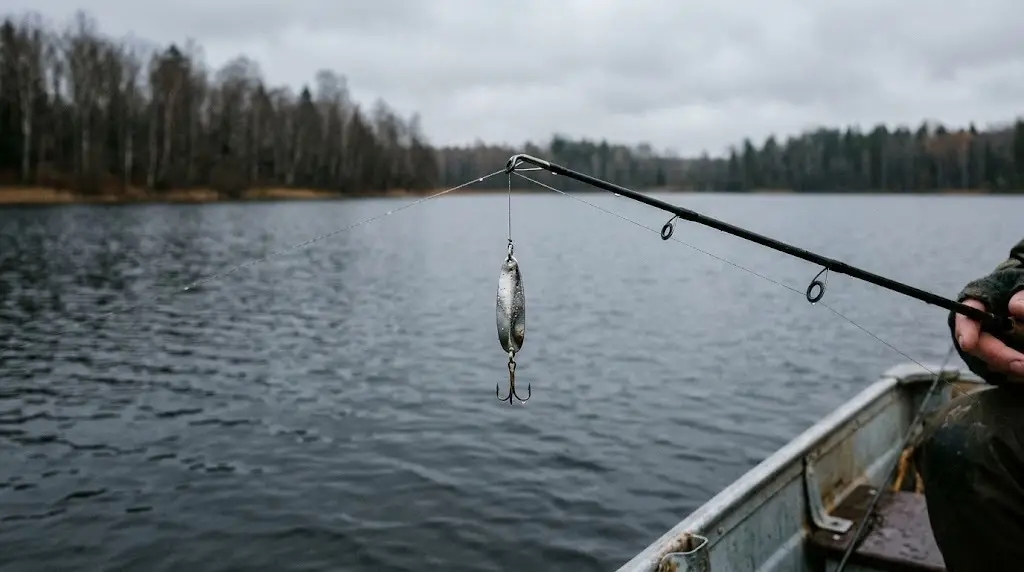
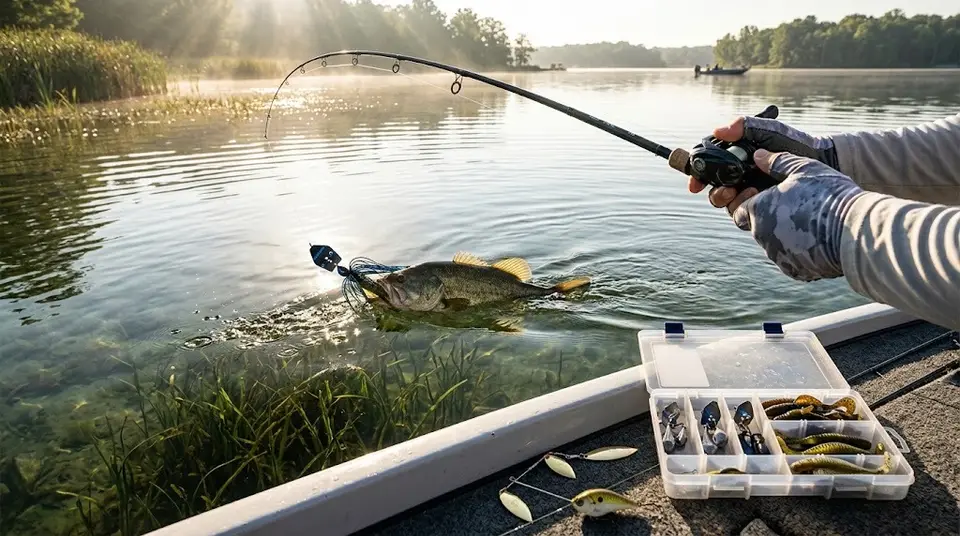
A jigging spoon is a compact, heavy piece of metal that you drop straight down to fish holding deep, lift sharply, and let flutter back. It is a lure for the colder months, when bass, walleye, white bass and perch pack into tight schools near the bottom and stop chasing anything that moves fast. Most bites come as the spoon falls, so the whole technique is about controlling that fall and feeling what happens during it.
How it differs from other spoons
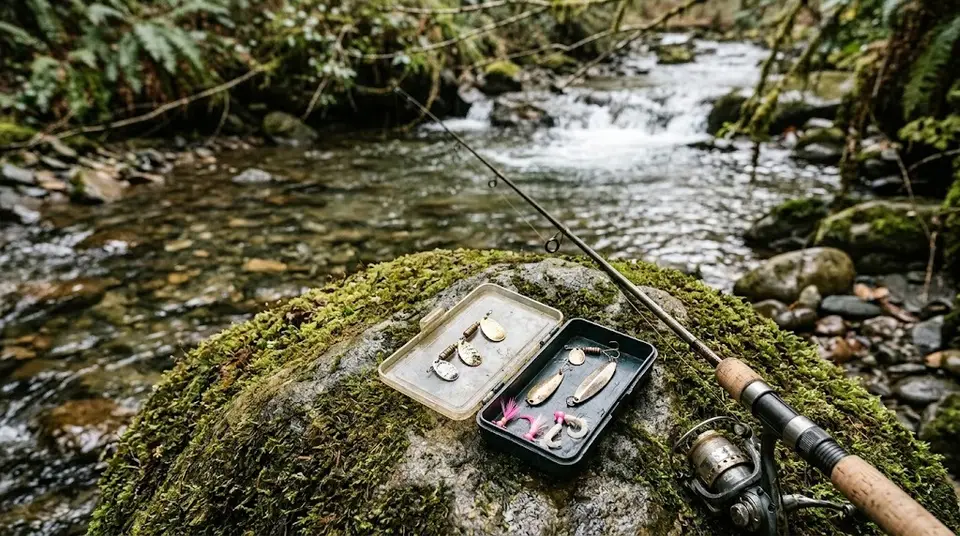
Spoons come in several shapes, and they are not interchangeable.
- Casting spoons are wider and lighter for their size. They wobble on a steady retrieve and are thrown out and reeled back.
- Flutter spoons are long and thin. They glide and swing on a slow fall, which suits suspended fish.
- Jigging spoons are thick and narrow, with most of their weight in a small body. They sink fast, stay under the rod tip in deep water and wind, and give a short, erratic flash on the drop.
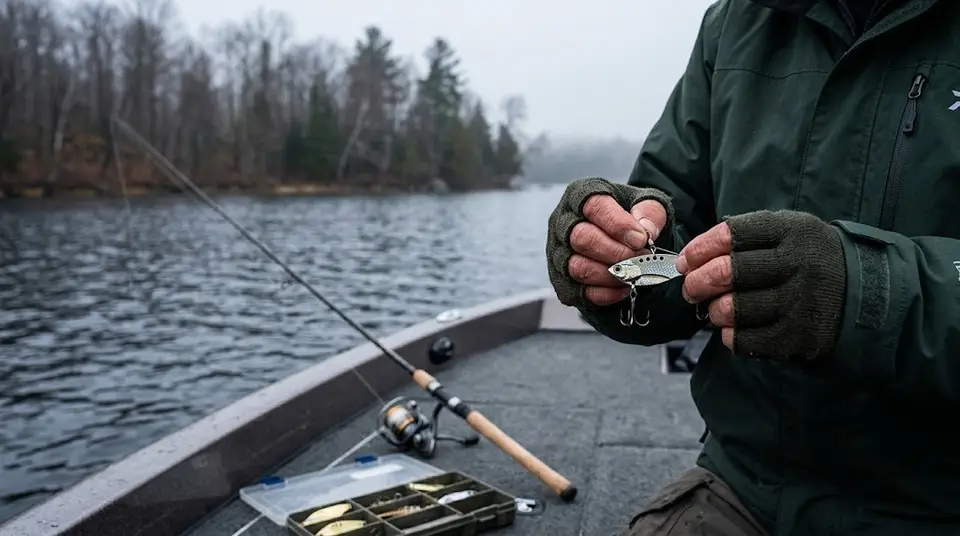
A blade bait is fished with almost the same lift-and-fall. The blade vibrates on the lift, while a spoon does its work on the fall, so many anglers keep both rigged and switch when one goes quiet.
Rigging and tackle
A medium or medium-heavy spinning or baitcasting rod with a fast tip works well, since you need to feel the lure tick down and set the hook through a long line. Braided main line with a fluorocarbon leader is a common setup: the braid transmits strikes on the fall, and the leader is less visible near the fish.
Tie the spoon to a small snap or split ring rather than directly to the eye. That lets the spoon swing freely, and a tight knot against the metal can wear through when the lure flips. Most jigging spoons come with a treble hook on a split ring; some anglers swap it for a single hook or a smaller treble to cut snags in wood and rock.
The lift-and-drop
- Drop to the bottom. Open the bail or press the spool release and let the spoon fall on a slack line until it hits bottom. Reel up the slack.
- Lift sharply. Raise the rod tip quickly, a short distance, so the spoon jumps up off the bottom.
- Follow it down. Lower the rod at about the speed the spoon falls, keeping the line just short of tight. This is the part that matters. A completely slack line hides the bite, and a tight one stops the spoon from fluttering.
- Watch the line. A strike often shows as the line jumping, going slack early, or stopping before the spoon reaches bottom. When anything changes on the fall, set the hook.
- Change the rhythm. If short hops do not get bit, try longer lifts, a few quick pops, or holding it still a moment above the bottom before the next lift.
In very cold water the fish often want less movement. Smaller lifts and a longer pause near the bottom are worth trying before you change lures.
Finding fish to drop it on
A jigging spoon is a vertical lure, so it works best once you know where the fish are. Look for:
- Deep structure such as channel edges, humps, points dropping into deep water and the base of steep banks.
- Schools of baitfish. Shad and other bait gather in tight balls in cold water, and the predators sit under or beside them.
- Places fish hold in winter. Deep holes in reservoirs, warm-water outflows and the edges of river channels are classic spots. Our winter fishing guide covers where fish go as the water cools.
Our walleye profile covers where that species holds through the seasons, which is the first thing to know before you drop a spoon for it.
Using sonar with a spoon
If you have a fish finder, a jigging spoon is a direct way of putting what you see on screen to work. Hold the boat over a school, drop the spoon, and you can often watch it fall on the display and see fish rise to it. Our page on reading sonar explains how to tell bait balls, single fish and the bottom apart, which makes it far easier to know you are dropping on fish.
Without sonar, work deep structure methodically: drop, fish a few lifts, move a short distance, and repeat until you find a spot that produces.
Losing fewer spoons
Spoons are cheap compared with many lures, but they do snag. When one hangs up, let the line go slack for a moment, then pop the rod tip; the weight of the spoon falling back can free it. Moving the boat to the opposite side of the snag and pulling from a new angle often works too. A heavier leader than usual helps in rocky places, and a single hook snags less than a treble.
Through the ice, the same lift-and-drop is one of the main ways to fish a small spoon. Check local ice conditions and your state agency’s advice before going out.
Recommended Gear on Amazon
- Jigging spoons - browse current options and reviews on Amazon.
- Fluorocarbon leader line - browse current options and reviews on Amazon.
- Fishing snaps - browse current options and reviews on Amazon.
As an Amazon Associate, we earn from qualifying purchases - at no extra cost to you. This helps us keep producing free, in-depth guides.