Jointed Swimbait
A multi-segment hard or soft swimbait that swims with a lifelike wriggle on a straight retrieve - the easiest big-profile lure to fish, and a proven big-bass producer.
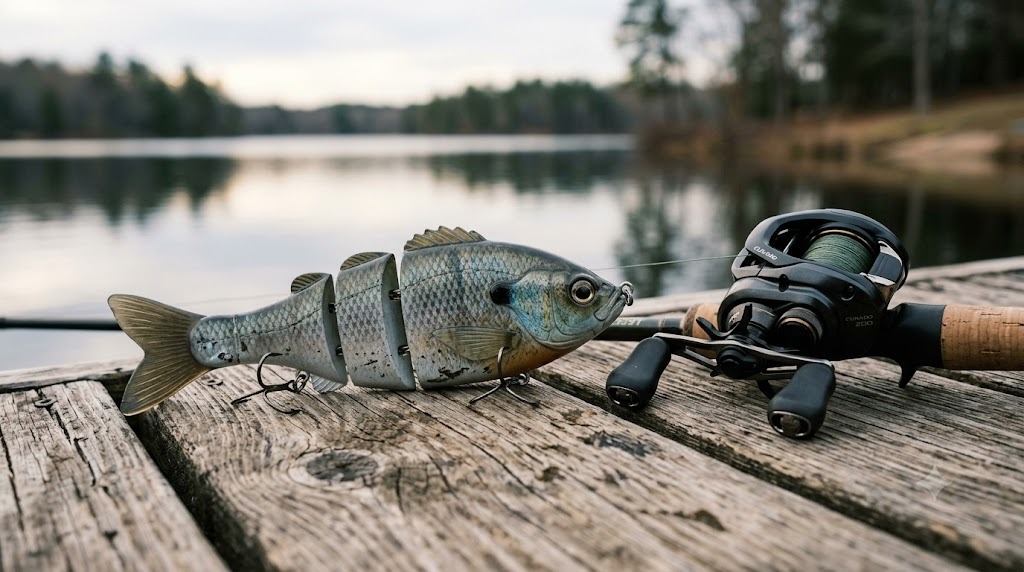
Where a glide bait wanders in wide S-turns, a jointed (multi-section) swimbait swims: its two, three or more hinged segments ripple in a tight, side-to-side wriggle that looks uncannily like a real swimming baitfish. Best of all, it fishes on a simple straight retrieve, making it the most beginner-friendly of the big swimbaits. Cast it out, reel it steady, and let the segmented body do the work of imitating a fleeing shad or trout.
What it is & how it works
A hard or soft-bodied swimbait built in multiple hinged sections so it flexes head-to-tail as it moves. Water pressure on the segments creates a natural swimming wriggle on a steady retrieve, no rod work required. The lifelike, undulating profile mimics real forage closely enough to fool wary and large fish that reject stiffer lures.
When & where it shines
Around baitfish schools, points, ledges, docks and open water, in both clear and lightly stained conditions. It shines any time bass are keyed on swimming baitfish and you want a big, natural profile that's easy to present. Slow-sinking and sinking versions cover different depths, from just under the surface to deep structure.
How to fish it
The core presentation is a simple steady retrieve at the depth the fish are holding - let it sink to the level you want, then reel it back at a pace that keeps the wriggle alive. Slow-roll it deep, wake it just under the surface, or add occasional pauses and speed changes to trigger followers. Count it down to find the strike zone and keep it there.
Tackle & rigging
Medium-heavy to heavy rods matched to the bait's weight, a reel with good line capacity, and fluorocarbon or braid. Hard multi-jointed baits come pre-hooked; soft-bodied line-through and paddle-tail styles rig on jig heads or weighted hooks. Check hooks and split rings on hard baits before a big-fish trip.
Colors & sizes
Shad, trout, herring and bluegill patterns matched to local forage; smaller sizes for numbers and pressured fish, larger for trophies. Clear water favors natural tones; stained water tolerates a bit more contrast. Sink rate should match the depth you need to fish.
Common mistakes
Reeling so slow the segments stop swimming, or so fast the action washes out, fishing it at the wrong depth for where the bait is holding, ignoring followers instead of triggering them, and skimping on hook and split-ring quality on a lure that hooks big fish.