Glide Bait
A big one-jointed hard swimbait that glides in wide S-turns on a slow retrieve - a trophy-hunter's lure that triggers giant bass with lifelike, side-to-side wandering.
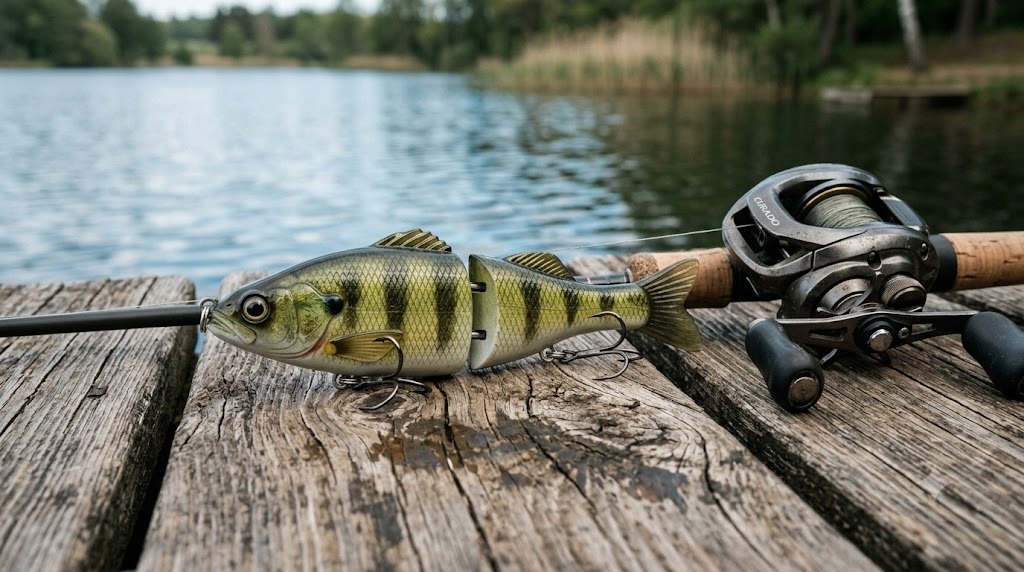
The glide bait is a trophy lure, plain and simple. A large single-jointed hard body, worked with a slow, rhythmic retrieve, it swings in long, hypnotic S-turns - gliding left, then right - like a wounded or unsuspecting baitfish wandering through open water. Big fish that ignore smaller lures will track a glide bait across a flat and crush it. It demands patience and produces fewer bites, but the ones it gets are often the biggest of the season.
What it is & how it works
A one-jointed (sometimes multi-piece) hard swimbait with a wide, gliding action. A cadence of pull-and-pause or steady reeling with rod twitches makes the head kick and the body glide wide to alternating sides. That sweeping, unpredictable S-track imitates a relaxed or vulnerable baitfish and reads as an easy, worthwhile meal to a large predator.
When & where it shines
Clear water where fish hunt by sight, pre-spawn and fall when big bass feed on larger forage, around bait schools, points, flats and open water near cover. It shines on lakes with big fish and a good baitfish base, and on pressured trophy waters where a huge, natural, slow-moving profile draws strikes that faster lures can't.
How to fish it
Cast out and let it get down, then work a rhythmic retrieve - steady reeling for a metronome glide, or slow sweeps and pauses of the rod to widen the kicks. The pause is key: a glide bait suspending or slowly sinking between glides often draws the eat. Watch for followers and add a twitch or speed change to trigger a trailing fish. Vary cadence until you find the day's mood.
Tackle & rigging
A heavy or medium-heavy swimbait rod with backbone, a strong reel, and stout fluorocarbon or braid to handle the weight and big fish. These lures are heavy, so balanced, purpose-built tackle prevents fatigue and blown casts. Check and upgrade split rings and hooks; a trophy on a glide bait tests every component.
Colors & sizes
Natural shad, trout, bluegill and baitfish patterns for clear water; larger sizes for big-fish waters, smaller "downsized" glides on pressured lakes. Match the profile to the dominant forage. Slow-sinking versions cover mid-depths; match size and sink rate to how deep the fish are holding.
Common mistakes
Reeling too fast and killing the glide, giving up after a few fishless casts on a low-numbers lure, ignoring followers instead of triggering them with a speed or direction change, and using tackle too light to cast the weight or land the caliber of fish this bait attracts.