How to Fish a Blade Bait
A blade bait is a thin metal lure that vibrates hard on a short lift, which makes it a cold-water lure for walleye, smallmouth and white bass. How to rig it, the lift-and-fall retrieve, where to use it and how to lose fewer of them to snags.
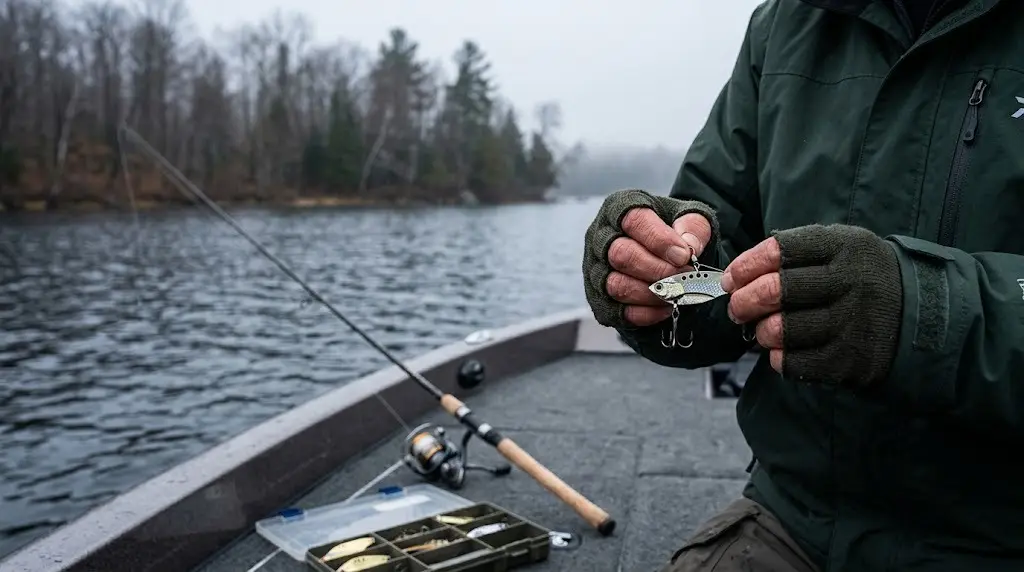
A blade bait is fished with short lifts off the bottom: cast it, let it sink, raise the rod tip until you feel the lure buzz, then let it fall back on a tight line. Most bites come as the lure drops. That one motion is nearly the whole technique, and it is why blade baits come out when water turns cold in late autumn and fish hold deep and close to the bottom. They are a standard lure for walleye, smallmouth bass and white bass at this time of year, and they cost little enough that a beginner can try one without a big outlay.
What a blade bait is
A blade bait is a thin, flat piece of metal shaped like a small baitfish, with a weighted belly at the front and treble hooks hanging underneath. Along the back there are usually two or three small holes for the snap. When you pull it upward through the water, the flat body shakes from side to side very fast. You feel it in the rod as a buzz, and fish detect it through their lateral line as well as by sight.
The weight sits low and forward, so the lure sinks quickly and nose-down. That lets you get it into deep water fast and keep it there, which matters in cold weather when fish move little and feed close to the bottom.
Blade baits come in a range of sizes. Lighter ones suit shallower water and slower drops; heavier ones get down in deeper water or current. Colour is less important than with many lures, because the vibration does a lot of the work. Silver, gold and a natural baitfish colour cover most situations.
Rigging it
- Use a snap. Clip the lure on with a small snap rather than tying straight to the hole. The snap lets the blade swing freely, and it lets you move between the holes on the back quickly.
- Pick the hole. The front hole gives a tighter, subtler shake that starts with less pull. The back hole gives a wider, harder shake but takes more lift to get going. Start in the middle hole if there are three.
- Line. A low-stretch line helps you feel the buzz and the bites. Many anglers use braid with a fluorocarbon leader, which keeps feel high and puts a less visible line in front of the lure. Our fishing line guide covers how the three main line types differ and when a leader makes sense.
- Rod. A spinning or casting rod with a sensitive tip and some backbone. You want to feel the lure start vibrating and still have enough power to drive treble hooks home.
The lift-and-fall retrieve
- Cast and let it sink. Count it down, or watch the line until it goes slack. That tells you the lure is on the bottom.
- Lift. Raise the rod tip smoothly from about the nine o’clock position up toward eleven. As soon as you feel the lure start to buzz, you have moved it far enough. A lift that is too big pulls it out of the fish’s zone.
- Fall on a semi-tight line. Lower the rod and follow the lure down. Keep just enough tension to feel it. A totally slack line hides bites; a tight line stops the lure falling naturally.
- Reel up slack and repeat. Take in the slack line, pause briefly on the bottom, then lift again.
The bite usually comes on the fall and often feels like the lure stopped early, a small tick, or a sudden heaviness on the next lift. If anything feels different, set the hook.
In very cold water, shorten everything: smaller lifts, longer pauses, slower overall. On days when fish are more active, a quicker rhythm or even a slow steady retrieve that keeps the blade buzzing can work.
Where to use it
Blade baits shine anywhere fish gather near the bottom in deep water:
- Deep edges and drop-offs next to shallow flats, where fish slide down as the water cools.
- Channel bends and holes in rivers, cast upstream and worked back with the current.
- Rock piles, humps and points, especially where a fish finder shows baitfish nearby.
- Under the boat, fished vertically with the same lift-and-fall motion. This is also how many anglers use them through the ice.
The season matters too. After fall turnover mixes a lake, fish spread out and then settle deeper as the water keeps cooling. Cold fish tend to feed less often, which suits a lure you can keep working in one deep spot.
Losing fewer lures to snags
Treble hooks and a lure that lives on the bottom will snag. A few habits keep losses down:
- Lift sooner on rocky bottoms. Let the lure touch, then start the next lift right away rather than letting it settle into cracks.
- Swap trebles for single hooks or remove the rear treble where snags are bad and local rules allow. You may lose a few fish, and you will lose fewer lures.
- Use the slack trick. When it hangs up, give a little slack line and then pop the rod sharply. The weighted nose often flips the lure free.
- Check hooks after snags. Bent or dull points cost fish. A small file fixes most of them on the spot.
When it is the right lure
Reach for a blade bait when water is cold, fish are deep, and slow bottom presentations like a jig are getting few bites. Its buzz covers more water than a jig and draws fish from farther away. It is less useful in heavy weeds or thick wood, where those trebles will hang up on nearly every cast.
Before any cold-water trip, check the regulations for the water you plan to fish, including any hook rules. Seasons, limits and gear rules differ by state and by water body.
Recommended Gear on Amazon
- Blade baits - browse current options and reviews on Amazon.
- Fishing snaps - browse current options and reviews on Amazon.
- Hook sharpener - browse current options and reviews on Amazon.
As an Amazon Associate, we earn from qualifying purchases - at no extra cost to you. This helps us keep producing free, in-depth guides.