Vintage tackle collecting.
Fishing tackle from before the middle of the last century was made largely of wood, brass, nickel silver and bamboo, by workshops small enough that the maker's name meant something. A lot of it survived, because tackle gets kept in sheds and attics rather than thrown out, and a lot of it still works.
Collecting it is a quiet hobby built on looking closely: at hardware styles, at paint, at the marks stamped into a reel foot. This page covers what people collect, how pieces are identified and dated, and the two things that ruin more old tackle than anything else - cleaning it too hard and storing it badly.
No prices here, and no talk of what anything is worth. That is a different conversation and it is not the reason most people do this.
Old reels
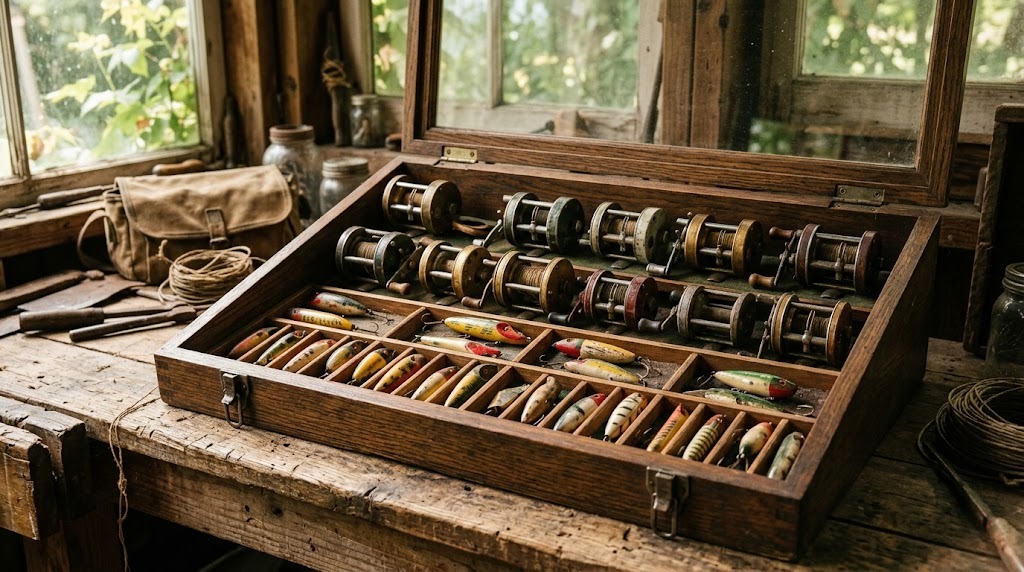
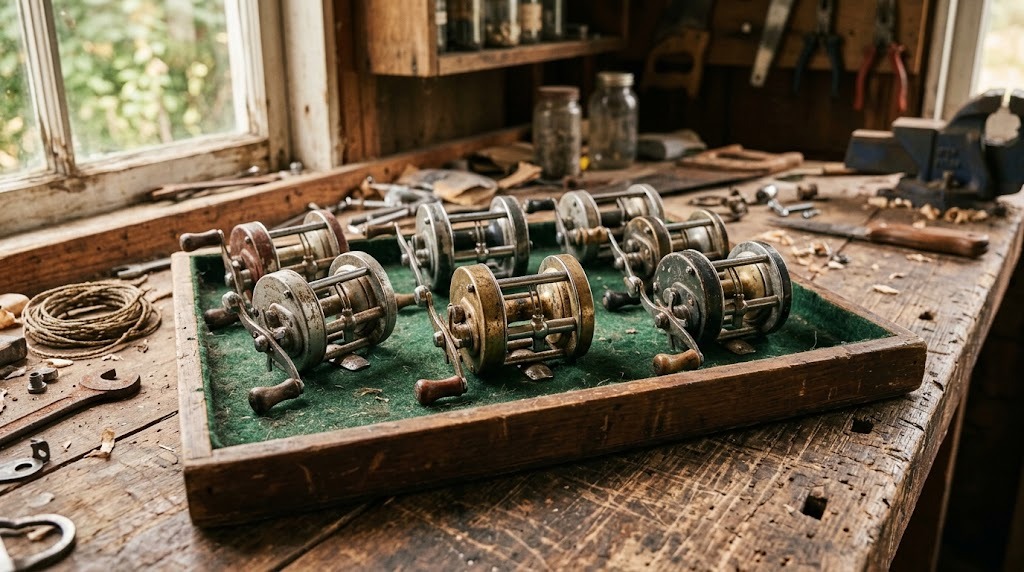
Reels are where most collections start, because a well-made one is a machine you can hold and work. The early Kentucky baitcasters and the level-wind reels that followed them, the early fly reels with their simple click-and-pawl drags, the big saltwater star drags - all of them show their engineering openly in a way modern sealed reels do not. What collectors look at is originality: matching side plates, the correct foot, an unbroken handle, and mechanics that still run smoothly. A reel that has been apart and put back together with the wrong screws is a different object from one that has not.
Wooden lures
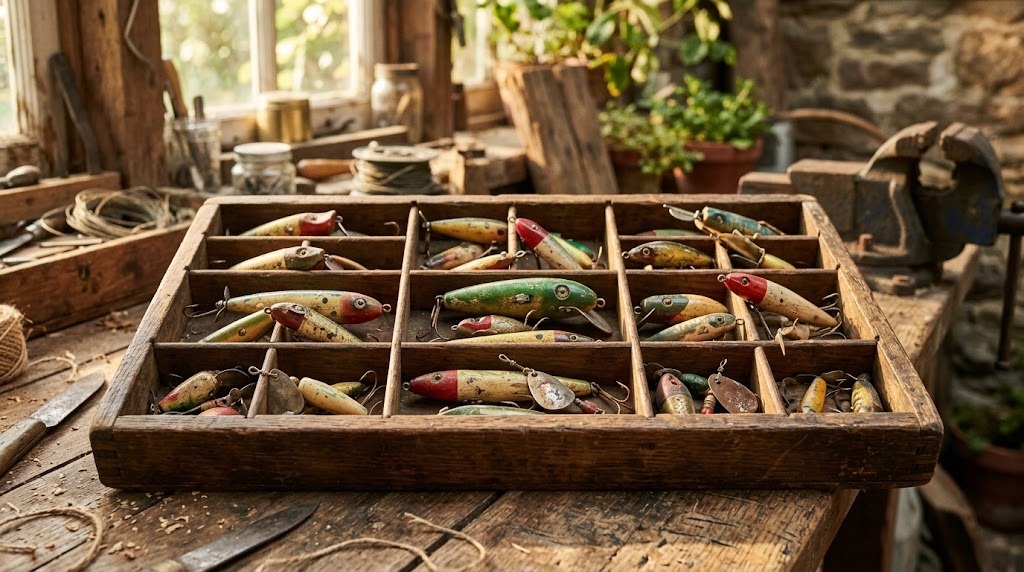
The wooden plug era ran from the 1890s to the middle of the twentieth century and produced thousands of designs, most of them from small workshops. Collectors sort them by maker, by model and by the details that date a particular run: glass eyes versus painted, the shape of the hardware, the style of the lip. Original paint in honest condition, chips and all, is what people want; a repaint destroys most of what makes an old plug interesting, however tidy it looks afterwards. The boxes are collected too, sometimes more keenly than the lures.
Split-cane rods
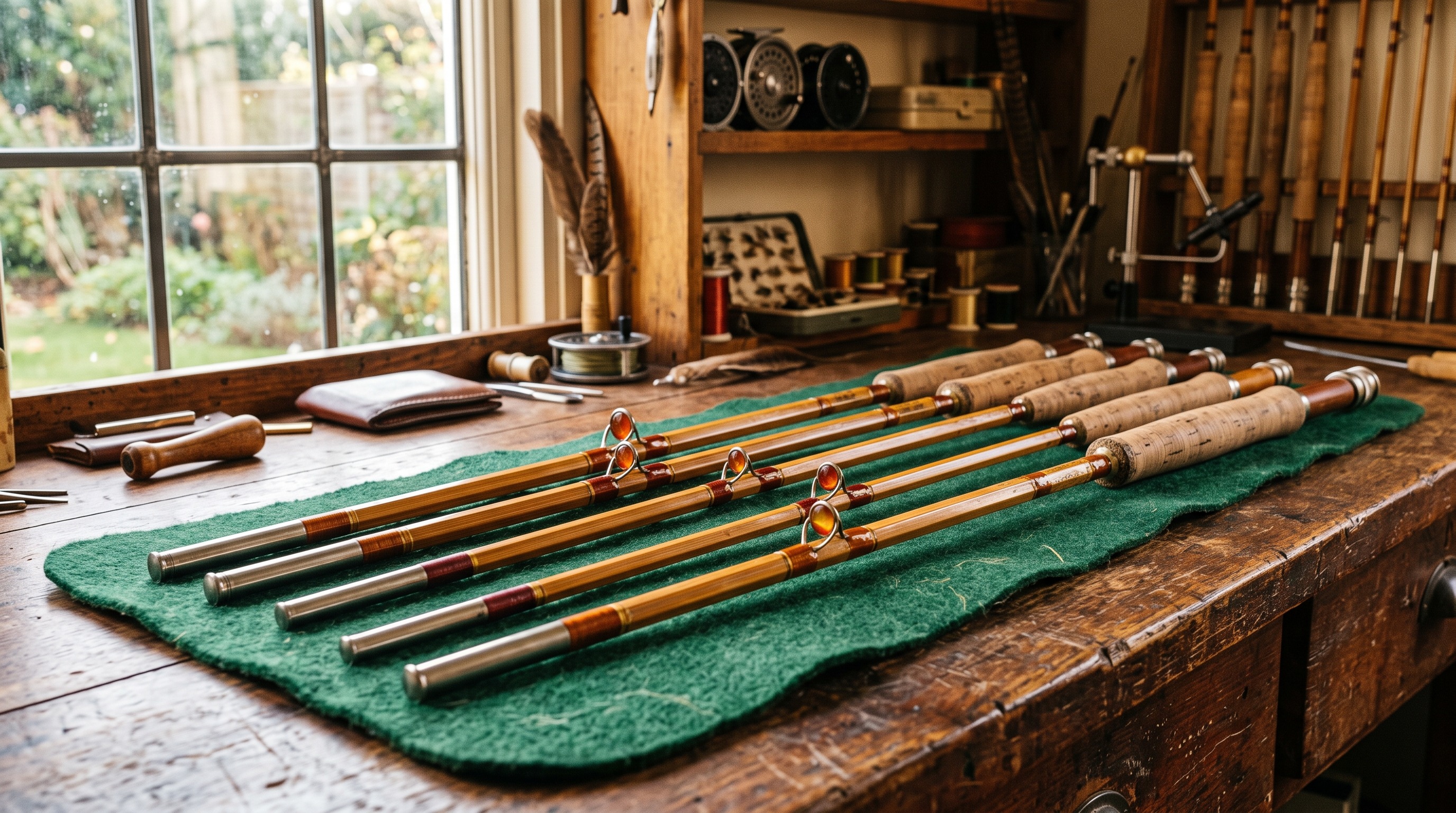
A split-cane fly rod is six triangular strips of Tonkin bamboo planed to a taper and glued into a hexagon, and the good ones are extraordinary objects. Collectors look at the maker, the taper, the wraps and the ferrules, and above all at whether the rod has taken a set - a permanent bend from being stored strung or leaned in a corner. Agate stripping guides, intermediate wraps and the original bag and tube all matter. Many are still perfectly fishable, and the argument about whether to fish them or shelve them never ends.
Dating and identification
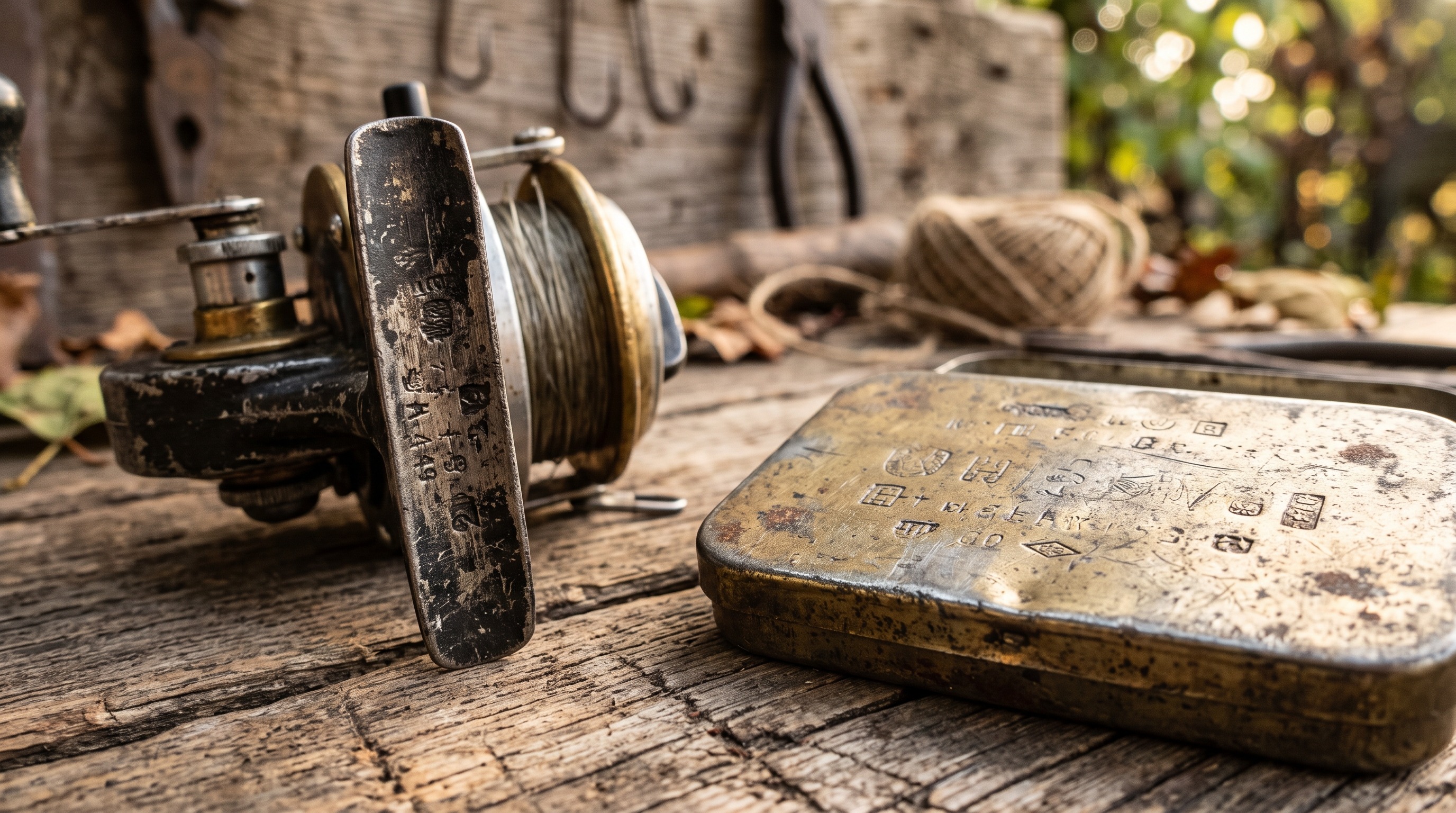
Identification is detective work. Maker's marks are stamped on reel feet, moulded into hardware and printed on boxes; catalogue reprints show which model had which features in which year; patent numbers give a date the design was registered, which is a floor rather than an exact answer. Hardware style changes over time and is often the giveaway on an unmarked lure. Collector clubs and reference books do most of the heavy lifting here, and a name that seems obvious is worth checking twice.
Cleaning without killing the patina
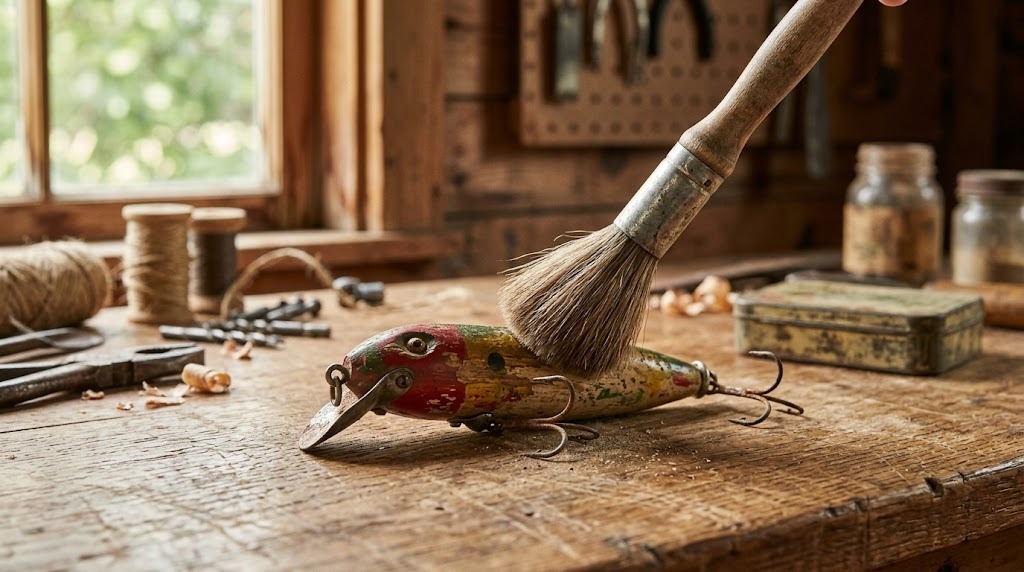
The single biggest mistake in this hobby is over-cleaning. Patina is the oxidation, wear and honest dirt that record an object's life, and it cannot be put back once it is polished off. The safe approach is minimal: a soft brush for dust, a barely damp cloth on painted surfaces, and nothing abrasive anywhere. Metal polish, solvents and any kind of stripper will remove original finish along with the tarnish. If something needs more than dusting, stop and ask somebody who collects the same thing before you touch it.
Storing a collection
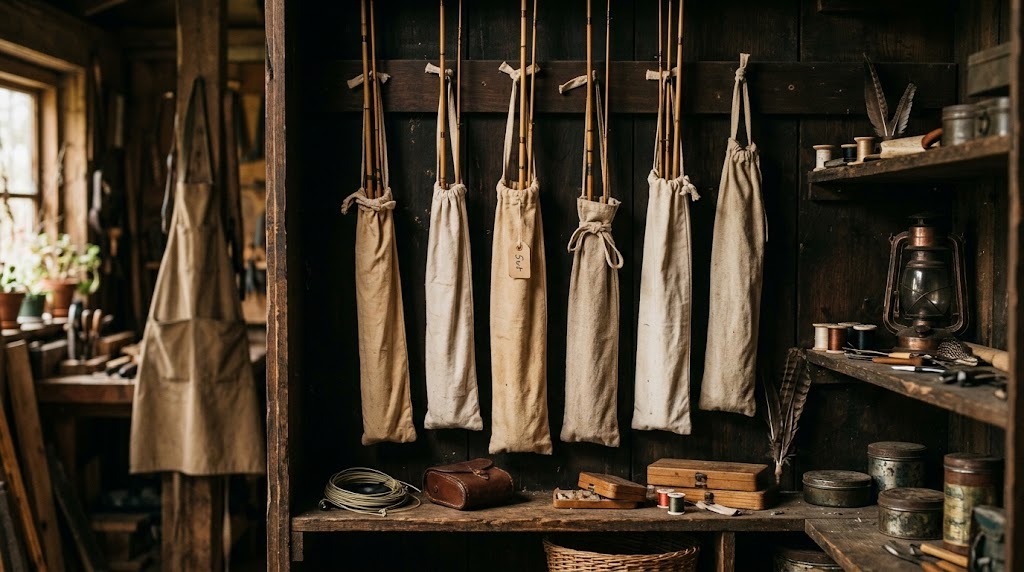
Old tackle dies of damp, light and heat. Wooden lures crack when they dry out too fast and paint fades in direct sun; reels corrode from salt residue and from being stored with the drag under tension; cane rods take a set if they are stood strung or leaned against a wall, and the varnish clouds in humidity. Stable temperature, moderate humidity, out of the light, rods flat or hanging by the tip, reels with drags backed off. A collection in a loft or a garage will be worse every year.
Why people collect
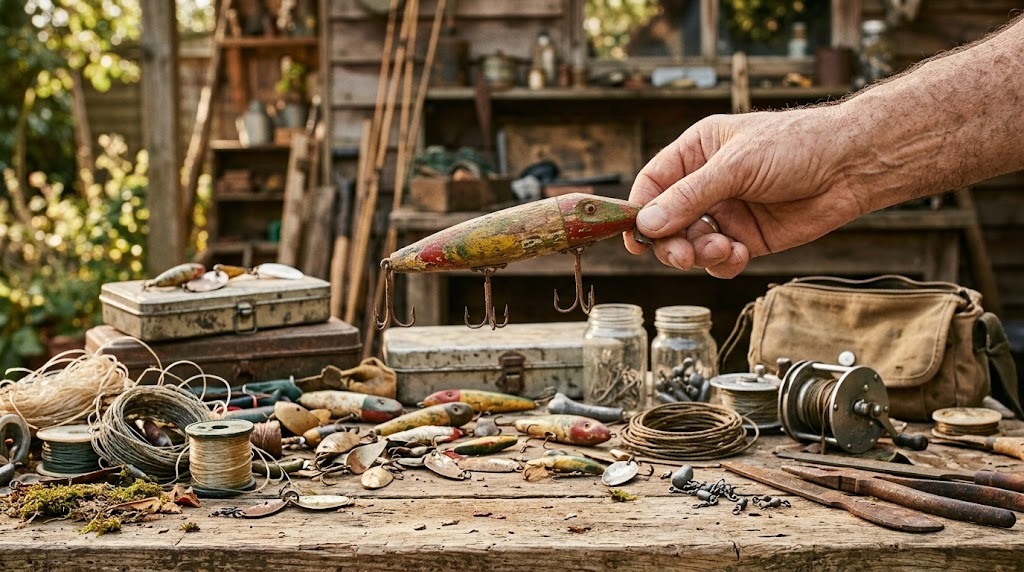
Worth saying plainly: this is a hobby, not an investment plan. People collect old tackle because they like holding a thing that was made carefully by somebody whose name is on it, because it connects them to how the sport was fished a century ago, and because the hunt through boxes at a boot sale is enjoyable in itself. Some pieces are sought after and some are not. Buy what you actually want to look at, and let anything else that happens be a bonus.