Nets, knots and rope work.
Before nylon there was twine, and every net on every boat was made and mended by hand with a wooden shuttle and a gauge stick. The knot has not changed. Neither has the shuttle. It is one of those crafts where a photograph from a hundred years ago and a photograph from last week are indistinguishable.
Alongside the practical netting sits the ornamental ropework sailors invented to fill long watches - monkey's fists, Turk's heads, woven mats made from rope too worn to trust aloft. This page covers both, plus the splices that hold everything together.
It is slow, repetitive and oddly absorbing. A landing net bag is an evening or two. A full net is a winter.
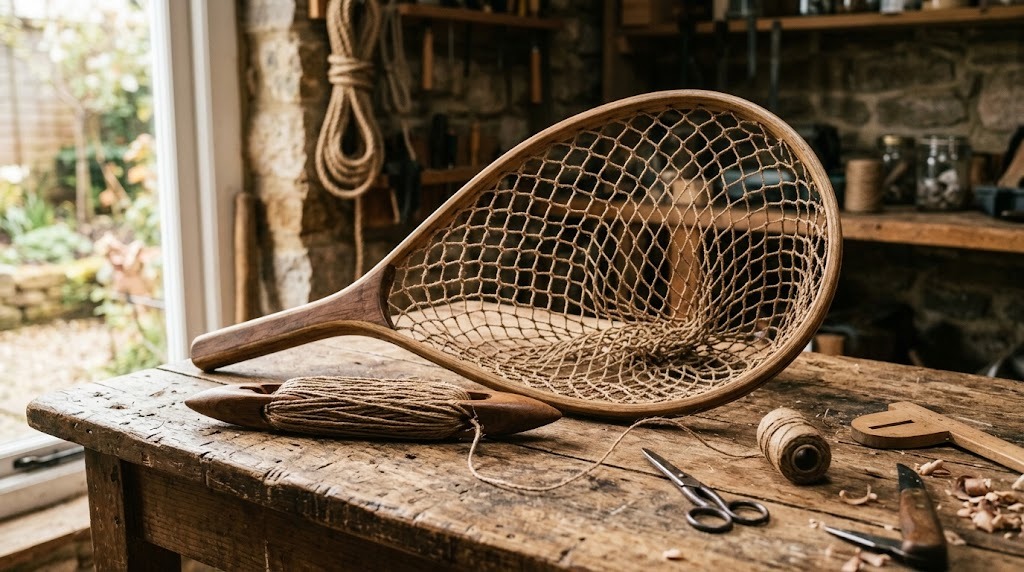
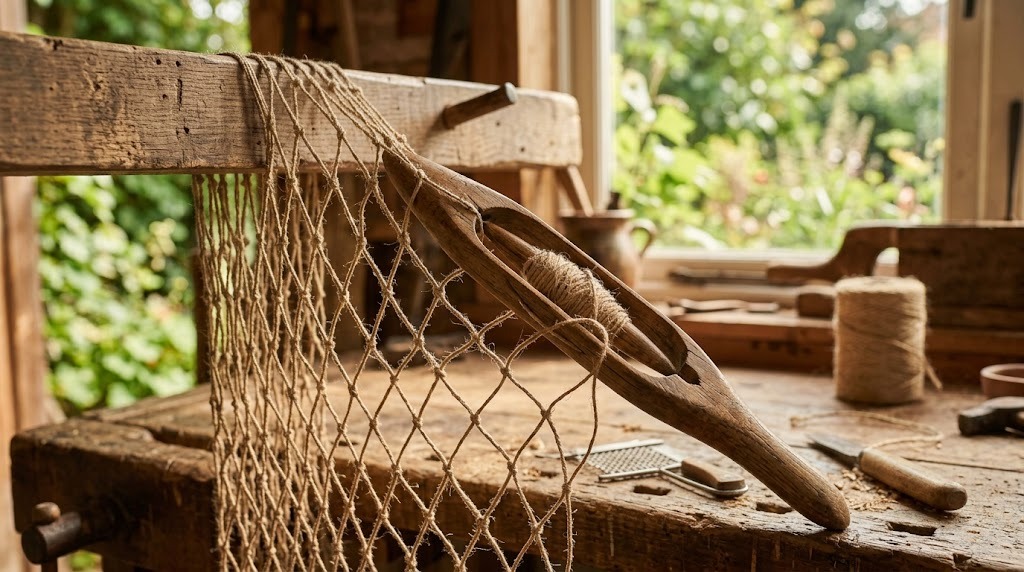
Netting a landing net bag
Net making is one repeated knot - the sheet bend, tied row after row - with a flat wooden shuttle holding the twine and a gauge stick setting the mesh size. You cast on a row of loops on a bar, then work back and forth, each new loop knotted into the one above. The gauge is what keeps every mesh identical and is the whole reason the finished bag hangs evenly. A landing net bag is a good first project because it is small, the mesh is coarse enough to see what you are doing, and a mistake is three rows to undo rather than thirty.
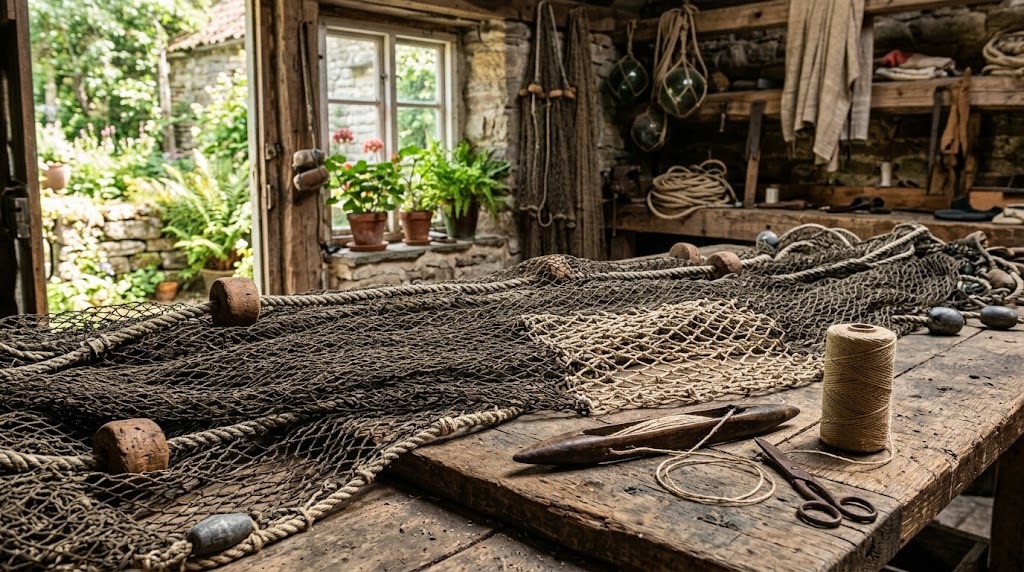
Mending a net
Repair is netting in reverse, and it is a more useful skill than making from scratch because nets tear constantly. The damaged section is cut back to clean meshes on all sides so you are working into whole loops, then filled in row by row with the same knot, matching the mesh count exactly or the net pulls out of shape around the patch. A neat mend is invisible in use and stronger than the twine round it. Fishermen everywhere did this on the quay between tides, and it is still the fastest way to keep a net alive.
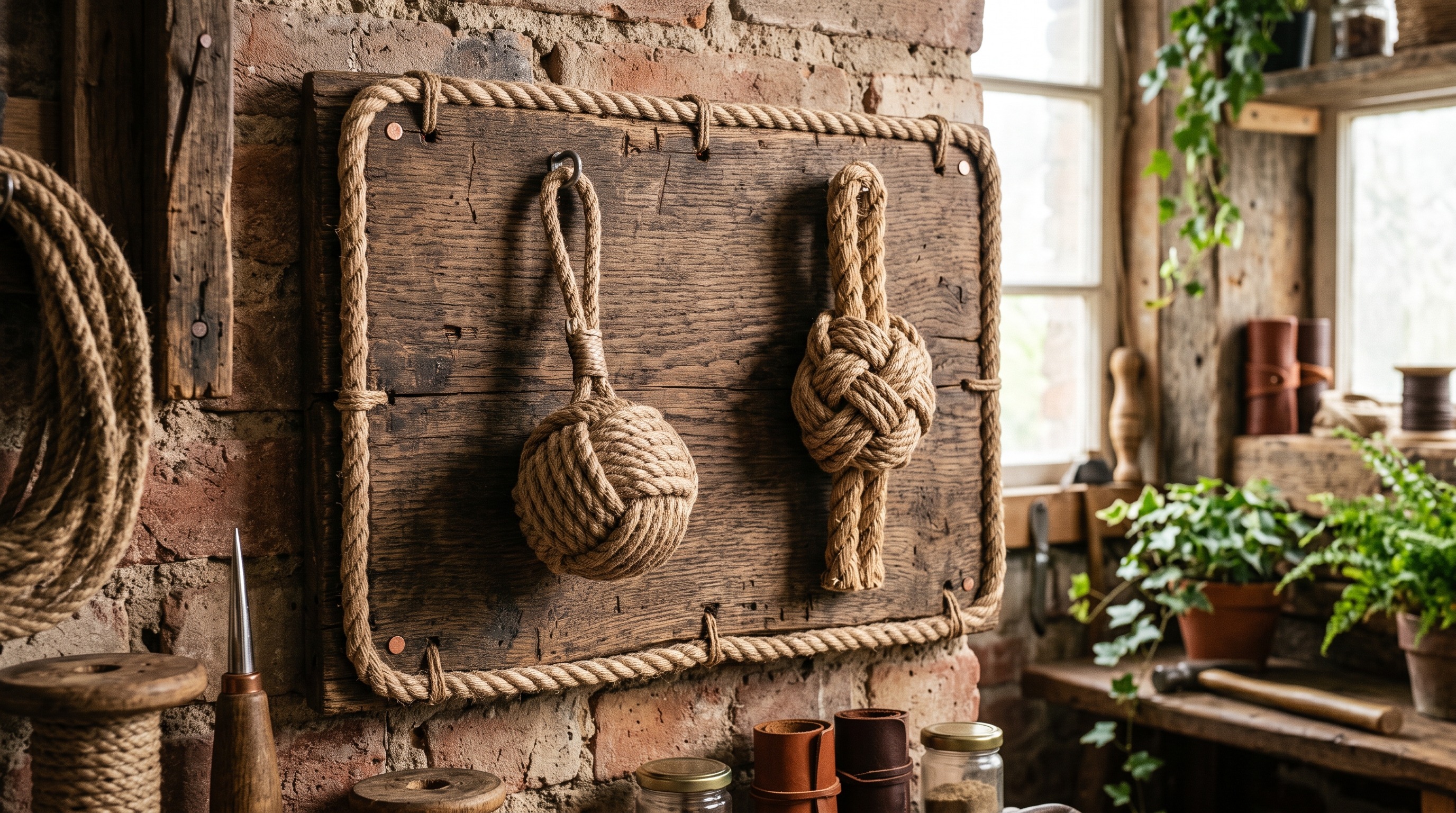
Decorative knots
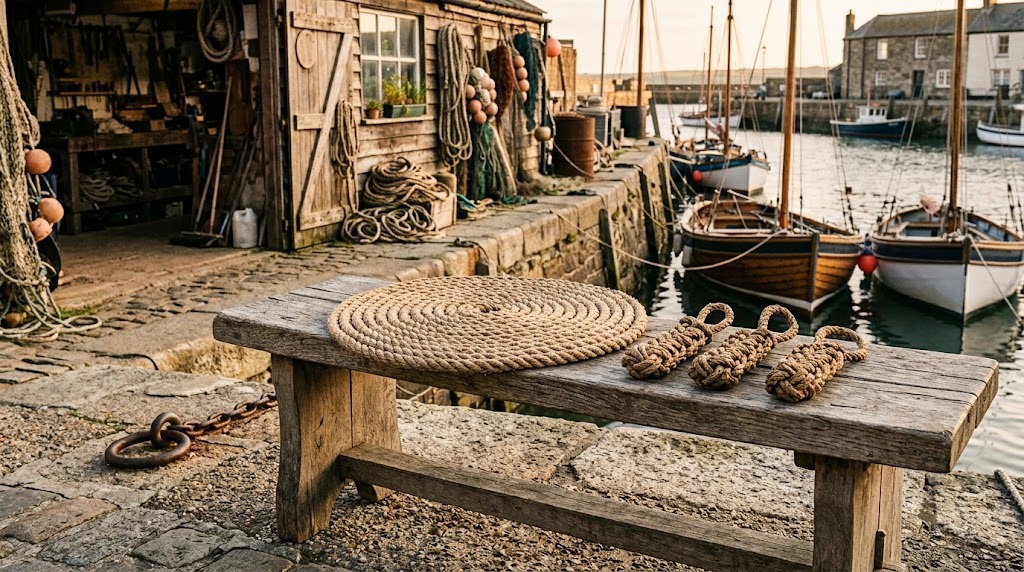
The monkey's fist, the Turk's head, the star knot and the various sennits are the ornamental end of ropework, developed by sailors with time on their hands and no other entertainment. A monkey's fist was originally a heaving-line weight, wrapped in three planes around a core; a Turk's head is a continuous woven ring used to mark a wheel spoke or dress a handle. None of them is hard once you can follow a diagram, and all of them look far more complicated than they are.
Splices and rope mats
A splice is a join made by tucking strands back into the rope itself, and it keeps far more of the line's strength than any knot does. The eye splice, the back splice and the short splice cover most needs. From the same skills come the woven rope mats and the plaited fenders that used to be made from worn-out running rigging - the traditional way a boat consumed its own scrap. Three-strand natural or synthetic rope is the material; modern braided line splices differently and needs its own tools.
Wrapping handles and grips
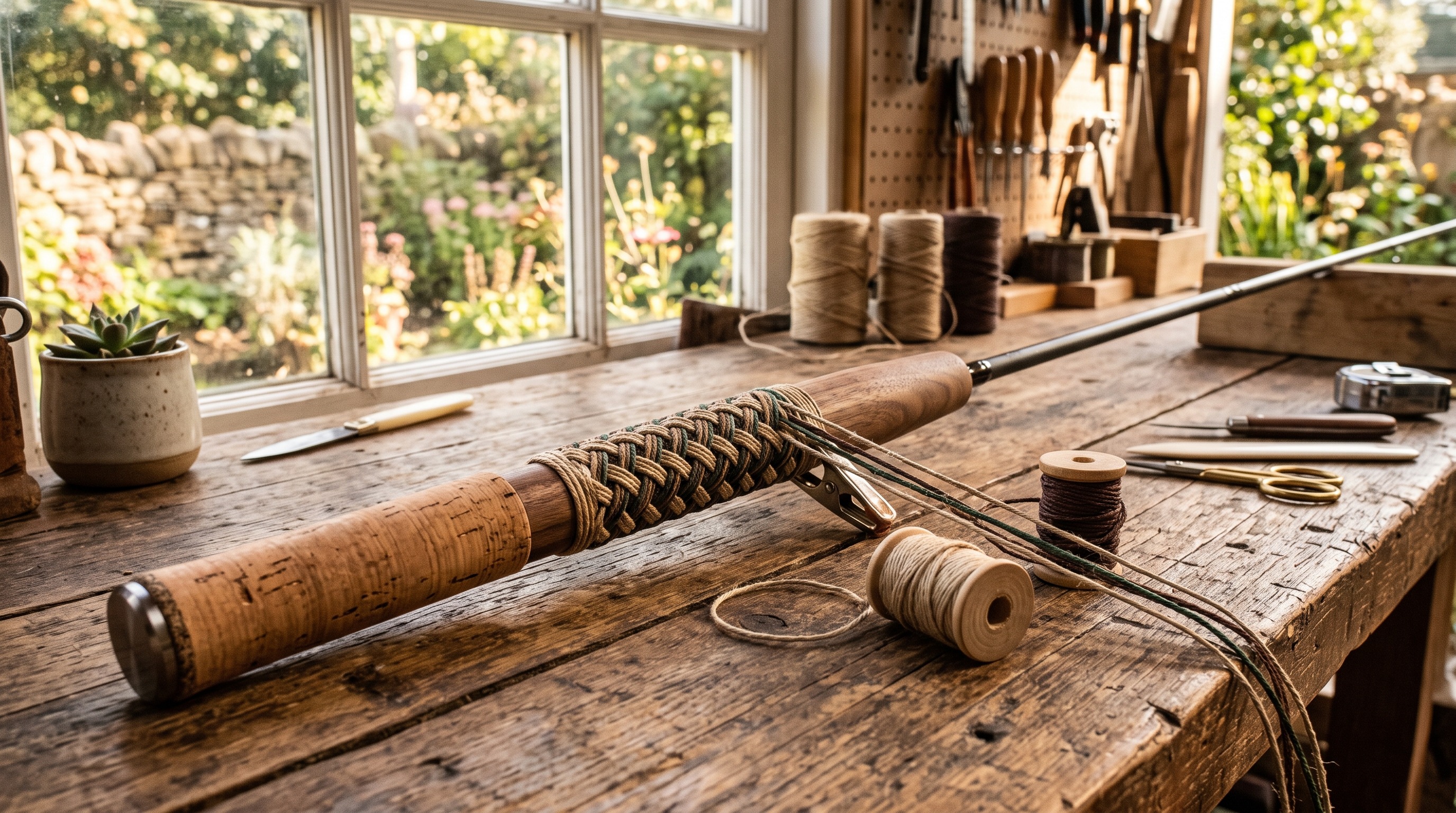
Cord wrapping a net handle, a gaff or a rod grip is functional and decorative at once: it adds purchase when wet, protects the material underneath, and looks like somebody cared. The common approaches are a tight spiral whipping finished with a hidden tuck, a French hitching that spirals as it goes, and a full Turk's head at each end to close the wrap. It is a job for an evening, uses very little material, and is easily undone and redone until the tension looks even.
Where nets may be used
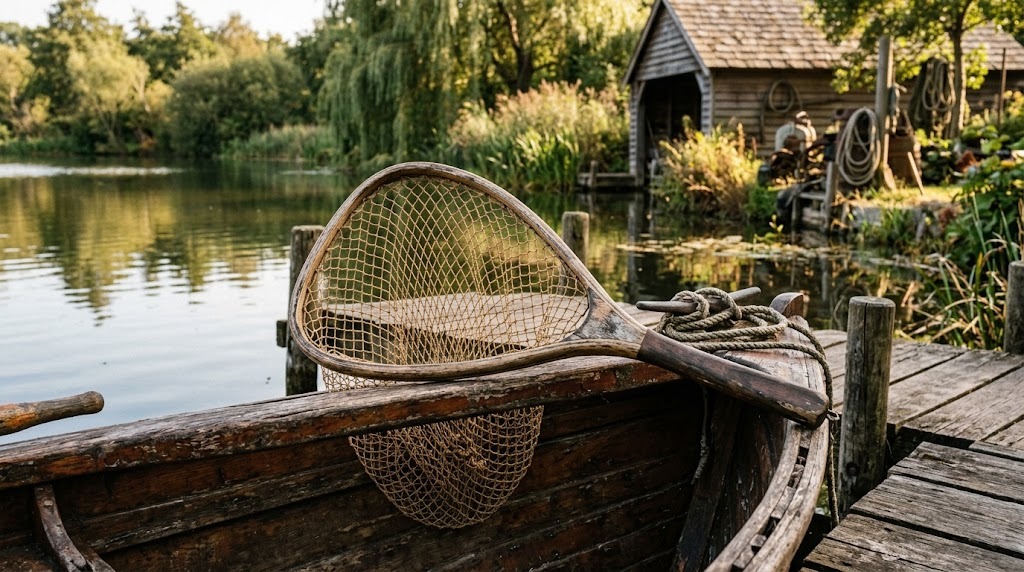
Making a net is unregulated almost everywhere. Using one is not. Gill nets, seines, cast nets and traps are restricted or prohibited across large parts of the world for recreational anglers, with rules that vary by water body, by species and by season, and the penalties are serious. A landing net for fish you caught on a rod is a different thing entirely from a net that catches fish itself. Know which category you are in and check the current regulations for the specific water before anything goes in it.