Southern Flounder
The Southern Flounder is one of the most prized inshore flatfish along the US Gulf and South Atlantic coasts, valued for both rod-and-reel fishing and gigging.
Last reviewed: October 2026
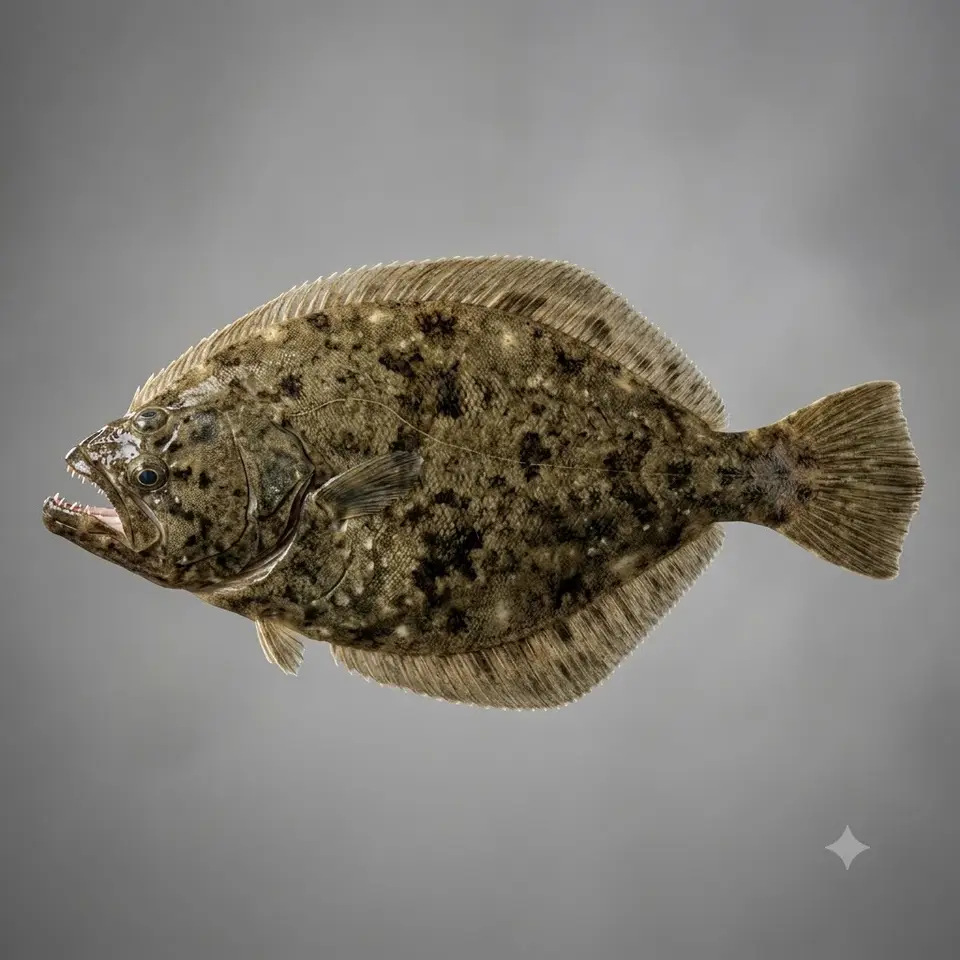 AI illustration
 Overview
The Southern Flounder is one of the most prized inshore flatfish along the US Gulf and South Atlantic coasts, valued for both rod-and-reel fishing and gigging. It is a large left-eyed flatfish, meaning both eyes sit on the left side of the body when the fish faces you with its dark side up. Anglers pursue it in estuaries, tidal creeks, and around passes, especially during its famous fall run.
Identification
Look for a flat, oval, left-eyed body colored olive to brown on the eyed side and white underneath, capable of rapidly changing shade to match the bottom. Unlike the Gulf and Summer flounders, the Southern Flounder lacks distinct large ocellated (eye-like) spots ringed in white, instead showing diffuse dark blotches and small spots. The mouth is large with sharp teeth, and the body can grow noticeably bigger than most other US flounders, with large females commonly exceeding several pounds.
Range & Habitat
It ranges from roughly North Carolina south to Florida on the Atlantic coast (it is largely absent from the tropical waters of extreme south Florida and the Keys) and continues throughout the Gulf of Mexico to northern Mexico. It favors soft mud and sand bottoms in estuaries, bays, tidal creeks, marsh drains, and around dock pilings, and tolerates a wide salinity range, often pushing well up into brackish and near-fresh water. Juveniles use shallow estuarine nurseries while adults move to deeper channels and coastal waters to spawn.
Behavior & Diet
Southern Flounder are ambush predators that bury in the bottom with only their eyes exposed, then lunge at prey passing overhead. They feed heavily on small baitfish (menhaden, mullet, mud minnows) plus shrimp and crabs. They orient to current and structure, positioning where tidal flow funnels bait past their hiding spot.
Best Seasons
Fall is the marquee season, when adults stage a spawning migration from estuaries toward the coast, concentrating at passes, inlets, and channel edges. Spring and summer offer steady action on the flats and creeks as fish feed actively. The fall run is also prime gigging time on calm nights.
How to Catch Them
Fish slow and near the bottom, dragging or hopping baits and jigs along drop-offs, creek mouths, sandy potholes, and pilings where flounder ambush. When a flounder takes a bait it often "thumps" then holds; give a short pause before setting the hook so it can turn the bait in its mouth. Gigging is popular at night in shallow clear water, walking or poling flats with a bright light and a barbed pole to spot buried fish.
Tackle & Rigs
A medium-light to medium spinning or baitcasting outfit with 10-20 lb line handles most situations. Effective rigs include a Carolina rig or fishfinder rig with live mud minnows, finger mullet, or mullet strips, and jig heads dressed with soft-plastic paddletails or shrimp imitations bounced along bottom. Use just enough weight to keep contact with the bottom in current.
Landing, Handling & Release
Use a net rather than lifting by the line, since flounder can throw a hook at the surface. Mind the sharp teeth and gill plates when unhooking. For released fish, support the body, minimize air exposure, and revive in the water before letting go, as larger females are important spawners.
Table Quality
Southern Flounder is excellent eating, with sweet, mild, delicate white fillets that lend themselves to pan-searing, frying, baking whole, or stuffing. It carries no ciguatera concern in this species. As with any fish, follow local advisories where they apply.
Where Anglers Go Wrong
The most common mistake is setting the hook too fast on the initial thump before the fish has the bait. Anglers also fish too quickly, whereas a slow bottom presentation is key. Keeping every large female rather than releasing some can pressure local stocks that have declined in parts of the range.
Regulations & Conservation
Southern Flounder populations have declined in several states, and managers in areas such as North Carolina and Texas have tightened size limits, bag limits, and seasonal closures in response. Always check your state's current flounder regulations, including any gigging rules and closed seasons, before you fish. Voluntarily releasing large females supports recovery.
FAQ
Q: How can I tell a Southern Flounder from a Gulf flounder? Southern Flounder lack the three prominent white-ringed ocellated spots that Gulf flounder show, and they typically grow larger.
Q: Why should I wait before setting the hook? Flounder often grab and hold bait crosswise before swallowing, so a short pause lets the fish turn it and improves hookups.
Q: Is Southern Flounder safe and good to eat? Yes, it is a mild, delicate, highly regarded table fish with no ciguatera concern; just follow any local consumption advisories.
Tackle for southern flounder
As an Amazon Associate we may earn from qualifying purchases - at no extra cost to you. We link gear types, not sponsors' picks: you choose the exact product. The partner-store link may earn us a commission too.