Spinner Shark
The spinner shark is a slender, fast coastal shark named for its signature feeding move: it charges up through a bait school while rotating on its own axis, and the momentum carries it spinning clear out of the water.
Last reviewed: October 2026
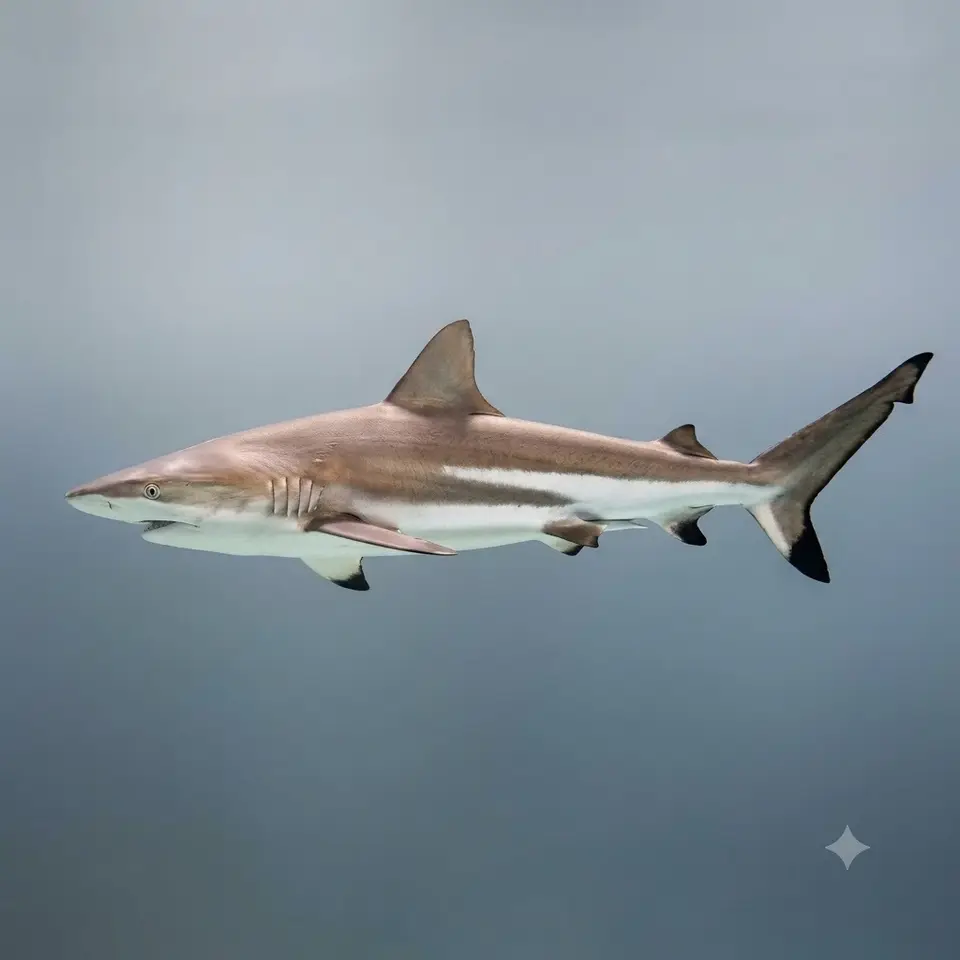 AI illustration
 Overview
The spinner shark is a slender, fast coastal shark named for its signature feeding move: it charges up through a bait school while rotating on its own axis, and the momentum carries it spinning clear out of the water. For anglers it is one of the best light-tackle jumpers in warm US coastal waters, giving blistering runs and repeated leaps. It is frequently confused with the blacktip shark, which shares the same nearshore turf.
Identification
Look for a gray to bronze back, white belly, and a distinct white band along each flank. Fins are dark-tipped, and the key tell is a black tip on the anal fin - blacktip sharks leave that fin unmarked. The spinner also has a longer, more pointed snout and a smaller first dorsal set farther back (over or behind the rear tips of the pectorals). Note that very young spinners may lack the black anal-fin tip.
Range & Habitat
In the US it ranges through the Gulf of Mexico and up the Atlantic coast, common off Florida and the Carolinas in season. It favors nearshore water over the continental shelf, from the surf zone out to deeper coastal grounds, and often travels in large schools.
Behavior & Diet
Spinners feed mainly on small schooling bony fish - menhaden, sardines, herring, mullet - plus squid and small rays. They are open-water hunters that slash through bait balls, which is where the spinning leap comes from. They migrate seasonally, moving north and inshore as water warms.
Best Seasons
Spring and early summer migrations are prime, when big schools push along Florida beaches and up the Southeast coast. Warm-water months are best everywhere in their range; cold snaps push them offshore and slow the bite.
How to Catch Them
Fish nearshore reefs, passes, inlets, and the surf during migration runs. Live or fresh-cut menhaden, mullet, or bluefish on the bottom or under a float works well, and chumming helps draw them in. During heavy spring runs sight-casting to feeding schools is deadly.
Tackle & Rigs
Medium-heavy conventional or spinning gear in the 30-50 lb class handles most fish. Always use a wire or heavy mono bite leader - their teeth cut through line - and non-offset circle hooks to reduce gut-hooking and aid release.
Landing, Handling & Release
Lead with catch-and-release: this is a vulnerable species. Keep the shark in the water alongside the boat, cut the leader close to the hook, and never put fingers near the mouth or gills. Avoid dragging small sharks onto hot decks or dry sand.
Table Quality
The meat is mild and edible if bled and iced immediately and soaked to purge urea (which otherwise turns ammonia-tasting). As a large predator it can carry elevated mercury, so limit consumption; ciguatera is not a notable concern for this species, but mercury is. The FDA's advice about eating fish puts shark among its highest-mercury "choices to avoid" for anyone who is or might become pregnant or is breastfeeding, and for young children.
Habits That Lose Fish
Misidentifying it as a blacktip and vice versa - check the anal fin. Using mono where teeth will part it, and horsing a leaping fish so hard the hook tears free.
Regulations & Conservation
Listed as Vulnerable by the IUCN. In US Atlantic and Gulf waters it falls under NOAA Highly Migratory Species rules (aggregated large coastal sharks), requiring an HMS Angling permit, a minimum fork length, and strict bag limits. Regulations change often - confirm current NOAA and state rules before keeping any shark.
FAQ
Q: How do I tell a spinner from a blacktip shark? Check the anal fin - the spinner has a black tip there, the blacktip does not.
Q: Do spinner sharks really jump out of the water? Yes; they spin through bait schools and the momentum launches them into spinning leaps, sometimes several feet high.
Q: Are they dangerous to eat? The meat is edible but can carry elevated mercury, so eat sparingly and handle it promptly.
Tackle for spinner shark
As an Amazon Associate we may earn from qualifying purchases - at no extra cost to you. We link gear types, not sponsors' picks: you choose the exact product. The partner-store link may earn us a commission too.