Spiny Dogfish
The spiny dogfish is a small, abundant coastal shark that schools in enormous numbers along both coasts.
🗓️ Last reviewed: September 2026
Overview
The spiny dogfish is a small, abundant coastal shark that schools in enormous numbers along both coasts. Once dismissed as a bait-stealing nuisance, it is now recognized as fine table fare - sold as "rock salmon" in British fish-and-chip shops - and a fun, accessible light-tackle shark.
Identification
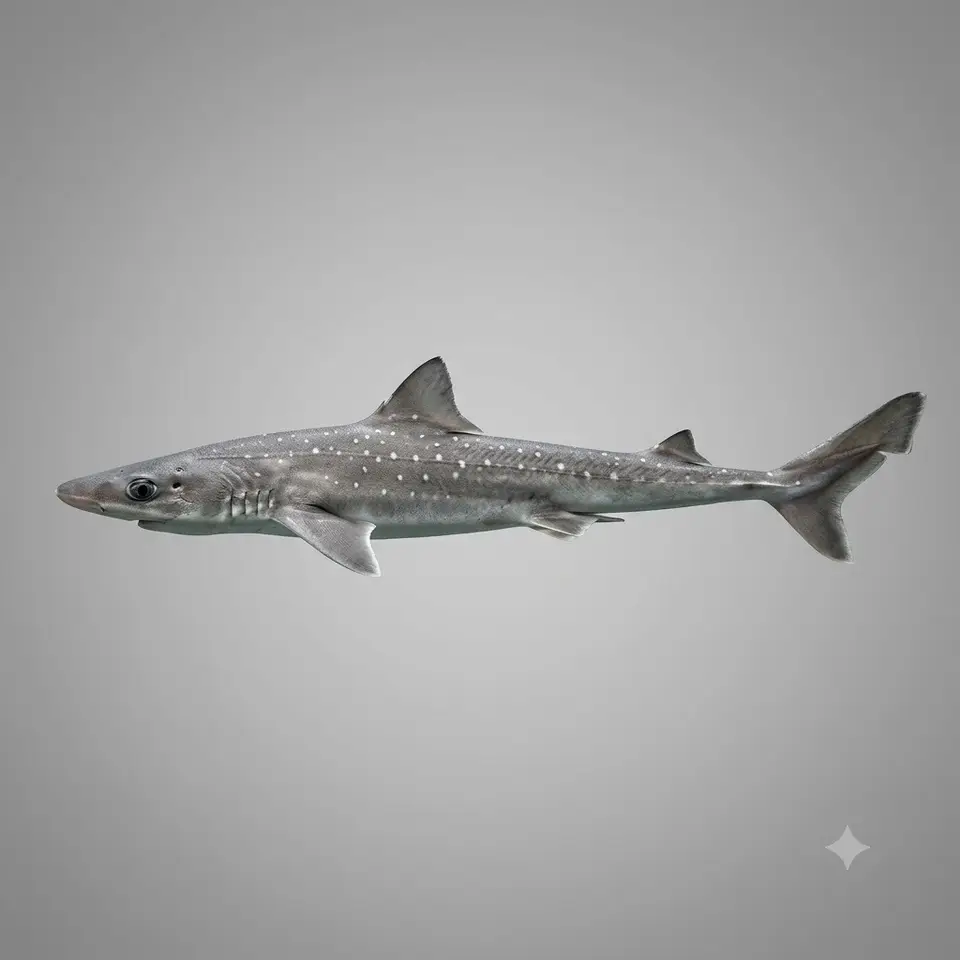
Spiny dogfish are slim gray sharks with white spots, no anal fin, and a sharp mild-venom spine in front of each dorsal fin - hence the name. They rarely exceed three to four feet.
Range & Habitat
They range along both US coasts over the continental shelf, schooling by season from nearshore shallows to deeper water, following cold water and bait.
Behavior & Diet
Dogfish travel in huge same-sex schools and feed voraciously on small fish, squid and crustaceans, often swarming a bait once one is hooked.
Best Seasons
Fishing is best when the schools move inshore - often spring and fall in the Northeast and cooler months elsewhere.
How to Catch Them
Bottom rigs with cut bait or squid over sand and structure; where dogfish school, catches come one after another.
Tackle & Rigs
Medium conventional or spinning gear, wire or heavy mono leader against their raspy skin and teeth, and simple bottom bait rigs.
Landing, Handling & Release
Handle carefully to avoid the two dorsal spines; use pliers and grip behind the head. Bleed and ice any fish you keep.
Table Quality
Properly bled and chilled, spiny dogfish is excellent - firm, mild and white - the traditional "rock salmon" of British fish-and-chips.
Common Mistakes
Getting jabbed by the dorsal spines and not bleeding the fish, which is essential for good flavor.
Regulations & Conservation
Dogfish are managed with commercial and recreational limits that vary by region. Always confirm the current state and federal regulations before keeping fish. We do not give legal advice.
FAQ
Are they good to eat? Yes, surprisingly - bled and chilled they are the "rock salmon" of British fish-and-chip shops.
Watch out for? The two sharp dorsal spines when handling.
🎣 Tackle for spiny dogfish
As an Amazon Associate we may earn from qualifying purchases - at no extra cost to you. We link gear types, not sponsors' picks: you choose the exact product. The partner-store link may earn us a commission too.