Nurse Shark
The nurse shark is a slow, docile bottom-dwelling shark common in warm US Atlantic and Gulf waters.
Last reviewed: October 2026
 AI illustration
 Overview
The nurse shark is a slow, docile bottom-dwelling shark common in warm US Atlantic and Gulf waters. Bottom anglers hook them frequently, often by accident, while soaking bait for other species. They fight with a stubborn, heavy, digging pull rather than fast runs, and they are best treated as a catch-and-release species.
Identification
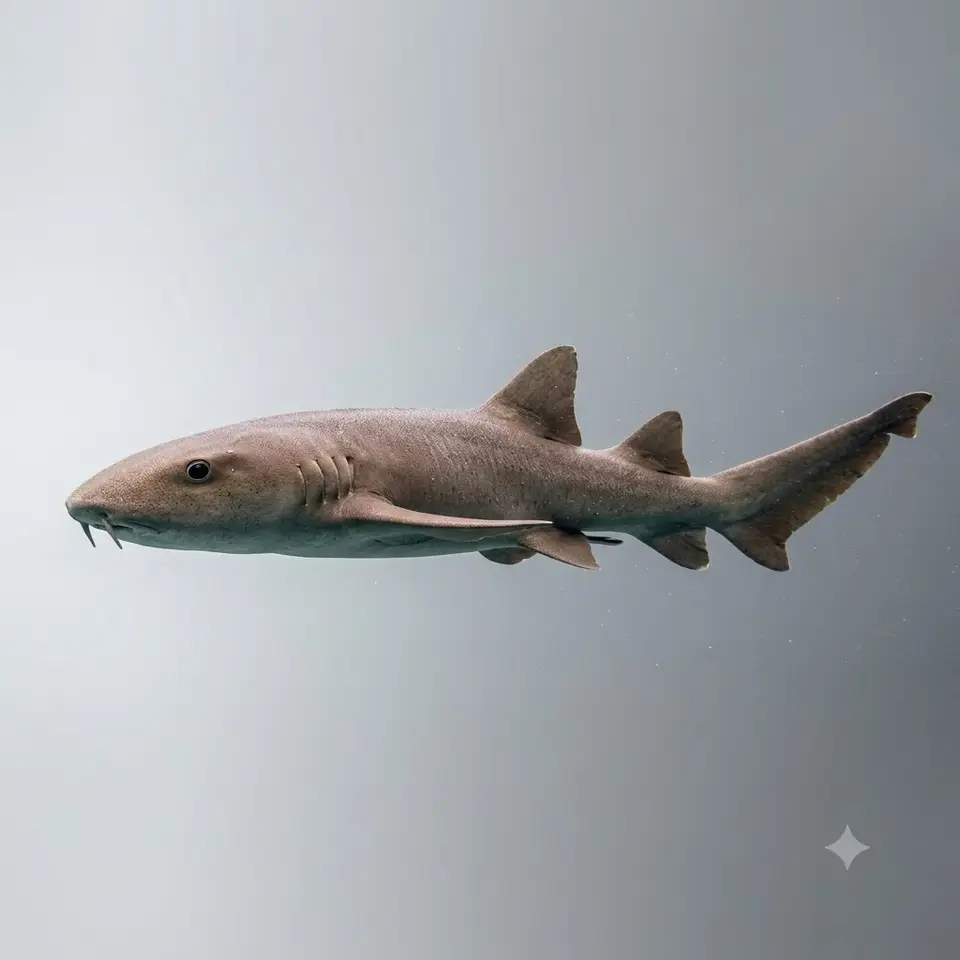
The giveaway is a pair of fleshy barbels hanging below the snout, just in front of a small mouth. Color is uniform tan to yellowish-brown, with small eyes and a broad, rounded head; juveniles may show small dark spots. The two dorsal fins sit far back and close together, and the long tail can make up roughly a quarter of the body length.
Range & Habitat
In the US they are most common around Florida, the Keys, and the Gulf of Mexico, ranging through the Caribbean and south to Brazil. They favor shallow, warm water - reefs, rocky ledges, mangrove channels, seagrass flats, and sandy bottoms. By day they often rest in caves, under ledges, or piled together in groups.
Behavior & Diet
Nurse sharks are nocturnal, resting on the bottom during the day and feeding at night. They are powerful suction feeders, vacuuming crustaceans, mollusks, sea urchins, octopus, and small fish off the bottom. Despite a small mouth, the jaws are strong and the bite is tenacious.
Best Seasons
Warm months are most productive, since these sharks are most active in warm water; in Florida and the Gulf that means late spring through fall. Night and low-light periods generally out-fish midday. In the coldest part of winter they slow down and feed less.
How to Catch Them
Fish on or very near the bottom with fresh cut bait, since they home in on scent. Target structure: reef edges, bridge and pier pilings, channels, and rocky bottom. Let the bait sit and expect a slow, heavy pickup rather than a screaming run.
Tackle & Rigs
A medium-heavy to heavy conventional or spinning outfit with 40-80 lb line handles most fish. Use a fish-finder or simple bottom rig with a heavy circle hook and a length of wire or heavy mono leader, since their rough skin and strong jaws cut through light line. Circle hooks help lip-hook the fish for a cleaner release.
Landing, Handling & Release
Lead with release: these fish are tough to land and thrash hard. Keep clear of the head - the jaws clamp down and hold, and bites happen when the shark is grabbed. Back the hook out with pliers, keep the shark in or near the water, and never grab the tail and head at the same time.
Table Quality
Poor. Like other sharks the flesh carries urea and turns ammonia-like unless bled and iced immediately, and large reef-associated sharks can carry ciguatera toxin and elevated mercury. Most anglers release them.
Mistakes That Cost You Fish
Using light leaders that fray on their sandpaper skin and get sheared by their jaws. Handling the head or dragging them onto hot, dry surfaces. Assuming "docile" means safe - a provoked nurse shark bites and holds on.
Regulations & Conservation
Globally the species has been assessed as vulnerable, with declines in parts of its range, though US Atlantic populations are relatively stable. Harvest and permit rules vary - Florida requires a shore-based shark fishing permit for many anglers, and size limits and prohibited-species lists change. Check current NOAA HMS and your state rules before keeping any shark.
FAQ
Q: Are nurse sharks dangerous to anglers? They are not aggressive, but they have strong jaws and will bite and hold if grabbed or stepped on, so keep hands clear of the head. Q: Can you eat a nurse shark? You can, but the meat is poor, must be bled and iced right away, and can carry mercury and ciguatera, so most anglers release them. Q: Why do they fight so slow and heavy? They are bottom sharks built for digging and holding rather than speed, so expect a stubborn, dead-weight tug-of-war.
Tackle for nurse shark
As an Amazon Associate we may earn from qualifying purchases - at no extra cost to you. We link gear types, not sponsors' picks: you choose the exact product. The partner-store link may earn us a commission too.