Arapaima
The arapaima (pirarucu) is one of the largest freshwater fish on Earth and a genuine bucket-list target for traveling anglers.
Last reviewed: October 2026
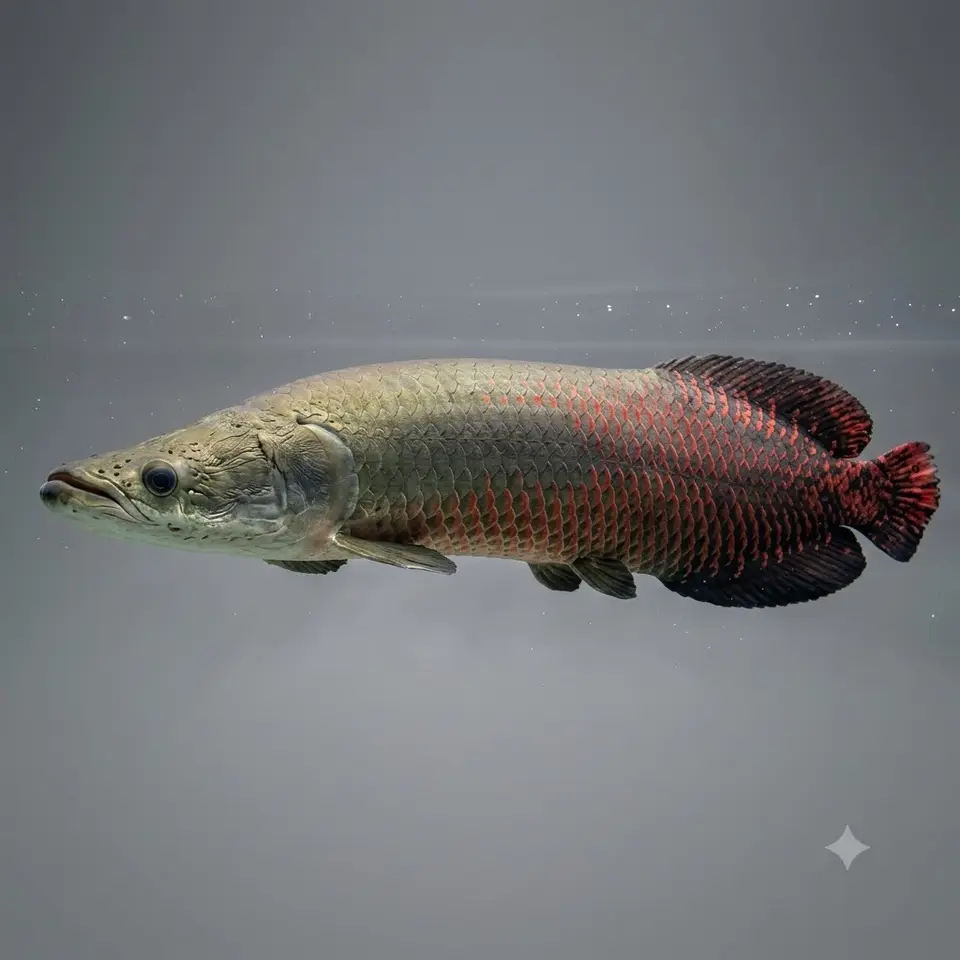 AI illustration
 Overview
The arapaima (pirarucu) is one of the largest freshwater fish on Earth and a genuine bucket-list target for traveling anglers. This air-breathing Amazon giant is not a US native, so treat it as an international, fly-in trip to South America. The legitimate fisheries are heavily managed and run on strict catch-and-release, so plan around licensed lodges and community programs.
Identification
Long, torpedo-shaped body with an olive to gray-green head and back, transitioning to dramatic red and crimson scale margins over the rear third and tail. The scales are large, thick, and armor-like, and the fish has a distinctive bony tongue and a broad, upturned mouth. Adults are unmistakable simply by their enormous size.
Range & Habitat
Native to the Amazon and neighboring basins across Brazil, Peru, Guyana, and surrounding countries. They favor slow floodplain lakes, oxbows, quiet tributaries, and seasonally flooded varzea forest - warm, often oxygen-poor water where air-breathing is a real advantage. Introduced populations exist elsewhere, and stray US catches (e.g., Florida) trace to aquarium releases, not a real fishery.
Behavior & Diet
As an obligate air-breather, an arapaima must surface every few minutes to gulp air, producing a visible roll that anglers use to locate fish. It is largely an ambush piscivore but will also take surface insects, small birds or mammals, and fruit. Hooked fish are powerful, thrashing fighters that often leap.
Best Seasons
The dry season, when falling water concentrates fish in lagoons and cutoffs, is prime. In Guyana's Rupununi this is roughly September to November, but timing varies by region. Book to match your chosen outfitter's window.
How to Catch Them
Fishing is largely sight- and roll-based: watch for surfacing fish and cast ahead of them. Both fly gear (large streamers and big poppers) and conventional tackle (large plugs and dead bait) produce. The bony mouth demands hard, repeated hooksets, and a knowledgeable local guide is effectively mandatory.
Tackle & Rigs
Go heavy: 10-12 wt fly rods with stout leaders, or beefy baitcasting/spinning outfits loaded with 65-100 lb braid. Use strong, chemically sharpened single hooks and a heavy fluorocarbon or abrasion-resistant leader. Undersized or soft hooks will fail on the jaw.
Landing, Handling & Release
Catch-and-release is the norm and often the law. Keep the fish in the water, support it horizontally, minimize air exposure, and use wet gloves - the scales are sharp. Revive fully after long fights before letting it swim off.
Table Quality
Pirarucu is prized eating, sometimes called the "cod of the Amazon," yielding boneless white slabs - but only where legally harvested under managed subsistence quotas. Sport-caught arapaima are release-only; do not keep them.
Where Anglers Go Wrong
Weak hooksets that slip off the bony jaw, hoisting the fish out of the water for photos, and fishing without a permit or guide. Do not target them outside sanctioned managed areas.
Regulations & Conservation
Historically assessed as Data Deficient by the IUCN and listed on CITES Appendix II, arapaima are overfished across much of their range and closely managed. Guyana's North Rupununi runs a permit-based, strictly catch-and-release sport fishery, while Brazilian reserves like Mamirauá use community-managed subsistence harvest under strict quotas rather than sport angling. Fish only through licensed community or outfitter programs.
FAQ
Q: Can I fish for arapaima in the US? No - there is no real native fishery, so it is an Amazon or Guyana travel trip. Rare US catches come from aquarium releases, not a sanctioned fishery.
Q: Do I have to release them? Yes - in sport fisheries release is standard and legally required in places like Guyana.
Q: Why do they keep surfacing? They are obligate air-breathers using a lung-like swim bladder, and that roll to gulp air is exactly how anglers spot them.
Tackle for arapaima
As an Amazon Associate we may earn from qualifying purchases - at no extra cost to you. We link gear types, not sponsors' picks: you choose the exact product.