Barramundi
Barramundi are the iconic estuary sportfish of northern Australia and Southeast Asia - hard-pulling, aerial fighters that headline any tropical bucket-list trip.
Last reviewed: October 2026
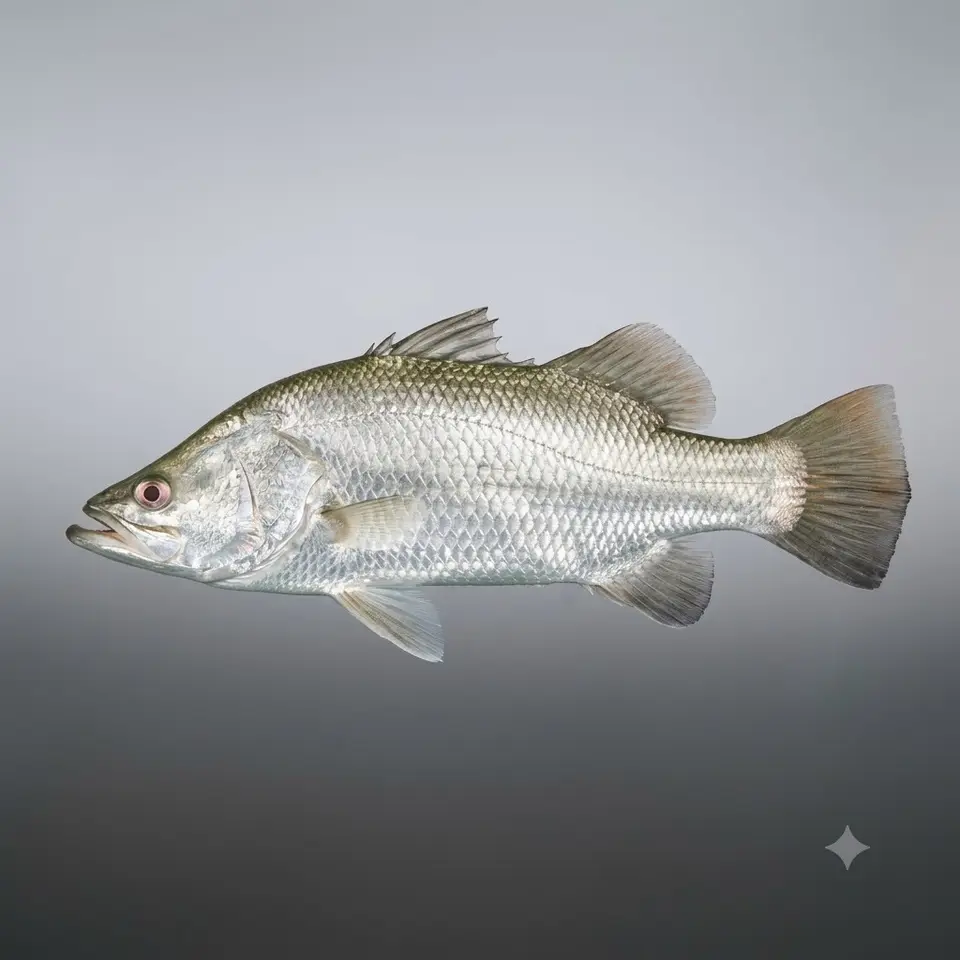 AI illustration
 Overview
Barramundi are the iconic estuary sportfish of northern Australia and Southeast Asia - hard-pulling, aerial fighters that headline any tropical bucket-list trip. US anglers meet them only abroad (or on the dinner plate, since they are one of the world's most heavily farmed food fish); landing a "metrey," a fish over one metre, is a serious milestone.
Identification
Look for a silver, laterally compressed body with large scales, a distinctive sloping "Roman nose" forehead running back to a continuous spiny dorsal, and a big upturned lower jaw. The broad tail is rounded, and the eyes glow pinkish-red in a torch beam at night. Colour shifts from bright silver in clear salt to darker green-brown in tannin-stained fresh water.
Range & Habitat
Native across the Indo-West Pacific, from the Persian Gulf through South and Southeast Asia to northern Australia and Papua New Guinea. They hold tight to estuaries, tidal creeks, mangroves, river mouths, snags, rock bars, and coastal freshwater reaches, favouring structure and current edges.
Behavior & Diet
Ambush predators, barra stack on structure and current lines and engulf prey with a signature "boof" gulp. They eat baitfish, prawns, and crabs, feeding hardest around tide changes. They are catadromous - adults drop to brackish estuary mouths to spawn, while juveniles run up into freshwater.
Best Seasons
The wet-season build-up and post-monsoon runoff (the tropical wet, austral spring-summer) are prime, when barra gorge around flowing drains, creeks, and barrages. The warm pre-wet build-up also fires, while cool dry-season nights slow the bite.
How to Catch Them
Cast to structure (snags, rock bars, drain mouths, mangrove edges, barrage walls), and work current seams on a running tide. Hard-body divers, paddle-tail plastics, vibes, and surface walkers all produce, as do live mullet or prawns fished near snags. The strike is often a violent boof, so stay ready to set.
Tackle & Rigs
A 6-10 kg baitcast or spin outfit is standard, stepping up to heavier gear around thick snags and big fish. Run 20-40 lb braid with a 30-60 lb mono or fluoro leader to survive their raspy jaws and gill plates, plus strong, sharp hooks. Their mouths are hard and bony, so set firmly and keep pressure to turn them from cover.
Landing, Handling & Release
Use a large knotless rubber net, support the fish horizontally, keep it wet, and mind the razor-sharp gill covers. Hold over water for photos and minimize air time. Big barra are breeding females, so revive them fully before release.
Table Quality
Barramundi are prized eating (white, moist, mild, flaky flesh), which is why they are farmed worldwide and common on US menus. Wild fish within the legal slot make excellent table fare, though most anglers release the oversize breeders.
What Costs Anglers Bites
Fishing too light around heavy snags gets you bricked and leaves hooks in fish. Setting softly into that bony jaw pulls hooks - swing hard. Ignoring the tide is the biggest error, since bite windows revolve around current changes.
Regulations & Conservation
Globally the species is IUCN Least Concern and heavily farmed, but wild stocks still face localized overfishing and habitat loss. Because barra are protandrous hermaphrodites (maturing as males, then turning female as they grow large) the biggest fish are the key breeders, which is why places like Australia's Northern Territory and Queensland enforce slot limits, bag limits, and closed seasons. Check the local rules for your water and release oversize females.
FAQ
Q: Can I catch barramundi in the US? Not in the wild: they are not native to US waters, so you will target them on trips to Australia or Southeast Asia; the barramundi on US menus is farmed.
Q: Why release the biggest ones? Large barra are almost all females and the fishery's main breeders, so letting them go (often required by slot limits) protects future stocks.
Q: What is a "metrey"? A barramundi measuring one metre or more, a benchmark trophy that barra anglers chase for years.
Tackle for barramundi
As an Amazon Associate we may earn from qualifying purchases - at no extra cost to you. We link gear types, not sponsors' picks: you choose the exact product.