How to Fish a Texas Rig
The short answer: a Texas rig is a weedless soft-plastic setup - bullet weight, hook, worm - that you drag and hop slowly along the bottom through cover most lures cannot touch. Here is how to tie it, weight it and work it.
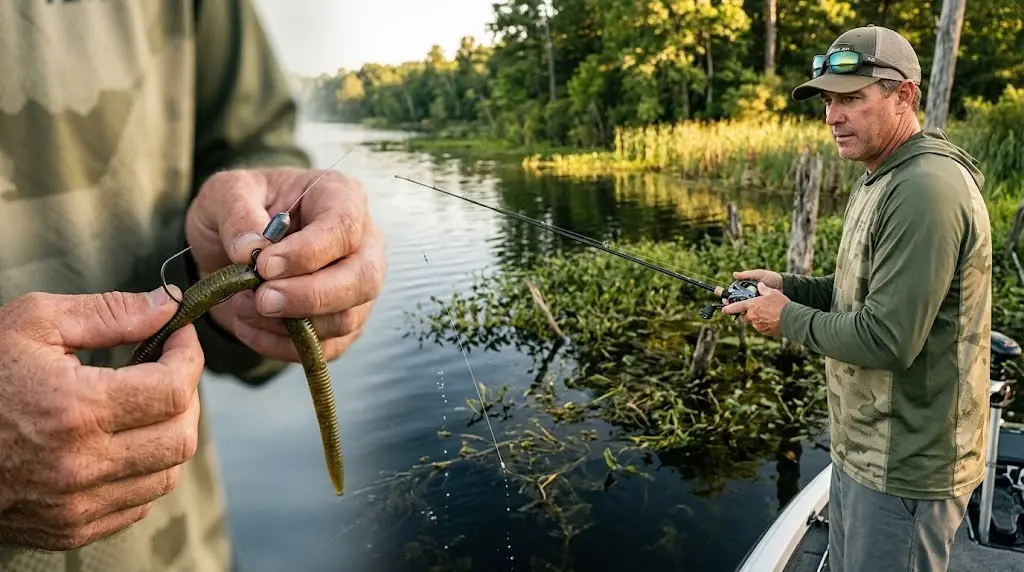
The short answer: the Texas rig is a bullet weight sliding on your line, then a hook rigged so the point is buried back in a soft-plastic bait, making it snag-proof. You cast it into heavy cover - grass, wood, docks, rock - let it sink, and work it slowly along the bottom with lifts and drags. It is one of the most relied-on bass presentations because it goes where fish hide and other lures get stuck. If you learn one soft-plastic technique, learn this one.
Here is how to build it, tune it, and fish it so it actually catches.
What you need
- A bullet (worm) weight - cone-shaped, slides on the line. Sizes from 1/8 oz up to 1 oz.
- A worm hook - an offset or extra-wide-gap (EWG) hook, usually 2/0 to 4/0 depending on bait size.
- A soft-plastic bait - a worm, creature bait, craw or beaver-style plastic.
- Fluorocarbon or braid line. Braid for heavy grass; fluorocarbon for clearer water and better feel.
Optional: a small plastic or glass bead between the weight and hook, and a bobber stopper above the weight to peg it (more on that below).
How to tie and rig it
- Slide the bullet weight onto your line, point facing up toward the rod.
- Tie on the worm hook with a solid knot (a Palomar is hard to beat). If you want the right knot for your line, our knot picker matches knots to line type.
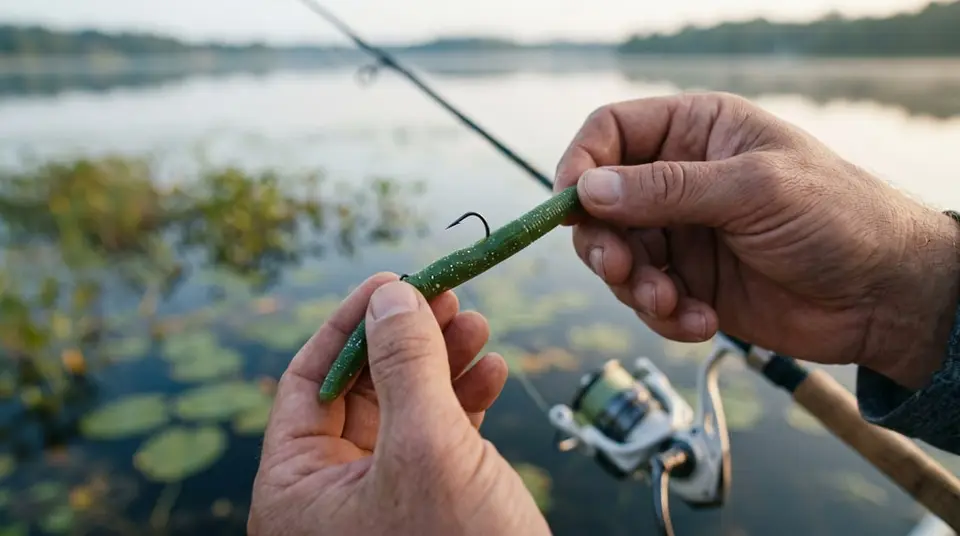
- Push the hook point into the very tip (nose) of the bait, about a quarter inch, then out the bottom.
- Slide the bait up over the hook eye so the nose sits snug against the knot.
- Rotate the hook, lay it against the body to see where the bend meets the plastic, then push the point straight through the bait and bury it just under the surface of the plastic. This is what makes it weedless - no point exposed.
- Check the bait hangs straight, not curled. A curled bait spins and twists your line.
Done right, the whole thing slides through cover cleanly and only exposes the hook when a fish crushes it and you set.
Pegged or unpegged?
The weight can slide freely or be pegged tight to the hook.
- Unpegged (free-sliding): the weight and bait separate on the fall, giving a more natural drop. Best in open water and light cover.
- Pegged: a bobber stopper holds the weight against the bait so the whole rig punches through matted grass and dense cover as one unit. Best in heavy vegetation.
Start unpegged for general fishing; peg it when you are punching thick stuff.
Choosing weight
Weight controls how fast the rig falls and how well it penetrates cover. Match it to conditions, not habit.
- 1/8 to 3/16 oz: shallow, light cover, finicky fish, a slow tempting fall.
- 1/4 to 3/8 oz: the everyday all-rounder for most bass fishing.
- 1/2 oz and up: deep water, current, wind, or punching heavy grass mats.
The rule of thumb: use the lightest weight that still lets you feel the bottom and reach the strike zone. Too heavy and the fall looks unnatural; too light and you never feel what is happening down there.
How to work it
The Texas rig is a bottom-contact bait. The whole game is feeling the bottom and the bite.
- Cast and let it sink on a semi-slack line. Watch the line - many bites happen on the fall, shown by a twitch or the line jumping.
- Lift the rod slowly to drag or hop the bait, then let it settle back down. Drag it over rock and wood; hop it in grass.
- Fish it slowly. This is not a search bait to burn back fast. Let it sit, crawl it, pause it. Bass often pick it up while it is motionless.
- Feel for anything different - a tick, a tap, sudden weight, or the line moving sideways. That is a fish.
- Reel down and set hard with a sweeping hookset to drive the buried point through the plastic and into the fish.
If the bite is tough and fish are pressured, downsize the bait and weight and slow down even more - the same finesse logic we cover in the finesse fishing guide.
When to reach for it
The Texas rig shines any time bass are relating to cover or the bottom:
- Flipping and pitching into laydowns, docks and bushes.
- Dragging worms and craws along points, ledges and drop-offs.
- Punching through grass mats and lily pads in summer.
- Fishing pressured water where a subtle bottom bait out-produces flashy lures.
It is a cornerstone technique for largemouth bass, and it pairs naturally with the jig - many anglers carry both and switch based on cover and mood.
A note on the water
Bass fishing means moving water, boats, banks and weather. None of the tackle advice above replaces basic water safety - wear a life jacket in a boat or kayak, watch conditions, and know your local rules. We cover technique here, not safety certification; for that, follow official boating-safety guidance for your area.
The bottom line
The Texas rig lasts because it solves the hardest problem in bass fishing - getting a bait into cover without hanging up - and it does it with three cheap components. Rig the hook weedless, match the weight to the cover, and fish it slow with your attention glued to the line and the bottom. Master that and you can catch bass almost anywhere they live.
Recommended Gear on Amazon
- Bullet weights - browse current options and reviews on Amazon.
- EWG worm hooks - browse current options and reviews on Amazon.
- Soft plastic worms - browse current options and reviews on Amazon.
- Bobber stops for pegging - browse current options and reviews on Amazon.
As an Amazon Associate, we earn from qualifying purchases - at no extra cost to you. This helps us keep producing free, in-depth guides.