Rainbow Runner
The rainbow runner is a sleek, fast pelagic member of the jack family (Carangidae) and the only species in its genus, Elagatis.
Last reviewed: October 2026
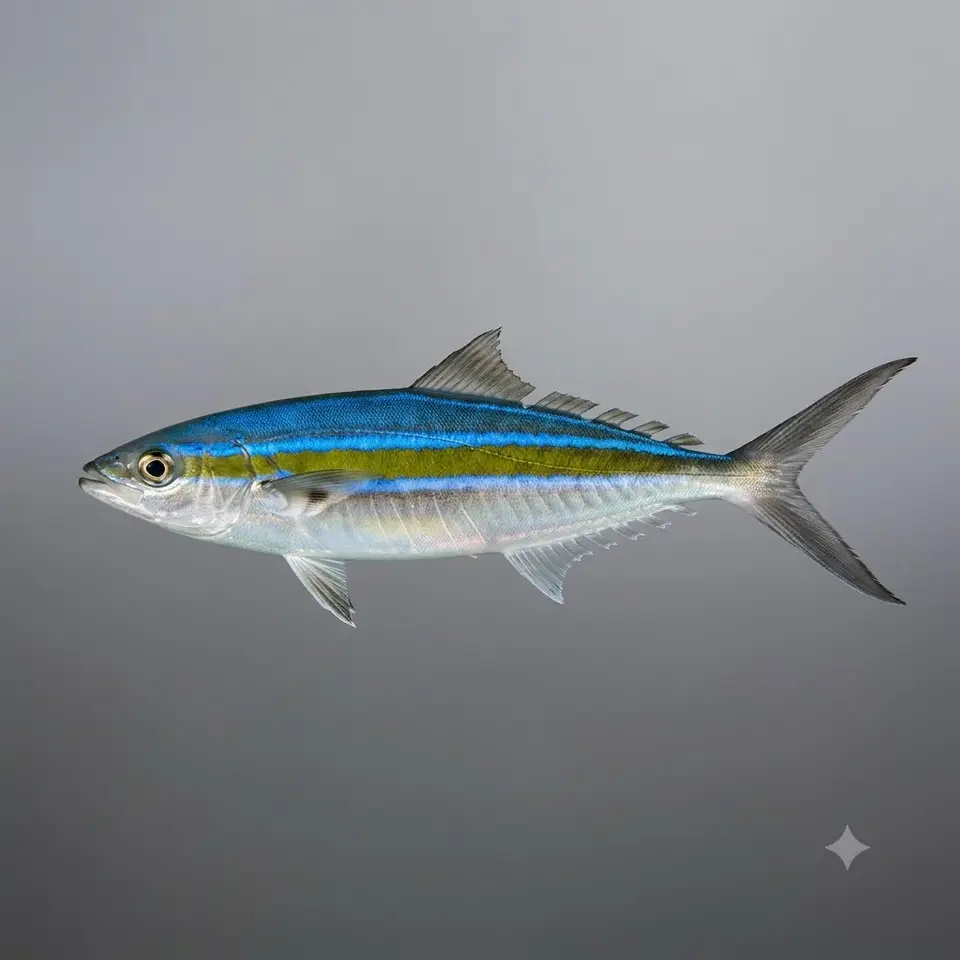 AI illustration
 Overview
The rainbow runner is a sleek, fast pelagic member of the jack family (Carangidae) and the only species in its genus, Elagatis. Anglers prize it as a hard-fighting light-tackle target, and cooks rate it among the finest-eating jacks. It is often an incidental but welcome catch while trolling offshore for tuna and mahi.
Identification
Look for a slender, cigar-shaped body and a deeply forked tail. The back is dark blue-green fading to a white belly, marked by two narrow electric-blue stripes with a broader olive-yellow band running between them along each flank. A small detached finlet sits behind both the dorsal and anal fins (the "bipinnulata"), a tuna-like trait unusual among jacks. Fish commonly run 2-3 feet, and large ones can exceed 3 feet and top 30 pounds.
Range & Habitat
Rainbow runners occur worldwide in warm tropical and subtropical seas. In US waters they range through Florida, the Gulf of Mexico, the wider Caribbean, Hawaii, and warm Pacific waters. They are pelagic and offshore, holding near reefs, current edges, weedlines, buoys, FADs, and floating debris, usually close to the surface.
Behavior & Diet
These are fast, schooling open-water predators that hunt small fish, squid, and crustaceans. They frequently associate with floating objects and larger pelagics, including tuna schools. Aggressive feeders, they readily strike trolled lures and live bait.
Best Seasons
They are present year-round across the tropics. In US waters they show up most reliably during the warm months when surface temperatures climb, with peak action offshore in summer and early fall.
How to Catch Them
Troll small feathers, cedar plugs, spoons, or skirted lures along current lines and around structure, or cast jigs and live bait to fish holding under debris and buoys. They often turn up in tuna and mahi spreads. Chumming near offshore structure can pull schools right to the boat.
Tackle & Rigs
Medium spinning or conventional gear with 20-40 lb line suits them well and preserves the fight. They lack cutting teeth, so a length of 30-50 lb fluorocarbon leader is plenty, with no wire needed. Small trolling feathers, metal jigs, and live sardines or pilchards on circle hooks all produce.
Landing, Handling & Release
They pull hard with strong runs, so let them tire before boating. For the table, bleed immediately and put fish straight on ice, because like tuna the flesh quality fades fast if not chilled. To release, minimize handling and revive the fish by moving water over its gills before letting go.
Table Quality
Excellent, with firm, clean flesh often likened to a cross between tuna and jack. It is superb as sashimi or ceviche (the FDA's rule of thumb for raw fish is to use fish that has been previously frozen, which kills parasites though not all germs) and great grilled or seared. Bleeding and icing promptly makes a big difference.
Where Anglers Go Wrong
The biggest error is failing to bleed and ice fish quickly, which dulls the fine flesh. Anglers also dismiss them as "just another jack" bycatch, or fish too-heavy gear that robs the sport.
Regulations & Conservation
Rainbow runner is listed by the IUCN as Least Concern and is not considered overfished, though it is only lightly managed and often lacks a dedicated bag limit in US waters. Always check current state and federal rules where you fish. Ciguatera caution: large specimens from known tropical hotspots in parts of the Caribbean and Pacific can occasionally carry ciguatera toxin, so heed local advisories.
FAQ
Q: Is rainbow runner good to eat? Yes, it is one of the best-eating members of the jack family, with firm flesh that shines raw or cooked, especially when bled and iced promptly.
Q: Is it a tuna? No, it is a jack (Carangidae), but its slender body and small finlets give it a tuna-like look and firm, tuna-like flesh.
Q: Do I need a wire leader? No, they have no cutting teeth, so a fluorocarbon leader is all you need.
Tackle for rainbow runner
As an Amazon Associate we may earn from qualifying purchases - at no extra cost to you. We link gear types, not sponsors' picks: you choose the exact product. The partner-store link may earn us a commission too.