Lemon Shark
The lemon shark is a stocky, yellowish inshore shark of shallow flats, bays, and mangrove shorelines across the warm-temperate and tropical western Atlantic.
Last reviewed: October 2026
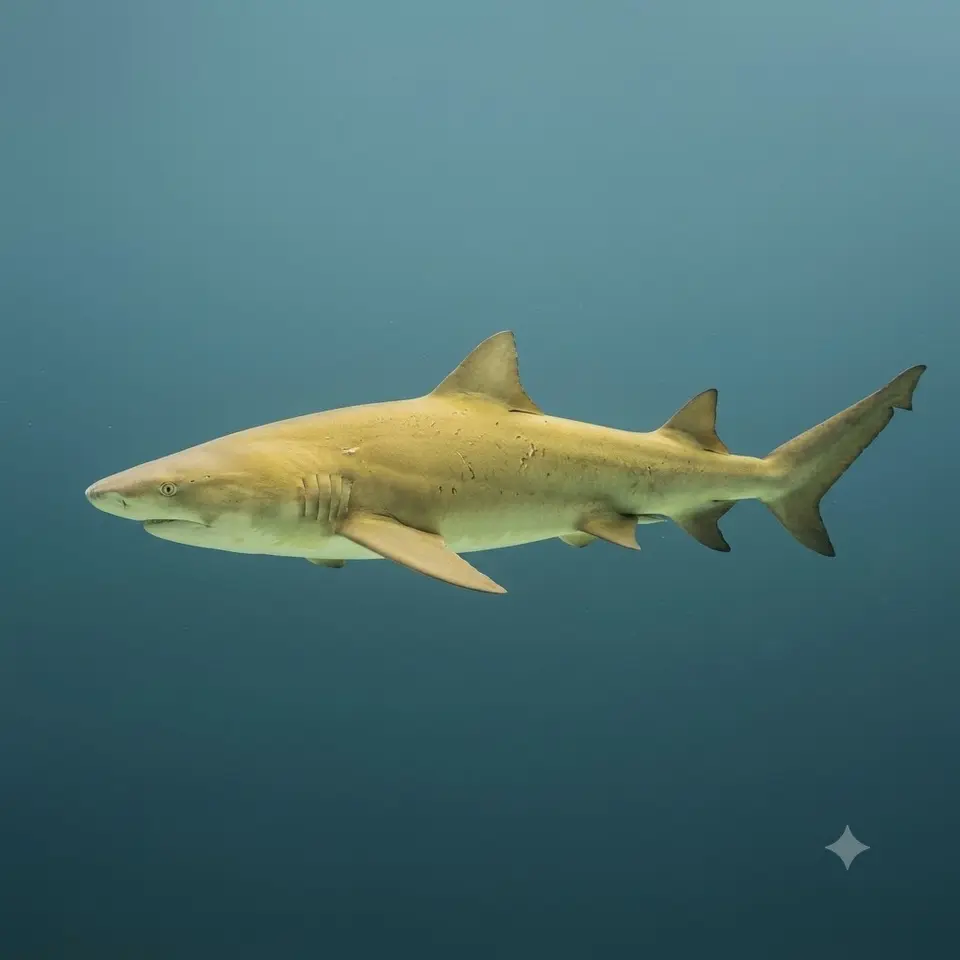 AI illustration
 Overview
The lemon shark is a stocky, yellowish inshore shark of shallow flats, bays, and mangrove shorelines across the warm-temperate and tropical western Atlantic. Anglers prize it because it fights hard and holds in predictable, often sight-fishable water - but it should be released, being protected in Florida and listed as Vulnerable globally.
Identification
The best field mark is its two dorsal fins of nearly equal size, which few other sharks show. It is olive to yellowish-brown above with a pale belly, with a short, broad, bluntly rounded snout (brevirostris means "short snout").
Range & Habitat
In US waters it is most common off Florida and the Gulf of Mexico, ranging north toward the Carolinas in warm months and south through the Caribbean. It favors warm, shallow water - sand and grass flats, channels, dock lines, river mouths, and mangrove estuaries, where juveniles shelter in the mangroves. It tolerates lower salinity but is a saltwater fish, not a true freshwater shark like the bull shark.
Behavior & Diet
Lemons eat mostly bony fishes plus rays and crustaceans, feeding hardest around dawn, dusk, and night. They cruise the same flats in inches of water and can form large seasonal aggregations, such as the well-known winter gathering off Jupiter, Florida.
Best Seasons
Warm months (spring through fall) spread fish across flats and beaches range-wide. In southeast Florida, winter (roughly December-February) brings big coastal aggregations - water temperature matters more than the calendar.
How to Catch Them
Sight-fish a cut or live bait ahead of a cruising fish on the flats, or chum them into casting range from boat, pier, or beach. Fresh oily baits - ladyfish, mullet, jack, bonito - work best; let the shark turn with the bait before coming tight on a circle hook.
Tackle & Rigs
A 30-50 lb-class conventional or heavy spinning outfit handles most inshore lemons. Rig a non-offset, non-stainless circle hook on a heavy mono or fluoro bite leader backed by a short length of wire to beat their teeth; a sliding-sinker fish-finder rig works well from shore.
Landing, Handling & Release
Keep the shark in the water - never drag a big one onto sand or lift it by the tail, which damages the spine. Use a long dehooker and gloves, stay clear of the mouth, cut the leader close if it is hooked deep, and let the fish swim off under its own power.
Table Quality
Because they are protected in Florida and Vulnerable globally, lemon sharks should be released, not eaten. As a general caution, shark flesh must be bled and iced at once to be palatable, and large tropical sharks can carry ciguatera toxin that cooking does not destroy.
What Costs Anglers Bites
Misidentifying them (check for the two same-size dorsals), fishing leader too light for their teeth and rough skin, and fighting fish to exhaustion. Harvesting one in Florida is illegal, and tail-lifting a heavy shark for photos causes lasting harm.
Regulations & Conservation
The lemon shark is on Florida's prohibited-harvest list and must be released, kept in the water if caught from shore. Federal shark fishing under NOAA HMS requires an angling permit and non-stainless circle hooks with natural bait, and the IUCN lists the species as Vulnerable - so careful catch-and-release is best everywhere.
FAQ
Q: Can I keep a lemon shark in Florida? No - in Florida it is on the state's prohibited-harvest list and must be released, and kept in the water if caught from shore; elsewhere check the current state and federal shark rules.
Q: Are lemon sharks dangerous to anglers? They are not considered aggressive toward people, but a shark this size has powerful jaws, so keep hands clear and use a dehooker.
Q: Do lemon sharks enter freshwater? Juveniles tolerate low-salinity mangrove estuaries, but this is an inshore saltwater shark, not a true freshwater species.
Tackle for lemon shark
As an Amazon Associate we may earn from qualifying purchases - at no extra cost to you. We link gear types, not sponsors' picks: you choose the exact product. The partner-store link may earn us a commission too.