Murray Cod
The Murray Cod is Australia's largest freshwater fish and its most iconic native gamefish, a true bucket-list target for the traveling US angler.
Last reviewed: October 2026
 AI illustration
 Overview
The Murray Cod is Australia's largest freshwater fish and its most iconic native gamefish, a true bucket-list target for the traveling US angler. For Americans it means an international trip to the Murray-Darling Basin, not a local catch. Historically fish grew to well over a metre and weights past 100 lb, though fish that large are now very rare. It is a legally protected, recovering species, so plan around catch-and-release from the start.
Identification
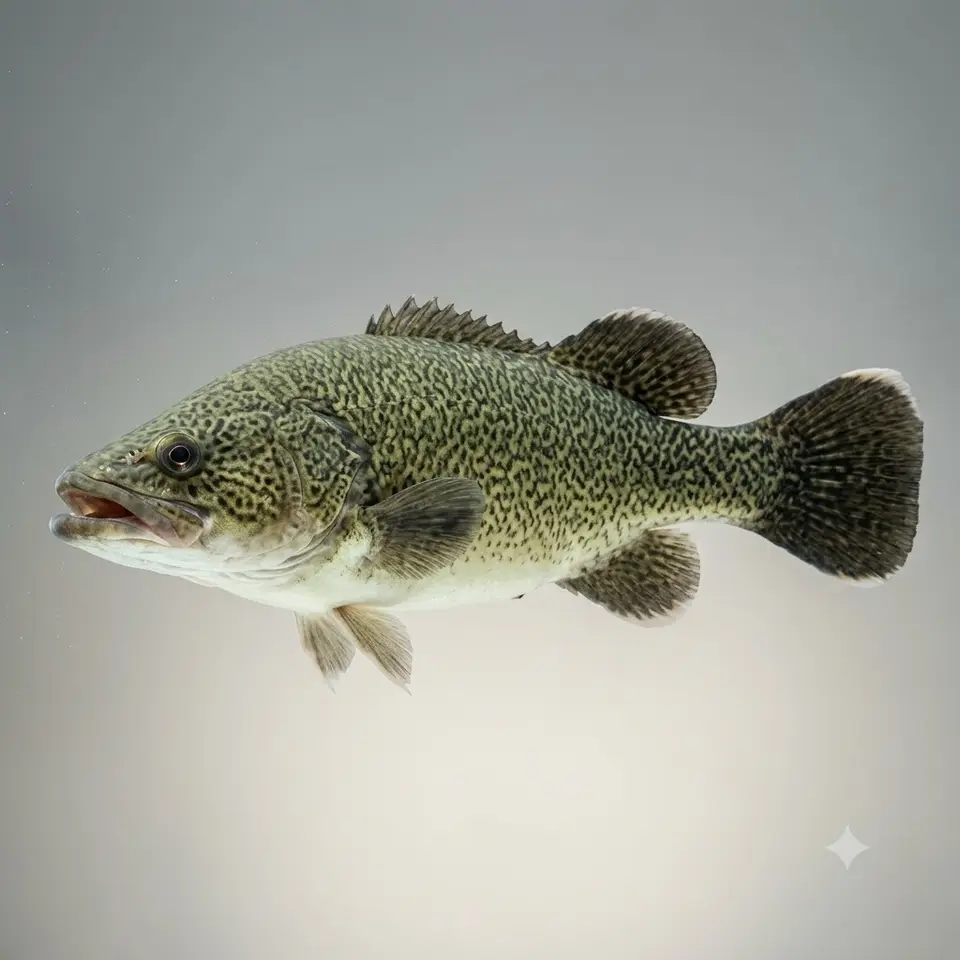
A heavy-bodied, elongated fish with a broad head, small eyes, large mouth, and a slightly protruding lower jaw. Coloration is olive to yellowish-green with dense darker mottling over a creamy-white belly. The fins are notably rounded, with a broad paddle-like tail and a low spiny dorsal running into a taller soft dorsal.
Range & Habitat
Endemic to the Murray-Darling Basin of southeastern Australia, plus stocked impoundments and lakes. They favor slow, turbid lowland rivers with heavy structure - submerged timber ("snags"), fallen trees, rock, and undercut banks. Individual fish are strongly tied to specific home snags.
Behavior & Diet
An apex ambush predator that holds tight to cover and territory. Diet is opportunistic: fish, yabbies (crayfish), shrimp, frogs, and occasionally ducklings, water rats, or reptiles. They often feed hardest in low light and around dawn, dusk, and warm nights.
Best Seasons
The warmer months, roughly the Australian spring through autumn, are most productive, with a well-known bite around the December season opening. Many jurisdictions enforce a spring closed season protecting spawning fish. Winter fishing is possible but generally slow.
How to Catch Them
Fish tight to structure. Cast and retrieve large spinnerbaits, swimbaits, and big surface lures worked over snags at dusk and dawn, or troll deep-diving hardbodies along timbered banks. Bait anglers use yabbies, bardi grubs, and cheese fished near cover.
Tackle & Rigs
Go heavy. A stout baitcaster, 30-80 lb braid, a strong abrasion-resistant leader, and a powerful rod let you turn big fish away from snags before they bury you. Strong single hooks and quality swivels matter; light tackle usually ends in a break-off.
Landing, Handling & Release
Lead with release, especially for large breeding fish. Use a big knotless net, keep the fish horizontal and in the water, wet your hands, support the belly, and minimize air exposure. Revive it fully facing into current before letting go.
Table Quality
The flesh is white and firm and was historically prized, but keeping fish is discouraged today. Large fish in particular should always be released; where legal, only smaller stocked fish within limits are occasionally taken. Most modern anglers release everything.
What Costs Anglers Bites
Fishing too light and losing fish in snags; casting away from structure; keeping big breeders; and poor handling with dry hands or long air exposure. Ignoring the closed season or local length limits is another frequent error.
Regulations & Conservation
Murray Cod is listed as Vulnerable under Australia's federal EPBC Act. Size limits (commonly a minimum around 55 cm plus slot limits protecting large breeders), low bag limits, and a spring closed season apply and vary by state. Always confirm current state rules before fishing.
FAQ
Q: Do I need to release Murray Cod? Practically, yes - it is a protected, recovering species, and releasing all large fish (and often all fish) is the responsible norm.
Q: How big do they really get? Historically well over a metre and past 100 lb, but fish that size are extremely rare now; a metre-class fish is the trophy of a lifetime.
Q: When is the best time to target them? The warmer months around the December opening, fishing low-light periods tight to submerged timber.
Tackle for murray cod
As an Amazon Associate we may earn from qualifying purchases - at no extra cost to you. We link gear types, not sponsors' picks: you choose the exact product.