Northern Hog Sucker
The northern hog sucker is a bottom-hugging native of clean, rocky streams, an oddly handsome fish with a big blocky head that anglers often catch while trout or smallmouth fishing.
🗓️ Last reviewed: July 2026
Overview
The northern hog sucker is a bottom-hugging native of clean, rocky streams, an oddly handsome fish with a big blocky head that anglers often catch while trout or smallmouth fishing. A sign of healthy water, it is a fun incidental catch and a favorite of native-fish enthusiasts.
Identification
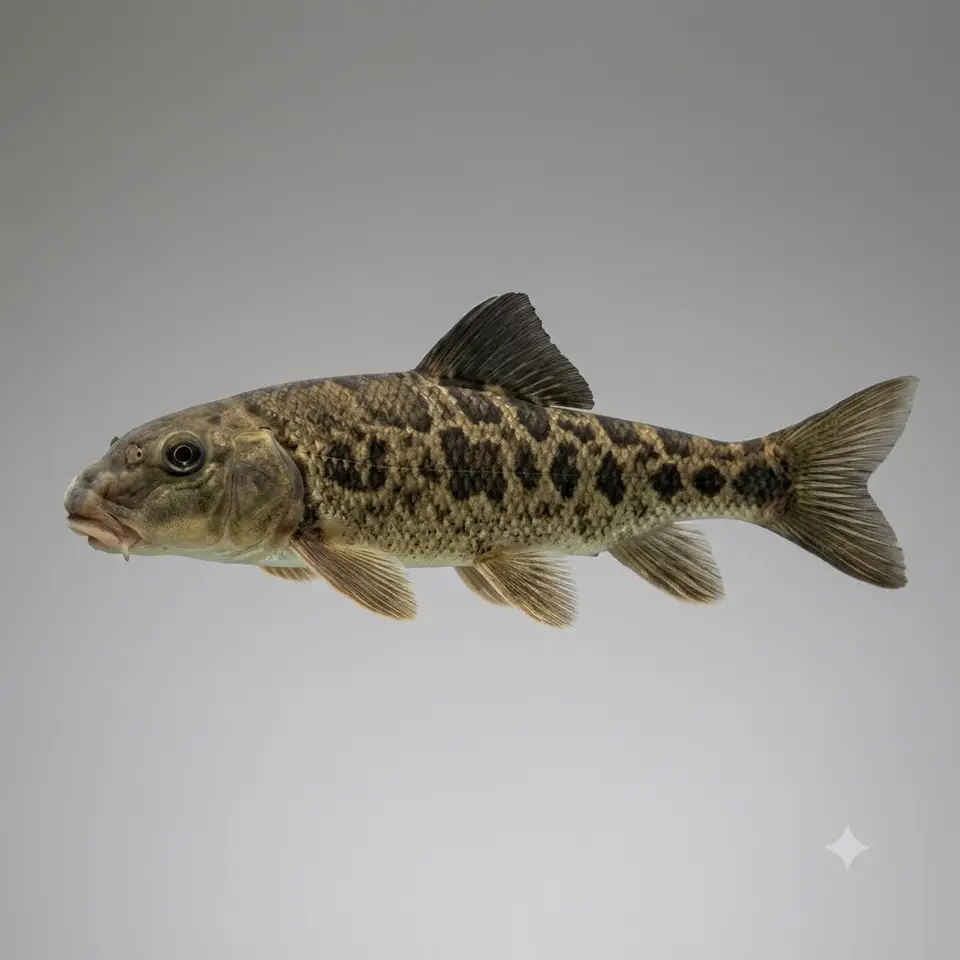
Hog suckers are olive-brown with dark saddle blotches, a large squarish head with a concave profile, and thick lips for bottom feeding. The blocky head and saddled body are unmistakable in the riffles.
Range & Habitat
They live in clean, clear, rocky-bottomed streams and rivers across the eastern and central US, holding in riffles and runs over gravel and cobble.
Behavior & Diet
Hog suckers root in the gravel with their fleshy lips for insect larvae and invertebrates, often flipping stones and stirring up food that other fish follow.
Best Seasons
Best fishing is spring through fall in flowing water, with spring spawning runs concentrating fish in the riffles.
How to Catch Them
Bottom-drifted worms, small nymphs and bits of bait tumbled through riffles and runs; they are commonly caught by trout and smallmouth anglers.
Tackle & Rigs
Light spinning or fly gear, 4-6 lb line, small hooks and bottom presentations.
Landing, Handling & Release
Handle wet and release; they are valued as an indicator of clean water rather than as table fare.
Table Quality
Edible but bony; almost always released for the sport and their role in healthy streams.
Common Mistakes
Overlooking them as trash fish rather than a sign of a healthy stream.
Regulations & Conservation
Generally unregulated or lightly managed; they indicate clean, healthy water. Confirm current state rules before keeping fish. We do not give legal advice.
FAQ
Why the big head? It anchors them in fast riffles as they root for food.
Are they a good sign? Yes - they need clean water, so their presence means healthy streams.
🎣 Tackle for northern hog sucker
As an Amazon Associate we may earn from qualifying purchases - at no extra cost to you. We link gear types, not sponsors' picks: you choose the exact product.