Nile Perch
The Nile perch is one of the planet's largest freshwater gamefish and a genuine bucket-list target, most famously chased on Egypt's Lake Nasser.
Last reviewed: October 2026
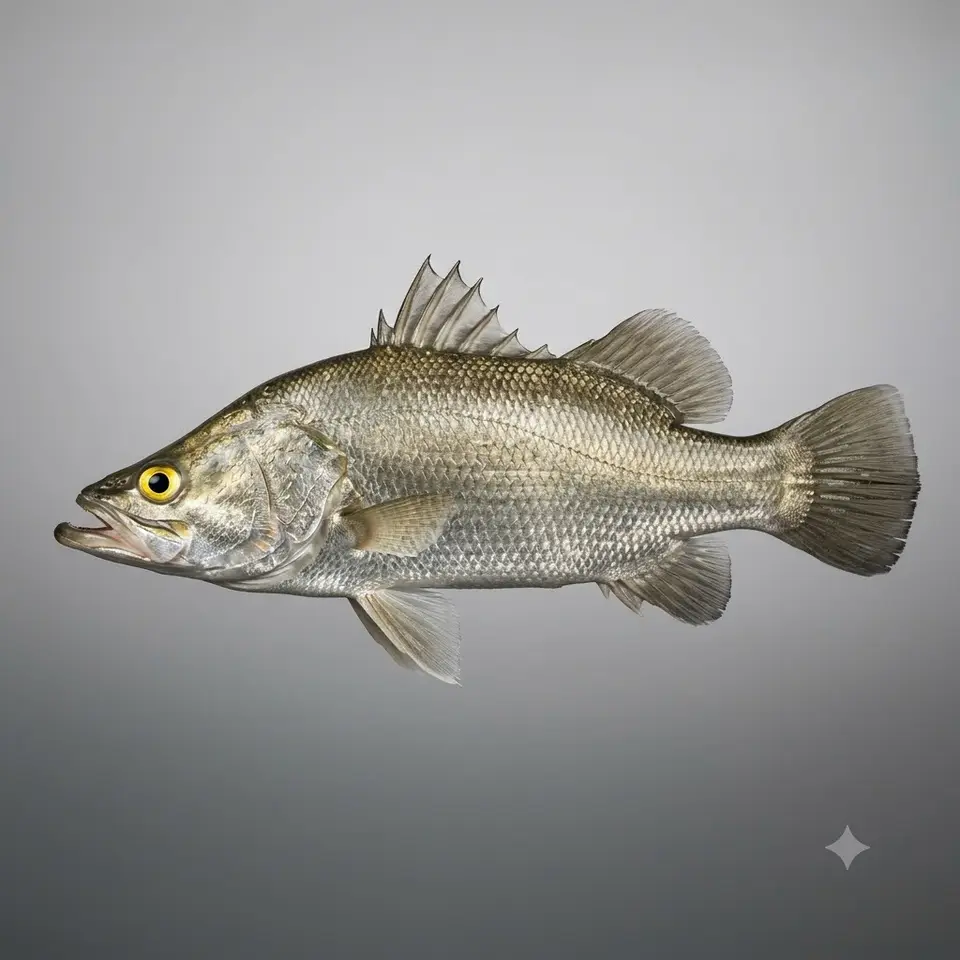 AI illustration
 Overview
The Nile perch is one of the planet's largest freshwater gamefish and a genuine bucket-list target, most famously chased on Egypt's Lake Nasser. This is not a US species, so plan it as an international trip booked through a licensed outfitter. Fish over 100 pounds are realistic trophies, and the IGFA all-tackle record stands at 230 pounds.
Identification
Look for a deep, thick silver body with a faint blue or brassy sheen and a paler belly. The standout feature is the large eye ringed in bright yellow to orange. It carries two dorsal fins (a spiny front and a soft rear), a rounded tail, and a big mouth with a slightly protruding lower jaw.
Range & Habitat
It is native to the Nile, Congo, Niger, Volta, Senegal, and Lake Chad basins across tropical Africa. It was infamously introduced to Lake Victoria in the mid-20th century, where it became a destructive invasive. Anglers find it in warm, well-oxygenated rivers, reservoirs, and lakes, holding near rocky points, drop-offs, and submerged structure.
Behavior & Diet
An apex ambush predator, it feeds heavily on fish (including smaller Nile perch), plus crustaceans and insects when young. Big fish patrol structure and current seams, using short bursts of speed to run down prey. Depth of the bite shifts with temperature and light.
Best Seasons
As a tropical warm-water fish it feeds year-round, but cooler, comfortable months make the best trips. On Lake Nasser, spring and autumn are the traditional prime windows, avoiding brutal peak-summer heat. Confirm timing with your outfitter, since water level and temperature drive the bite.
How to Catch Them
Trolling large diving plugs and casting big crankbaits, spoons, and swimbaits around structure are the core tactics. Shore casting from rocky banks accounts for many Lake Nasser trophies alongside boat trolling. Live and dead baitfish also produce, especially for the very largest fish.
Tackle & Rigs
Use heavy spinning or baitcasting gear, 40-65 pound braid, and a strong 60-100 pound mono or fluorocarbon leader for their raspy jaws, sharp gill plates, and abrasive structure. Run oversized lures on strong single or upgraded treble hooks. A smooth, powerful drag is essential for stopping that first run.
Landing, Handling & Release
These are strong fish that dig for cover, so keep steady pressure and a healthy drag. Support big fish horizontally with a hand under the belly, and never hang a heavy one vertically by the jaw. Wet your hands, minimize air time, and revive the fish fully before release.
Table Quality
The flesh is firm, white, and mild, and the species is a major commercial food fish sold internationally as "Lake Victoria perch." Sport fisheries, though, treat trophy-class fish as catch-and-release. As a long-lived apex predator, large individuals can accumulate mercury, so treat any harvest accordingly.
Habits That Lose Fish
Going undergunned is the classic error, as light line, weak knots, and dull hooks lose giants fast. Anglers also mishandle big fish vertically and overlook the structure where the biggest fish ambush prey.
Regulations & Conservation
Globally the species is listed as Least Concern and is even invasive where introduced, so it is not endangered. However, heavy commercial gill-netting has thinned trophy-sized fish in some waters, so releasing big breeders is the accepted sporting ethic. Always fish through licensed guides, follow local permits, and never transport or stock this species yourself, as it is ecologically devastating outside its native range.
FAQ
Q: Is the Nile perch native to the United States? No. It is an African freshwater fish targeted on international trips such as Egypt's Lake Nasser, and stocking it is illegal.
Q: How big do they really get? Fish over 100 pounds are realistic trophies, and the IGFA all-tackle record stands at 230 pounds.
Q: Do I need a wire leader for their teeth? No, they lack cutting teeth, but use a heavy mono or fluorocarbon leader for their raspy jaws and sharp gill covers.
Tackle for nile perch
As an Amazon Associate we may earn from qualifying purchases - at no extra cost to you. We link gear types, not sponsors' picks: you choose the exact product.