Trolling & Boat Rod / Reel
Short, strong rods and level-wind or lever-drag conventional reels built for dragging lines behind a moving boat - the workhorses of walleye programs and offshore alike.
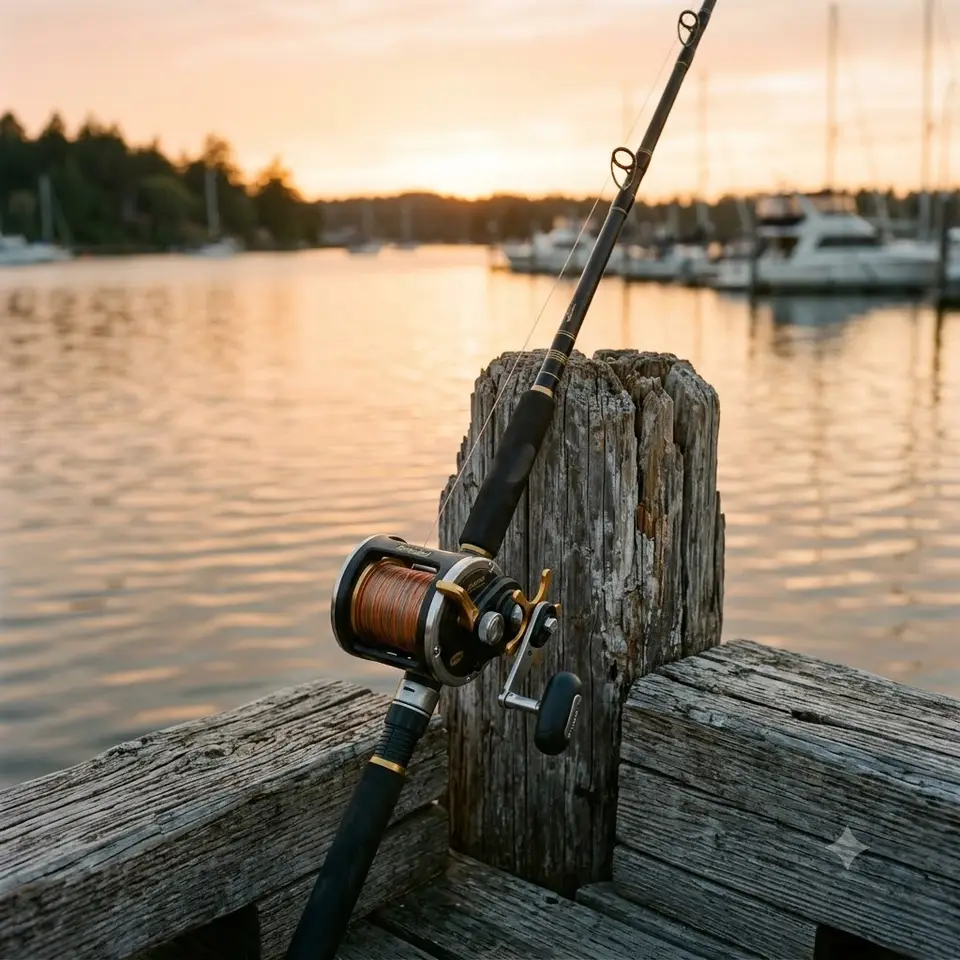
Trolling tackle isn't cast at all - rods sit in holders while the boat does the presenting, so everything optimizes differently: shorter, stouter blanks that cushion strikes, conventional reels with line counters or lever drags that meter out exact distances, and capacity for fish that pull back at boat speed. From walleye boards to offshore spreads, this is equipment as infrastructure.
What it is
Conventional (revolving-spool) reels - line-counter models in freshwater, lever-drag on blue water - on 5'6"-8' rods with soft tips and strong mid-sections, run from rod holders in organized spreads.
What it does best
Precise, repeatable depth via counted line, soaking multiple lines legally allowed, absorbing violent strikes at speed, and winching genuinely large fish. Pairs with our trolling technique guides.
How to choose one
Freshwater trolling: 8'-8'6" medium line-counter combos for walleye/salmon boards and riggers. Salt: 20-30 lb class lever-drag for coastal, heavier as species demand. Buy pairs/quads - spreads want matched sets.
Learning curve
The tackle is simple; the ART is spread management - staggering depths and distances without tangles, and clearing lines fast when one goes off. Boat time teaches it quickly.
A sensible first setup
Two matched 8'6" medium trolling rods with line-counter reels, 12-15 lb mono (its stretch is a feature here), a set of inline planer boards and a box of crankbaits - a complete beginner walleye program.
Where the setup goes wrong
Locking drags 'so it sets itself' (pulled hooks, broken gear), uncounted mystery depths that can't be repeated when one rod fires, and grabbing the rod to strike - trolled fish hook themselves; just lift and wind.
Rod & reel starting points
As an Amazon Associate we may earn from qualifying purchases - at no extra cost to you. We link gear types, not sponsors' picks: you choose the exact product.