Choosing a reel.
The reel is where a lot of anglers overthink it. There are really just a few types, each built for a job, and a handful of numbers on the box that tell you what a reel is for. Sort those out and the right choice is obvious.
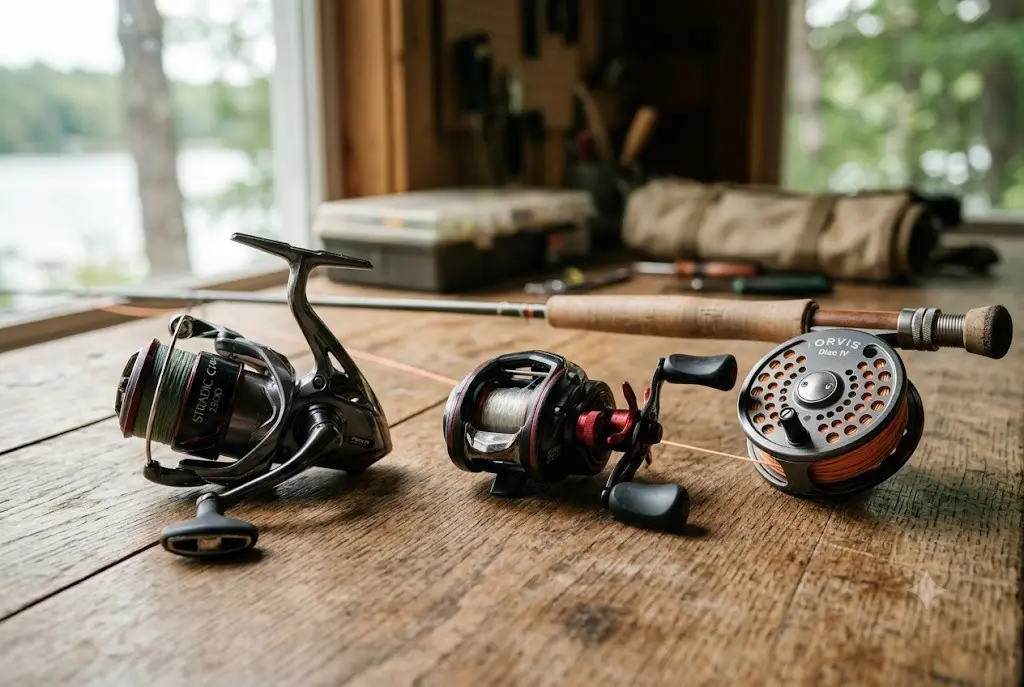
The types, and who each suits
Best forGeneral use, finesse, and beginners.
The open-faced, hang-under-the-rod reel most anglers start and stay with - versatile, easy to cast light lures, and hard to mess up.
Easy to learn, great with light line and small lures, few tangles.
Line twist over time; less raw casting power than a baitcaster.
Best forAccuracy, power, heavier lures and cover.
The reel sits on top of the rod and the spool spins as you cast. It rewards a practised thumb with pinpoint casts and cranking power.
Casting accuracy, heavier line and lures, winching fish from cover.
The learning curve - a backlash ('bird's nest') until you master the thumb and brakes.
Best forKids and absolute beginners.
The closed-face, push-button reel: press the button, cast, release. About as simple as fishing gets.
Almost no tangles, dead-simple, cheap.
Limited casting distance, drag and line capacity - you'll likely outgrow it.
Best forFly fishing.
On a fly rod the rod does the casting and the reel mostly stores line and provides drag - simple, but the drag matters on big, running fish.
Smooth drag for fighting fish, holds line and backing.
Not a casting tool - match it to the rod weight, see the fly rod matcher.
Best forTrolling, offshore and big game.
A stout, high-capacity reel that sits on top for trolling, bottom fishing and heavy saltwater work.
Huge line capacity and drag, built for big fish and deep water.
Overkill for everyday freshwater; heavier and pricier.
Reading the numbers
Spinning reels use numbers like 1000-8000+. Roughly: 1000-2500 = panfish, trout, finesse; 3000-4000 = the all-round bass and general size; 5000-6000 = pike, surf and light saltwater; 8000+ = big saltwater. Bigger number, bigger reel and line capacity.
How much line comes in per handle turn, shown like 6.2:1. Low (5.x:1) = slower but more cranking power, good for deep cranks and big baits; high (7.x:1+) = fast retrieve, great for burning lures and picking up slack; mid (6.x:1) = the do-everything choice.
The drag lets line slip so a running fish doesn't snap you off. The listed max drag is a ceiling, not a setting - a common starting point is to set drag to about a quarter to a third of your line's breaking strength. Smooth, sealed drags are worth paying for.
Reel sorted? Balance it with the right line using the knot & line strength notes, tie it on with a solid knot, and match the whole outfit to your target with tackle by species. Fly angler? See the fly rod & line matcher.
A general buying guide - sizing and gear-ratio conventions vary a little between brands, and the "right" reel depends on your target, water and budget. Handle a few in a shop, and match line rating to both the reel and the rod before you commit.
Reel picks by type
As an Amazon Associate we may earn from qualifying purchases - at no extra cost to you. We link gear types, not sponsors' picks: you choose the exact product.