Fly Rod & Reel
Fly tackle casts the LINE's weight instead of the lure's - opening flies of near-zero mass to trout, panfish and salt, and opening a lifetime of craft to the angler.
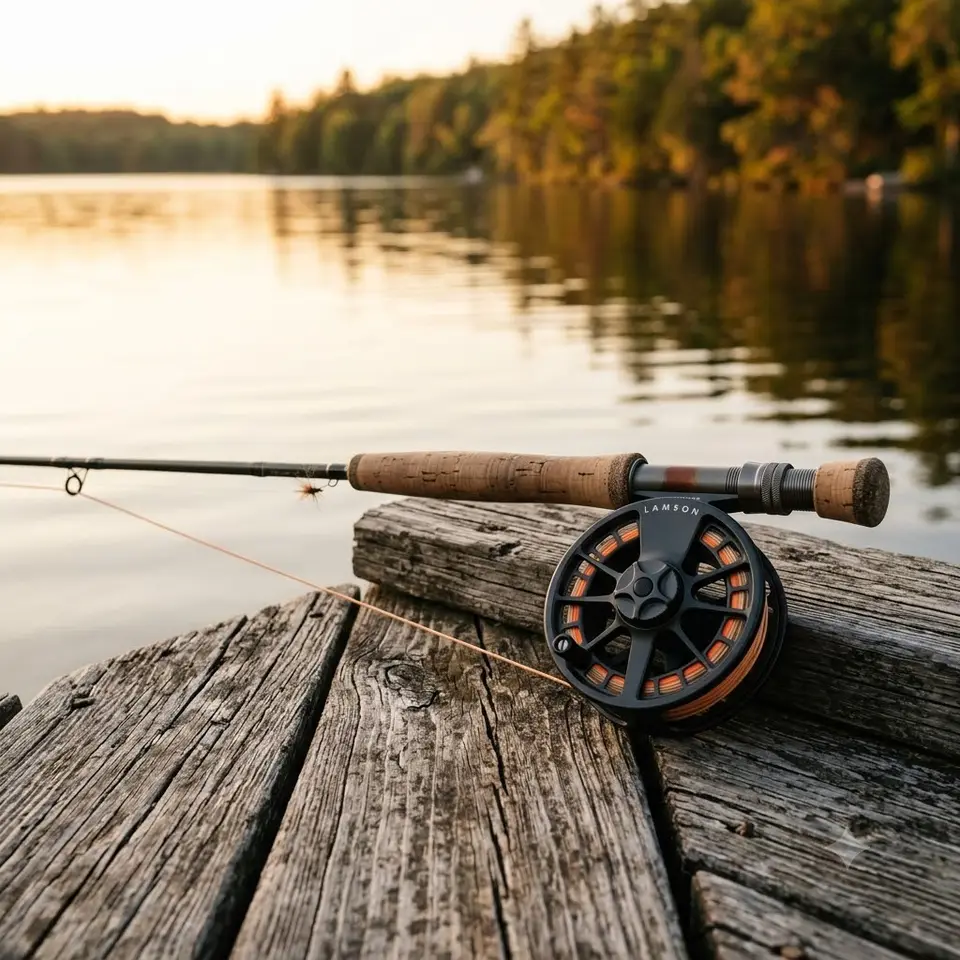
Every other outfit here throws a weighted lure; fly tackle inverts the physics - the thick line itself is the casting weight, unrolling forward to deliver a fly that weighs nothing. That inversion is why a fly rod can present a matchstick-sized mayfly at 18 meters, and why the cast is a genuine learned skill. Our full fly-box catalog covers WHAT to tie on; this is the tackle that delivers it.
What it is
A long, deeply-flexing rod (7'6"-9'+), a simple drag-and-spool reel, and the system's real engine: tapered fly line matched to the rod's 'weight' number (3wt light trout → 8wt+ salt/pike), ending in a tapered leader and tippet.
What it does best
Presenting tiny and unweighted flies with delicacy nothing else approaches, mending line for drag-free drifts, and turning rivers into the most absorbing puzzle in fishing.
How to choose one
First outfit: a 9' 5wt medium-fast rod with matching weight-forward floating line - the universal trout/panfish spec. The line matters more than the reel; spend accordingly. Balanced kits from reputable makers remove the guesswork.
Learning curve
The cast wants instruction - one lesson or a good casting course saves a season of self-taught faults. Expect awkward weeks, then a click, then addiction. Our fly-box guides carry the pattern knowledge from there.
A sensible first setup
9' 5wt rod, weight-forward 5wt floating line, 9' tapered leader in 5X, a spool of 5X tippet, and a dozen forgiving flies (woolly buggers, elk-hair caddis, pheasant tails). Panfish forgive everything while you learn.
What costs you fish
Muscling the cast instead of timing it, buying an expensive reel and cheap line (exactly backwards for trout), and starting on a fast 'expert' rod that hides the timing you're trying to learn.
Rod & reel starting points
As an Amazon Associate we may earn from qualifying purchases - at no extra cost to you. We link gear types, not sponsors' picks: you choose the exact product.