Baitcasting Rod & Reel
The baitcaster's revolving spool rewards practice with pinpoint accuracy and cranking power - and punishes impatience with the backlash every angler must earn past.
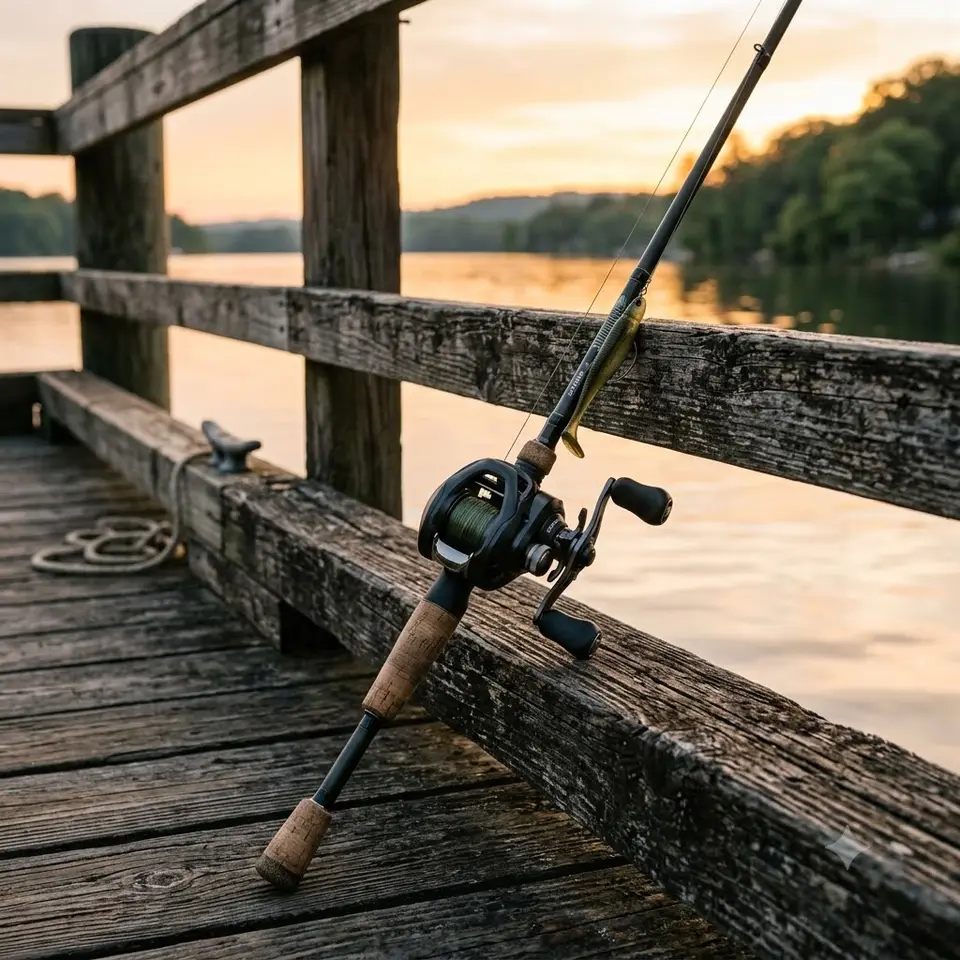
The baitcasting setup sits ON TOP of the rod with a spool that spins as line leaves it - which means power, winching torque, and surgical accuracy for the practiced thumb, and the famous 'bird's nest' backlash for everyone else's first month. Bass fishing above 10 g lure weights largely happens on these, for reasons that become obvious the day the skill clicks.
What it is
A low-profile (or round) reel with a rotating spool, driven directly by the outgoing line, mounted atop a trigger-gripped rod. Your thumb is the cast's brake and the reason accuracy gets scary-good.
What it does best
Lures 10 g and up: jigs into dock gaps, frogs over mats, big cranks, swimbaits, flipping heavy cover. Superior cranking power and line control under load - and heavier line without casting penalty.
How to choose one
A 6.3:1-7.5:1 gear ratio covers most jobs; look for adjustable magnetic OR centrifugal braking plus a spool-tension knob. Rod: 7' medium-heavy fast is bass country's default. Skip ultra-budget baitcasters - cheap braking systems teach despair.
Learning curve
The honest answer: expect a dozen backlashes while your thumb calibrates - practice in the yard with a heavy plug, brakes maxed, then loosen gradually. Two weeks of casual practice and it's yours for life.
A sensible first setup
7' medium-heavy fast rod, 7:1 reel with magnetic brakes, 15 lb fluorocarbon or 30-40 lb braid, and a 3/8 oz practice jig - tuned so the lure barely creeps down when you disengage the spool.
Where the setup goes wrong
Buying one as a first-ever combo (start spinning), zero brake adjustment out of the box, casting into wind while learning, and picking at a backlash from the wrong end - pull the loop, not the tag.
Rod & reel starting points
As an Amazon Associate we may earn from qualifying purchases - at no extra cost to you. We link gear types, not sponsors' picks: you choose the exact product.