Trolling Spoon
A thin, light spoon designed to wobble behind a diving device or downrigger at trolling speed - the mainstay for open-water trout, salmon and walleye programs.
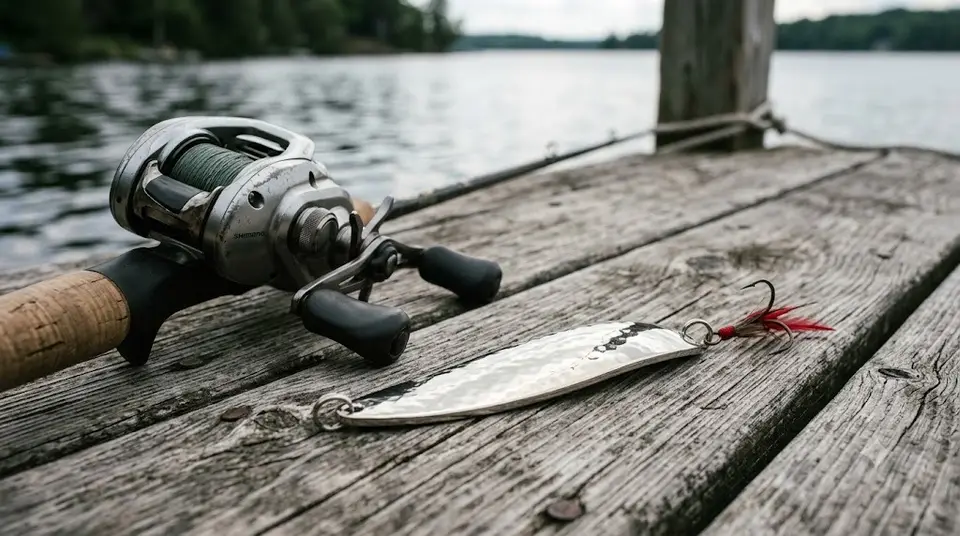
A trolling spoon is a thin, light spoon built not to be cast but to be pulled. On its own it's too light to cast far, but behind a downrigger, diving planer or inline weight it flutters and rolls with an enticing wobble at trolling speed, throwing flash that draws trout, salmon and walleye across open water. It's the backbone of Great Lakes and open-water trolling: set the depth with the delivery device, pick the speed that makes the spoon dance, and cover miles of water searching for suspended fish.
What it is & how it works
A thin-metal spoon with a light, fluttering action tuned for trolling speeds, run behind a downrigger, diver, or weight rather than cast. At the right speed the spoon wobbles and rolls, flashing like a wounded baitfish. Because the delivery device sets the depth and the spoon just needs to swim, you can precisely place flash at any level where fish are marked.
When & where it shines
Open-water trolling for trout and salmon on big lakes, walleye suspended over basins, and any program targeting fish scattered through the water column. It shines when fish suspend off structure and you need to cover water at controlled depths and speeds, mixing spoons across a spread of downriggers and divers to find the productive level and pattern.
How to fish it
Attach the spoon to a leader behind a downrigger release, diver or weight set to the marked depth, and troll at the speed that gives the spoon its best wobble (many have a fairly narrow ideal range). Stagger depths and colors across the spread until fish commit, then match the pattern. Watch for the rod loading up, and let the trolling drag set the hook before you take the rod.
Tackle & rigging
Trolling rods and reels matched to the delivery method (downrigger, diver or leadcore), with a fluorocarbon leader to the spoon. The spoon's own hook is usually a treble or single; keep it sharp. Match spoon size and weight to the target species and speed, and let the device, not the spoon, carry the depth.
Colors & sizes
Baitfish, chrome, and bright UV or glow patterns for deep and low-light trolling; match hatch colors to the local forage. Smaller spoons for finicky or smaller fish, larger for salmon and big trout. Run a spread of colors and swap toward whatever produces.
What makes this lure fail
Trolling outside the spoon's ideal speed so it doesn't wobble right, setting it at the wrong depth for the marked fish, running one color and depth instead of varying the spread to find the pattern, and grabbing the rod before the trolling drag has set the hook.
Stock the lure box
As an Amazon Associate we may earn from qualifying purchases - at no extra cost to you. We link gear types, not sponsors' picks: you choose the exact product.