X-Caddis
The X-Caddis is Craig Mathews' trailing-shuck caddis emerger - the fly for fish that slash at caddis but refuse your Elk Hair. The Zelon shuck says 'crippled and easy,' and trout believe it.
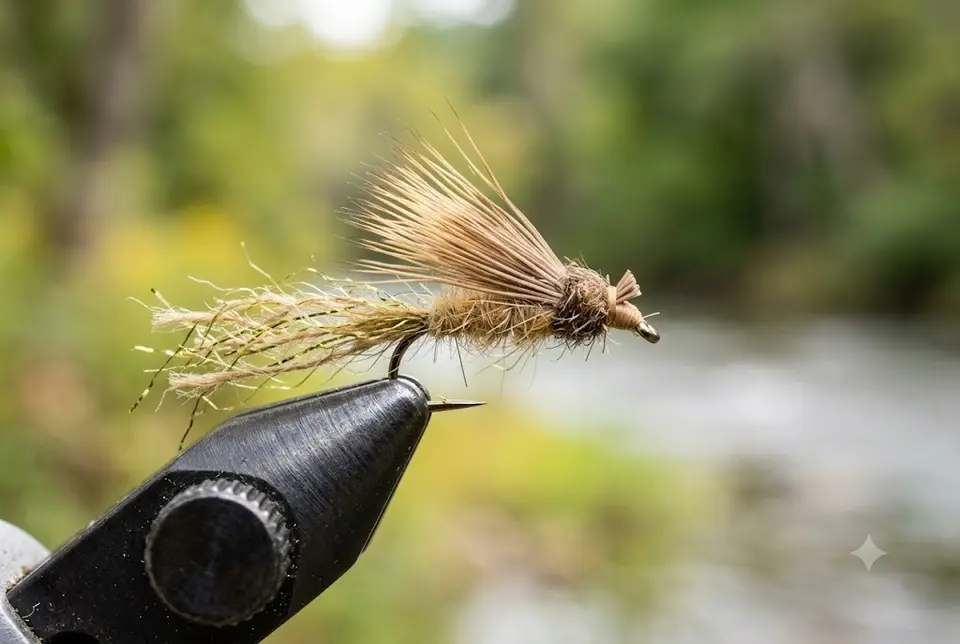
When trout are slashing at caddis but refusing your Elk Hair, the X-Caddis is the fix. Craig Mathews of Blue Ribbon Flies designed it in West Yellowstone in the 1980s after sampling what Madison River trout were actually eating during caddis hatches: not clean adults, but emergers still dragging their pupal shucks. One trailing tuft of Zelon turned that observation into one of the deadliest caddis patterns in America.
What it imitates
An emerging caddis stuck in the surface film, half out of its pupal shuck. The sparse amber Zelon tail reads as the crumpled shuck still attached to the insect - a signal to trout that this bug is crippled, going nowhere, and safe to eat without hurry. That shuck is the whole trick; the rest of the fly is a standard downwing caddis with the hackle deleted so the body sits low.
When & where it wins
Any caddis emergence, which in the US means most evenings from April through October. It shines when you see splashy, urgent rises but keep getting refusals on high-floating dries - the fish are keyed on emergers in the film, not adults on top. It earned its reputation on the Madison and the Yellowstone-area rivers, but it works on tailwaters, freestones, and spring creeks anywhere Hydropsyche or Grannom caddis hatch, which is nearly everywhere trout swim.
How to fish it
Dead-drift it exactly like a dry fly, but expect it to ride flush in the film with only the deer-hair wing above water. That makes it hard to see, so either track the spot where it should be and set on any rise near it, or fish it 18-24 in (45-60 cm) behind a visible dry like an Elk Hair or Stimulator in a two-fly rig. At the end of the drift, let it swing and lift instead of ripping it out - emerging caddis move toward the bank, and that little twitch draws savage takes.
Sizes & variants
14-18 covers most American caddis; carry 16 as the workhorse and add 18 for micro caddis and picky tailwater fish. Tan, olive, and amber bodies match the common hatches, and a black size 18 handles the small dark caddis of early season. Mathews' Iris Caddis is the sister pattern - the same shuck idea with a looped Zelon wing - for fish that want the fly even deeper in the film.
Tying notes
Three materials: a sparse tuft of amber Zelon or Antron for the shuck, a dubbed body, and a natural deer-hair downwing with the trimmed butts left standing as a rough head. No hackle - that is the point, since bare body plus buoyant wing is what parks the fly half-in, half-out of the surface. Keep the shuck sparse and slightly crinkled; a fat shuck reads as a tail and kills the effect. Genuinely a beginner-friendly tie, easier than the Elk Hair it backs up.
Where tyers go wrong
Dressing the whole fly with floatant - grease only the wing so the body sits in the film where it belongs. Tying or buying shucks that are too thick and too straight. Giving up because you cannot see it, instead of trailing it behind a bright indicator dry. And saving it as a 'refusal fly' only: on many caddis evenings it out-fishes the Elk Hair from the first cast, so there is no shame in starting with it.
Kit for fishing flies
As an Amazon Associate we may earn from qualifying purchases - at no extra cost to you. We link gear types, not sponsors' picks: you choose the exact product.