WD-40
The WD-40 is a three-material sliver of thread and wood duck that fools tailwater trout eating midge pupae and Baetis emergers - the fly to tie on when fish bulge under the surface but refuse every dry.
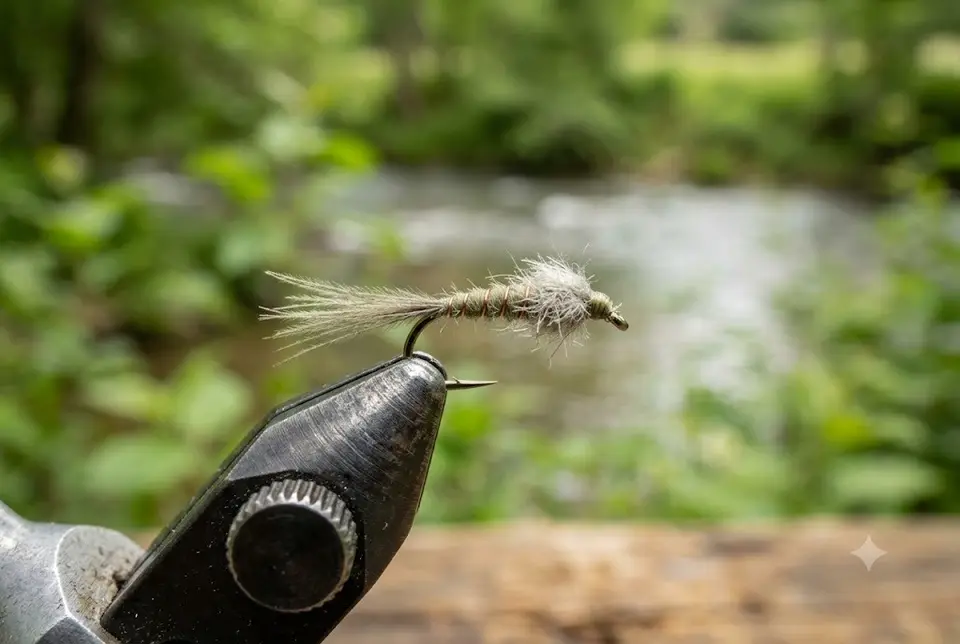
Three materials - thread, wood-duck flank, a pinch of dubbing - and the WD-40 has been quietly out-fishing fancier flies since Mark Engler tied the first one on New Mexico's San Juan River in 1982. It is the small fly you reach for when trout are eating something you can barely see: midge pupae on their way up, or little Baetis nymphs about to become blue-winged olives.
What it imitates
Two things at once, which is the trick. In gray or black it is a midge pupa: slim thread abdomen, slightly swollen thorax, wood-duck fibers over the top reading as emerging wings and legs. In olive or brown it passes for a Baetis (blue-winged olive) nymph or emerger, with the flank-fiber tail doubling as a trailing shuck. Trout in slow, clear water do not seem to vote on which; they just eat it.
When & where it wins
Tailwaters are its home field - the San Juan, Bighorn, South Platte, Frying Pan, and any dam-fed river where midges hatch year-round and the fish have earned a doctorate in fly inspection. It shines in winter midging and in spring and fall Baetis weather, those gray, drizzly afternoons when small olives ride the surface forever. Fish it in the hour before a hatch, when trout key on ascending pupae and ignore adults completely, and keep it on during the hatch for the fish that bulge under the surface instead of breaking it.
How to fish it
Dead-drift it like a nymph most of the time: as a dropper 12-18 in (30-45 cm) behind a heavier fly, or under a small yarn indicator with just enough weight to tick along near the bottom. Closer to hatch time, grease the leader and hang it a few inches under the film behind a visible dry fly. The one active move that pays is letting the fly swing up at the end of the drift - that slow lift imitates a pupa rising to the surface and triggers takes that will surprise you. Use 5X-6X tippet (roughly 0.15-0.12 mm); anything heavier drags a fly this small.
Sizes & variants
16-24, with 18-22 doing most of the work. Carry gray and olive first, then brown, black, and red. The bead-head WD-40 gets it down quickly as a dropper, and the flashback version adds a strip of pearl tinsel over the thorax for stained water or heavily pressured fish. Its close cousin the RS2 covers the same water with a slightly different profile - plenty of anglers fish the two as a tandem and let the trout pick.
Tying notes
A genuine beginner's fly. Tie in a small clump of wood-duck (or mallard dyed wood duck) flank fibers with the tips pointing back as the tail, build the abdomen from tying thread alone, dub a small thorax of muskrat or fine synthetic, then pull the leftover flank butts forward over the top as a wing case and trim. Sparse wins every time: the abdomen should stay thread-thin, and six to eight flank fibers are plenty for both tail and wing case.
Mistakes at the vise and on the water
Tying or buying it fat - a chubby WD-40 loses the slim pupa silhouette that makes it work. Fishing it too big: a size 18 looks huge next to real midges, so when refusals pile up, drop to a 20 or 22 before you change patterns. Skipping the end-of-drift lift, which is often the best second of the whole presentation. And setting the hook like you mean it - on 6X and a size 22, a smooth downstream lift lands fish that a hard strike loses instantly.
Kit for fishing flies
As an Amazon Associate we may earn from qualifying purchases - at no extra cost to you. We link gear types, not sponsors' picks: you choose the exact product.