Rusty Spinner
The Rusty Spinner matches the spent, egg-laying stage of nearly every mayfly, because most species turn rusty brown before they fall. When trout sip quietly at dusk and refuse your dun pattern, this is the answer.
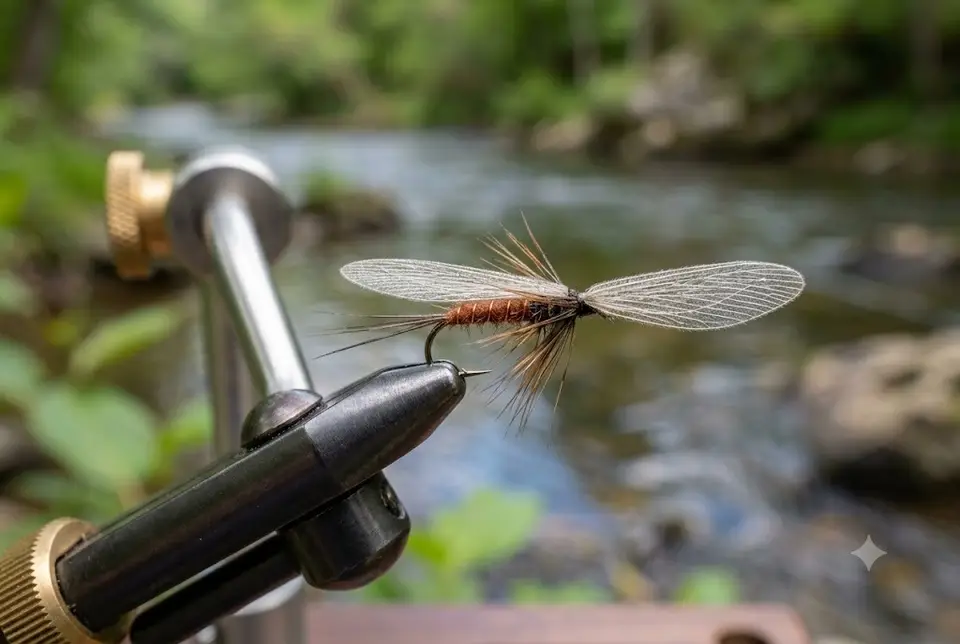
When the evening air fills with mating mayflies and the dying insects start dropping to the water, the game changes: trout stop chasing duns and start sipping spent spinners flush in the film. The Rusty Spinner is the one pattern that covers that moment for almost every mayfly river in North America, because most spinners (whatever color the dun was) turn some shade of rusty brown before they fall. If you fish evenings and don't carry this fly, you are leaving the best rise of the day on the table.
What it imitates
A spent mayfly spinner: the final, egg-laying stage of the adult, wings flat on the water in a cross shape, body trapped in the surface film. The trick that lets one fly cover dozens of hatches is chemistry - Hendricksons, Sulphurs, Pale Morning Duns, March Browns, and plenty of Baetis all darken to rusty brown as spinners. Match the size and the rusty body covers the species.
When & where it wins
Calm, warm evenings from late spring through early fall, when mating swarms form over riffles and the spent bugs wash into the slow water below. Look for pool tailouts, flats, foam lines, and back eddies - anywhere the current collects dead insects. Spring creeks and tailwaters with heavy Sulphur or PMD hatches are prime, but any trout river with mayflies has spinner falls. Don't skip mornings either: spinners from the night before collect in eddies, and fish remember them.
How to fish it
Dead drift, no exceptions - a spinner is a dead insect and cannot move. Use a downstream or down-and-across reach cast so the fly reaches the trout before the leader does, then feed slack to extend the drift. The hard part is seeing a flush-floating size 16 rusty fly at dusk: track the drift line rather than the fly itself and set on any rise near where it should be, or trail it 16-20 in (40-50 cm) behind a small visible dry as a sighter. Rises to spinners are slow, confident sips on 5X-6X water: pause a beat before setting or you will pull the fly away.
Sizes & variants
12-20 overall; 14-18 covers most falls, and a size 16 (body roughly 8 mm / 0.3 in) is the single best all-rounder. Variants worth carrying: the standard poly-wing (durable, floats well), a hen-hackle spent wing for glassy water where the softer footprint matters, a CDC-wing version for the toughest fish, and a hi-vis tie with a spot of orange or white poly on the wing for low light. A Trico spinner in 20-24 is really the same idea in black.
Tying notes
Split tails of two or three Microfibbets, a slim body of rusty-brown dubbing or a turkey biot for segmentation, and white or light dun poly yarn locked in with figure-eight wraps for the spent wings. Sparse is the whole game - the natural is a dried-out husk, so a fat thorax or bushy wings ruin the profile trout are keying on. This is an honest beginner tie: no hackle to wind, no wings to post, and the materials cost almost nothing.
Where tyers go wrong
Leaving the river at sunset, right before the fall peaks - the best fifteen minutes often happen in near dark. Fishing it during the dun hatch instead of after, when the spent bugs actually hit the water. Bulky wings and fat bodies that ride on top of the film instead of in it. Dragging the fly even slightly: a skating dead bug fools no one. And striking fast on those lazy sips: count one, then lift.
Kit for fishing flies
As an Amazon Associate we may earn from qualifying purchases - at no extra cost to you. We link gear types, not sponsors' picks: you choose the exact product.