October Caddis
A big burnt-orange dry for the West's giant fall sedge - when October Caddis are on the water, the largest trout in the river look up for one more easy meal before winter.
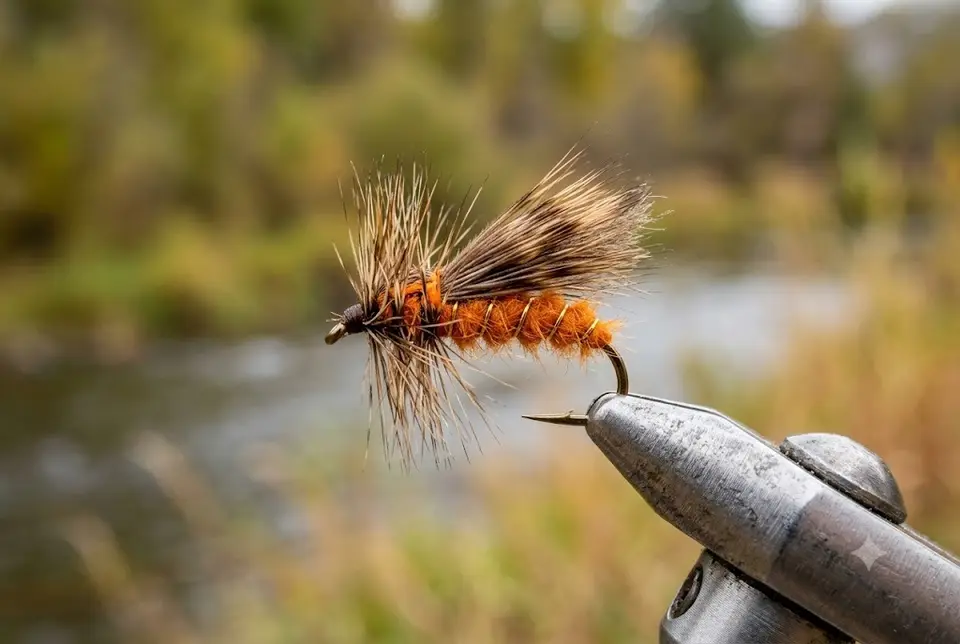
The October Caddis is the last big meal of the season on western rivers - a burnt-orange sedge the size of a small stonefly that hatches in September and October, when most anglers have already put the dry-fly box away. Trout that ignored size 18 mayflies all summer will move three feet for this bug, because one October Caddis is worth fifty midges. If you fish the West in fall, carry it.
What it imitates
The adult giant orange sedge (Dicosmoecus species) - a caddisfly running 1 to 1.4 inches (25-35 mm) with a burnt-orange body and mottled gray-brown tent wings, the biggest caddis most trout ever see. The pattern also doubles as a loose stonefly or late hopper impression, which is why it keeps catching fish for weeks after the naturals are gone.
When & where it wins
September through late October on freestone rivers of the West - the Deschutes, Rogue, Klickitat, the Yellowstone country, and on up into British Columbia. The best surface action is afternoon into dusk, when egg-laying females return to the water. It also earns its keep as a searching fly on fall days when nothing is rising: trout remember the bug, and the buoyant body will float a dropper through every riffle you pass.
How to fish it
Start with a dead drift tight to the banks, current seams, and tailouts - then break the mayfly rules. Egg-laying females skitter and dive, so a deliberate twitch or a short skate across the surface often triggers the strike a clean drift could not buy. Fish it on 3X or 4X tippet; the fly is wind-resistant and the takes are anything but delicate. Hanging a caddis pupa 18-24 in (45-60 cm) below it covers both stages at once.
Sizes & variants
6-10, with 8 as the workhorse. An orange-bodied Stimulator is the classic stand-in and skates beautifully; the Morrish October Caddis adds foam and rubber legs for rough water and heavy dropper duty; a sparser, lower-riding hair-wing version earns eats on flat tailouts where foam gets refused. Carry the foam style for pocket water and the quiet one for picky fish.
Tying notes
A stout 2XL dry-fly hook, burnt-orange dubbing or foam body, an elk or deer hair wing tied tent-style, and brown or furnace hackle palmered for grip on the water. A foam underbody buys the flotation you need for twitching and droppers. Keep the wing sparse enough that the fly lands softly instead of slapping down. It is not a beginner's first tie, but it is easier than it looks - essentially a large Elk Hair Caddis with attitude.
Where tyers go wrong
Fishing it too small - the naturals are genuinely huge, and a size 12 sells the imitation short to fish that have seen the real thing. Dead-drifting only, when the twitch is half the pattern's magic. Quitting because nothing is rising; this is a prospecting fly, and fall trout will come up for it cold. And ignoring the pupa stage entirely: for every trout that eats the winged adult, several more eat the orange pupa crawling toward shore, so fish a pupa behind or below it before you write the hatch off.
Kit for fishing flies
As an Amazon Associate we may earn from qualifying purchases - at no extra cost to you. We link gear types, not sponsors' picks: you choose the exact product.