Flying Ant
A winged ant imitation for the late-summer mating swarms that dump thousands of ants on the water - when a fall is on, trout eat this fly and refuse nearly everything else.
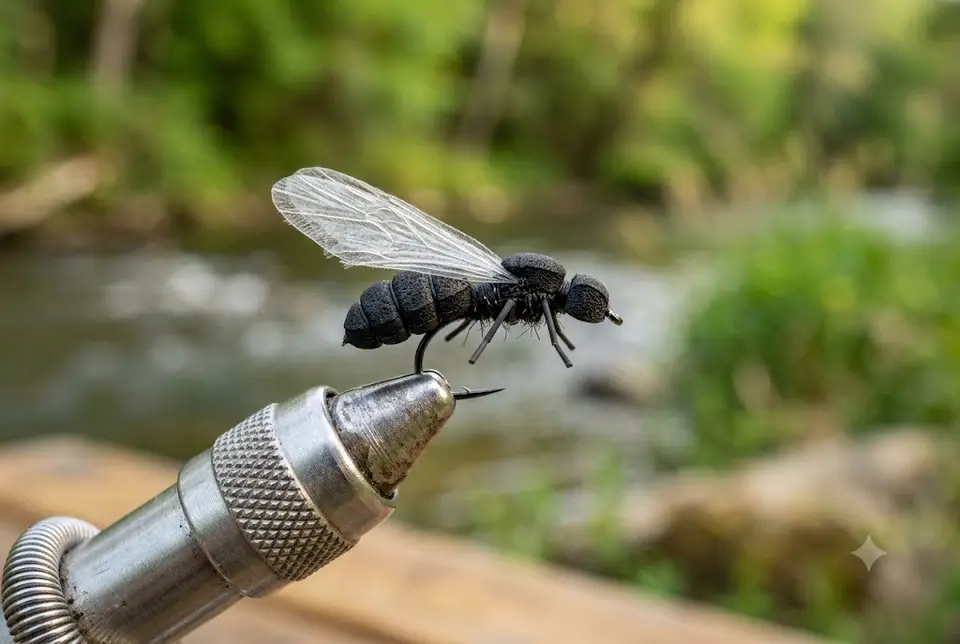
A flying ant fall is the closest thing fly fishing has to a cheat code - and the day it happens is the day half the anglers on the river have no ant in the box. A few warm afternoons each summer, mating swarms of winged ants end up on the water by the thousand, and trout eat them with a single-minded greed they show almost nothing else. When it happens, this small, unglamorous fly outfishes everything you own.
What it imitates
Winged reproductive ants - the 'alates' that leave the colony in mass mating flights on warm, humid days. They are weak fliers, and wind and thermals dump them onto rivers and lakes in huge numbers. Both the small black ants (roughly 1/8-3/16 in, 3-5 mm) and the larger cinnamon or honey-colored ants (up to 3/8 in, 9-10 mm) matter, depending on your water. The pattern copies the two-lump body with its pinched waist plus flat, glassy wings - a silhouette trout recognize instantly and, many anglers swear, actively prefer over anything else on the menu.
When & where it wins
Late June through September across most of the US, peaking in August and early September. The classic setup is a warm, humid, windless afternoon, often a day or two after rain or ahead of a storm front - that is when colonies launch their swarms. Falls happen everywhere trout live: freestones, tailwaters, spring creeks, and stillwaters, where wind lanes collect ants in ribbons. The tell is rising fish that ignore your mayfly and caddis patterns while sipping steadily at 'nothing' - look closely at the film and you will see the ants. Outside of falls, it still earns its keep as a summer searching fly along grassy banks and under overhanging trees.
How to fish it
Dead-drift it exactly like a small dry fly, with one adjustment: the naturals ride flush in the film, not on top of it, so let the fly sit low. Target risers, foam lines, seams, and bank edges; on lakes, cast into wind lanes and scum lines where ants collect. Takes are quiet, confident sips - count 'one' before setting so you do not pull it away. The fly is genuinely hard to see, so trail it 18-24 in (45-60 cm) behind a visible dry, or fish a version with a bright post. If fish stop responding on top, a sunk ant swung soft-hackle style just under the surface often keeps the game going.
Sizes & variants
14-20 covers it: 14-16 for cinnamon and honey ants, 18-20 for the common small black fall. Carry black and cinnamon at minimum. Useful variants: foam-bodied flying ants that never sink, parachute versions with a white or orange post for visibility, and a sinking soft-hackle ant for fish taking drowned naturals. Krystal Flash or organza wings add the glassy shine of the real insect.
Tying notes
Two distinct bumps - abdomen and head - with a skinny, bare waist between them. The pinched waist is the trigger, so resist the urge to fill it in. Bodies are dubbing or foam. Tie the wings flat or delta-style over the back with hackle tips, Z-lon, or organza, slightly longer than the body. One or two turns of hackle at the waist suggest legs; clip the bottom so the fly sits down in the film. An easy tie a beginner can manage in an evening.
Where tyers go wrong
The biggest one is not carrying it at all - ant falls are unpredictable, and the pattern is useless in the shop when the swarm is on the water. Others: fishing it too large, over-dressing the waist until the silhouette reads 'blob' instead of 'ant', floating it high on stiff hackle when the naturals lie flush or drowned, striking too fast on the sip, and shelving the fly once the fall ends, when it still works as a prospecting terrestrial all summer.
Kit for fishing flies
As an Amazon Associate we may earn from qualifying purchases - at no extra cost to you. We link gear types, not sponsors' picks: you choose the exact product.