Elk Hair Caddis
The Elk Hair Caddis is the buoyant, skittering adult-caddis imitation that owns riffled water and summer evenings - arguably the most-fished dry fly after the Adams.
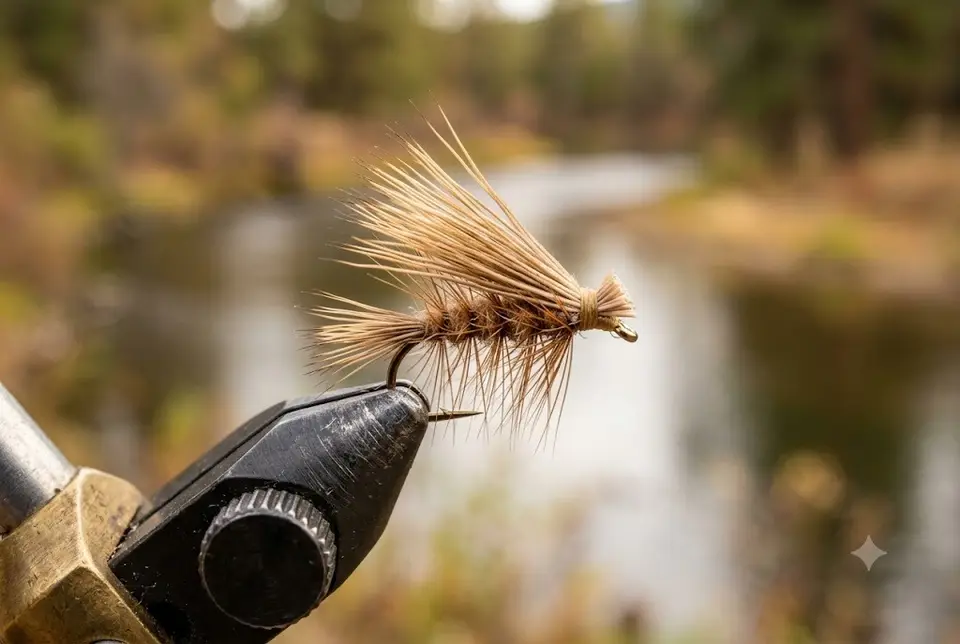
Al Troth's 1957 Elk Hair Caddis solved rough water: a tent of hollow elk hair floats through riffles that drown daintier dries, wearing the down-wing silhouette of the caddisflies that blanket summer rivers. Where mayflies mean the Adams, caddis mean this - and rivers hold more caddis than anything.
What it imitates
An adult caddisfly - the tent-winged, moth-like bug that skitters and bounces on the surface rather than sailing serenely like a mayfly.
When & where it wins
Riffles, pocket water and summer evenings; any splashy rise (caddis takes are slashes, not sips). The high-floating hair makes it the broken-water dry.
How to fish it
Dead-drift first - then, unlike mayfly dries, TWITCH it: a skated, skittering caddis triggers strikes a dead bug can't. Downstream swing-and-skate at dusk is deadly.
Sizes & variants
12-18, tan/olive/black bodies; X-Caddis (trailing shuck) for picky fish, Goddard Caddis for max flotation.
Tying notes
A true beginner's fly - dubbed body, palmered hackle, elk-hair wing, done. First-dry-fly curriculum standard.
Mistakes at the vise and on the water
Never twitching it (caddis MOVE), fishing mayfly-calm water with a caddis silhouette, and skimping the floatant that keeps the hair up.
Kit for fishing flies
As an Amazon Associate we may earn from qualifying purchases - at no extra cost to you. We link gear types, not sponsors' picks: you choose the exact product.