Tiger Shark
The tiger shark is one of the largest predatory sharks an inshore US angler can realistically encounter, capable of reaching well over ten feet.
Last reviewed: October 2026
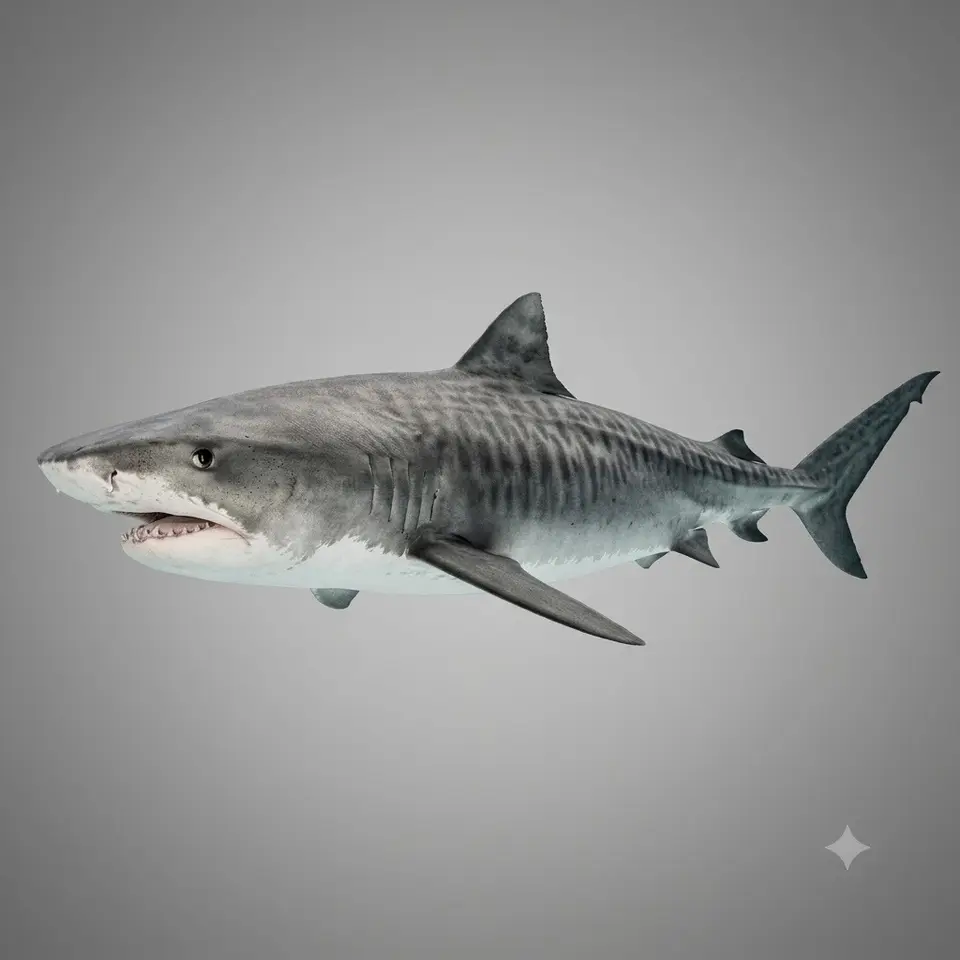 AI illustration
 Overview
The tiger shark is one of the largest predatory sharks an inshore US angler can realistically encounter, capable of reaching well over ten feet. It is a powerful, hard-fighting fish that shows up on many big-game and shore-based shark lists, but it is a slow-growing, slow-reproducing apex predator - treat every hookup as catch-and-release unless you have a clear, legal reason and permit to keep one.
Identification
Look for the broad, blunt, almost square snout and a heavy body that is gray to brownish above and pale below. Juveniles and subadults carry distinctive dark vertical bars or blotches down the flanks, which fade as the fish matures. The teeth are unmistakable: heavily serrated and curved into a cockscomb shape suited to shearing turtles, bone, and shell.
Range & Habitat
In US waters tiger sharks are common in the warm Atlantic from the Carolinas through Florida, throughout the Gulf of Mexico, and around Hawaii. They favor coastal and continental-shelf waters, harbor mouths, reefs, and channels, often moving into shallow, murky water at night. This is a strictly saltwater species.
Behavior & Diet
Tiger sharks are opportunistic, largely nocturnal feeders with famously indiscriminate diets - fish, rays, sea turtles, seabirds, other sharks, crustaceans, and often inedible debris. They tend to cruise and investigate rather than blitz, then commit hard once they decide to eat. Expect a slow, heavy, grinding fight rather than blistering runs.
Best Seasons
Fishing peaks in the warmer months when water temperatures climb and the sharks push inshore, generally late spring through fall in most US ranges. Night tides and periods after dark are typically most productive.
How to Catch Them
Fish oily, bloody baits near bottom or under a float in areas with current and structure. A well-managed chum slick greatly improves your odds by drawing sharks up-current to your baits. From beach, pier, or boat, position baits along channels and drop-offs and be patient - one confident run beats many small taps.
Tackle & Rigs
Use heavy conventional gear: 50-lb-class and up, with a stout rod and a lot of line capacity. Rig a long wire or heavy mono/cable bite leader to a strong non-offset circle hook, and use fresh chunks of bonito, mackerel, ray, or mullet. Circle hooks reduce gut-hooking and greatly improve release survival.
Landing, Handling & Release
Keep large sharks in the water - do not drag a big tiger onto sand or deck. Cut the leader close to the hook with long-handled cutters, support the fish so water flows over the gills, and revive it before release. Never put hands near the mouth or tail.
Table Quality
Not recommended. Large tiger sharks can carry ciguatera toxin, high mercury, and very high vitamin A in the liver, all of which pose real health risks, and their conservation status argues against harvest.
Where Anglers Go Wrong
Anglers frequently under-gun, using leaders and hooks that fail on a big fish. Others fight sharks to complete exhaustion or beach them for photos, badly hurting release survival.
Regulations & Conservation
Tiger sharks are assessed as Near Threatened, and rules are strict: US federal Atlantic HMS fishing requires the correct permit, non-offset circle hooks with natural bait, and minimum sizes, while state limits vary. Always confirm current NOAA HMS and state regulations before targeting them.
FAQ
Q: Are the tiger stripes always visible? No - the dark vertical bars are boldest on juveniles and fade with age, so large adults may show little or no barring.
Q: Can I eat a tiger shark I catch? It is strongly discouraged due to ciguatera, mercury, and high liver vitamin A, plus conservation concerns.
Q: What is the best bait? Fresh, oily, bloody chunks like bonito, mackerel, or ray fished in a chum slick work best.
Tackle for tiger shark
As an Amazon Associate we may earn from qualifying purchases - at no extra cost to you. We link gear types, not sponsors' picks: you choose the exact product. The partner-store link may earn us a commission too.