Schoolmaster Snapper
The schoolmaster snapper is a hard-fighting reef and mangrove snapper prized by inshore and light-tackle anglers across Florida and the Caribbean.
Last reviewed: October 2026
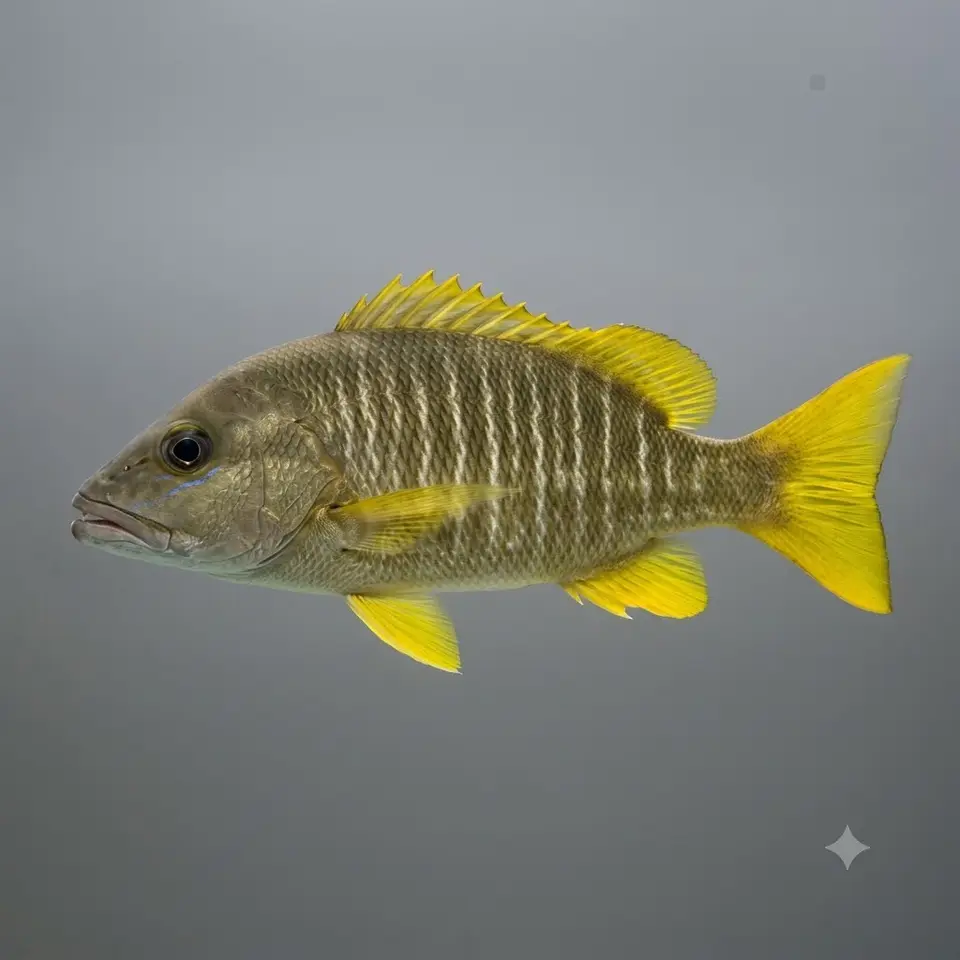 AI illustration
 Overview
The schoolmaster snapper is a hard-fighting reef and mangrove snapper prized by inshore and light-tackle anglers across Florida and the Caribbean. It gets its name from its habit of hanging in loose, orderly schools around structure during the day. Most fish landed are modest, roughly 1 to 2 pounds, but larger reef specimens can reach a couple of feet and several pounds.
Identification
Look for an olive to brownish-gray body, often marked with about eight pale, narrow vertical bars that come and go with mood. The giveaway is the fins: dorsal, anal, pelvic, and tail run distinctly yellow to yellow-orange. A faint pale blue line or bar sits below and in front of the eye, and the mouth carries sharp canine teeth typical of snappers.
Range & Habitat
It ranges through the western Atlantic from Florida and the Bahamas across the Caribbean and Gulf of Mexico, straying north on occasion but rarely common far up the US coast. Juveniles favor mangrove roots and seagrass flats, while adults hold on coral reefs, rocky ledges, wrecks, bridge pilings, and dock structure. They generally stick to warm, relatively shallow to moderate depths.
Behavior & Diet
Schoolmasters are structure-oriented ambush feeders that shelter near cover by day and forage more actively around dawn, dusk, and night. Their diet is heavily carnivorous, leaning on shrimp, crabs, and other crustaceans plus small fish, worms, and mollusks. They can be wary, especially in clear, pressured water.
Best Seasons
In tropical and subtropical waters they are available year-round, with warmer months typically producing the most consistent inshore action in Florida. Nighttime and low-light periods often fish better than bright midday sun.
How to Catch Them
Target them tight to mangroves, reefs, wrecks, and lighted bridges or docks with live or fresh-cut shrimp, small baitfish, or cut bait. A light chum trickle can draw them out of cover and into a feeding mood. Cast toward structure, keep bait natural, and be ready for a fast dive back into cover on the strike.
Tackle & Rigs
A medium-light spinning setup with 10 to 20 pound line handles most schoolmasters well. Add a 20 to 30 pound fluorocarbon leader, since these fish are line-shy near clear structure, and use a knocker rig, small jig head, or a light egg-sinker rig with a 1/0 to 2/0 hook.
Landing, Handling & Release
Watch the sharp canine teeth, spiny dorsal, and abrasive gill plates when unhooking. Support the fish horizontally, minimize air time, and use pliers for quick hook removal. Vent or use a descending device on deeper-caught fish showing barotrauma before release.
Table Quality
The flesh is white, mild, and flaky, and smaller fish are good eating. Caution: larger schoolmasters from certain tropical reef areas, especially parts of the Caribbean, can carry ciguatera toxin, so check local advisories and favor smaller fish where ciguatera is a known concern.
Habits That Lose Fish
Using heavy, visible leader in clear water spooks these fish, so downsize when bites stop. Anglers also lose hooked fish by giving slack, letting them reach cover, and some overlook that big reef specimens are the higher ciguatera risk.
Regulations & Conservation
Schoolmaster snapper is generally listed as of low conservation concern, but it is regulated under state snapper rules and, in Florida, falls within the aggregate snapper bag limit. Always confirm current size, bag, and season limits for your state or waters before keeping any fish.
FAQ
Q: Are schoolmaster snapper good to eat? Yes, they have mild white flesh, though larger tropical-reef fish can carry ciguatera, so favor smaller ones and check local advisories.
Q: Where do I find them? Around mangroves, reefs, wrecks, bridges, and dock pilings in warm, relatively shallow water.
Q: What bait works best? Live or fresh shrimp and small cut or live baitfish fished tight to structure.
Tackle for schoolmaster snapper
As an Amazon Associate we may earn from qualifying purchases - at no extra cost to you. We link gear types, not sponsors' picks: you choose the exact product. The partner-store link may earn us a commission too.