Skipjack Tuna
The skipjack is the small, blazing-fast tuna that fills the world's canned-tuna market and thrills light-tackle offshore anglers.
🗓️ Last reviewed: July 2026
Overview
The skipjack is the small, blazing-fast tuna that fills the world's canned-tuna market and thrills light-tackle offshore anglers. Traveling in huge surface-crashing schools, it offers nonstop action and doubles as premium bait for bigger game.
Identification
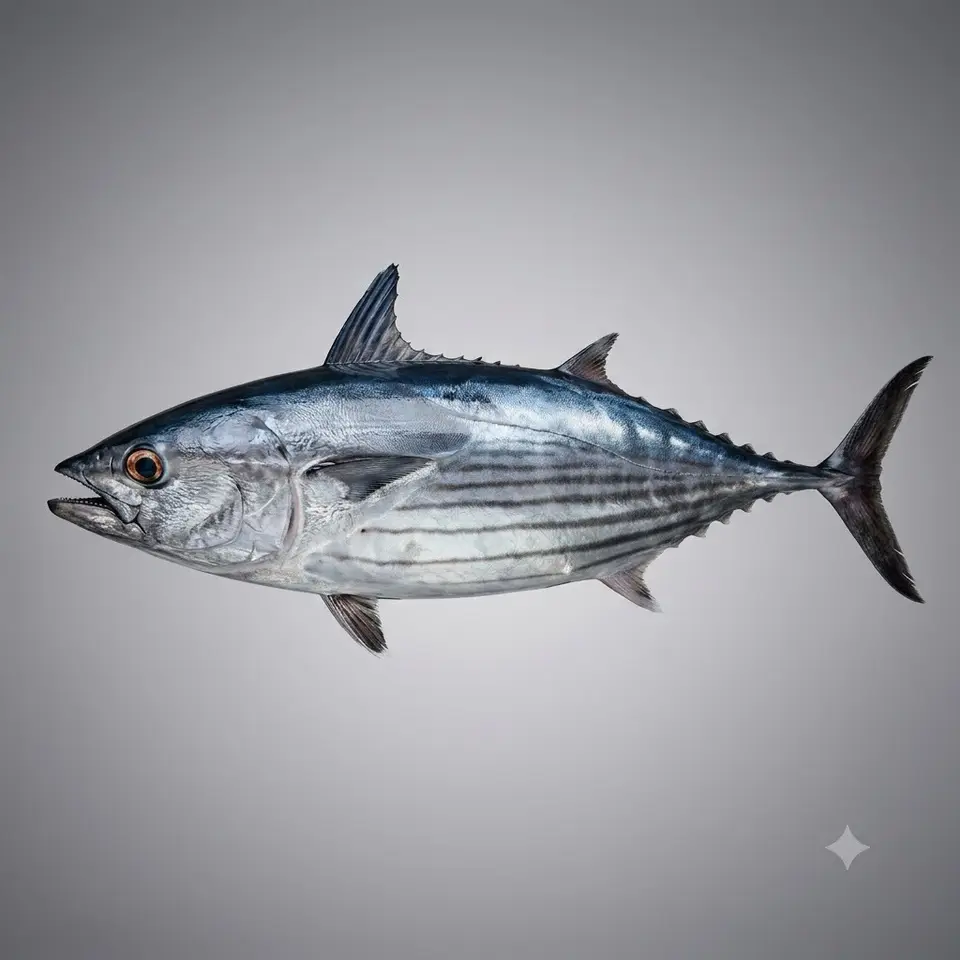
Skipjack are streamlined and steel-blue above with silver sides marked by several bold dark horizontal stripes low on the belly - the surest ID among small tunas. They lack the spots and long fins of other species.
Range & Habitat
They roam warm tropical and subtropical seas worldwide, running offshore along both US coasts and following warm currents and bait over deep water.
Behavior & Diet
Skipjack are relentless schooling predators that crash bait on the surface in feeding frenzies, often marked by diving birds, chasing small fish, squid and crustaceans.
Best Seasons
They run in the warm months as tropical water and bait push the schools within reach of the coast.
How to Catch Them
Trolling small feathers and lures to locate schools, then casting jigs and small lures into the boils; birds and breaking fish give them away.
Tackle & Rigs
Light to medium offshore spinning or conventional gear, 20-40 lb line, small trolling lures and jigs.
Landing, Handling & Release
They fight hard for their size; bleed and ice keepers fast, or keep some fresh as prime bait for marlin and larger tuna.
Table Quality
Skipjack is the main canned "light" tuna - stronger and darker than albacore, good grilled fresh and excellent as bait.
Common Mistakes
Overlooking them as bait-only and not chilling the strong-flavored meat quickly.
Regulations & Conservation
Generally abundant and managed under tuna frameworks. Confirm current federal and state regulations before keeping fish. We do not give legal advice.
FAQ
How do I ID a skipjack? Bold dark belly stripes on a steel-blue, streamlined body.
Good bait? Yes - a top live and dead bait for big offshore predators.
🎣 Tackle for skipjack tuna
As an Amazon Associate we may earn from qualifying purchases - at no extra cost to you. We link gear types, not sponsors' picks: you choose the exact product. The partner-store link may earn us a commission too.