Cubera Snapper
The cubera is the largest snapper in the Atlantic, a thick-shouldered reef and wreck brute that can exceed 100 pounds, with the IGFA all-tackle record topping 120 pounds.
Last reviewed: October 2026
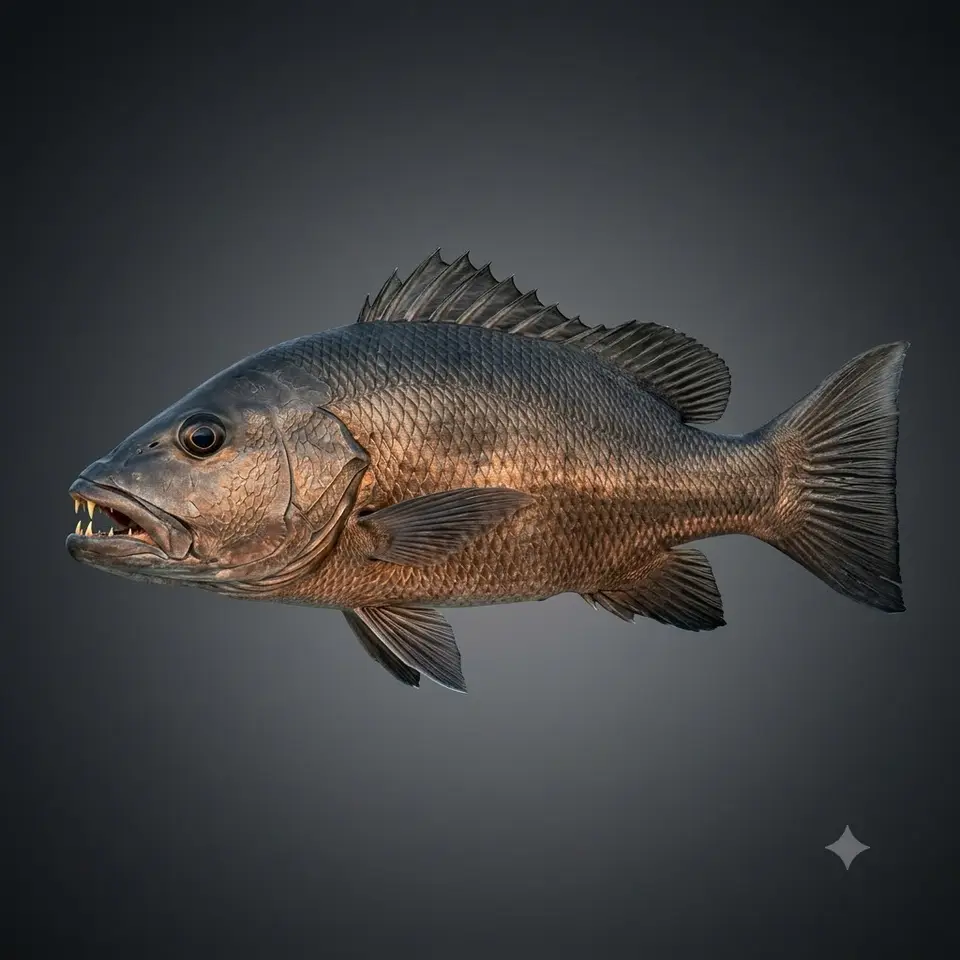 AI illustration
 Overview
The cubera is the largest snapper in the Atlantic, a thick-shouldered reef and wreck brute that can exceed 100 pounds, with the IGFA all-tackle record topping 120 pounds. A hooked cubera bolts straight back into structure and will break off casual tackle in seconds, which makes it a genuine big-game bottom target.
Identification
A heavy, deep-bodied snapper colored slate gray to dark reddish-brown, often with a coppery or purplish cast (the name cyanopterus means "blue fin"). Its signatures are a broad, blunt head and unusually large, exposed canine teeth - more prominent than on any other Atlantic snapper. Smaller cubera are easily confused with gray (mangrove) snapper, but cubera grow far larger and bulkier.
Range & Habitat
Found in the western Atlantic from Florida and the Gulf of Mexico south through the Caribbean to Brazil, straying occasionally farther north. Adults hold on deep reefs, ledges, rockpiles, and shipwrecks, while juveniles use mangroves, seagrass, and estuaries. In US waters they are most reliably targeted off South Florida and the Keys.
Behavior & Diet
Cubera are ambush predators that eat fish, crabs, and cephalopods, with a well-known appetite for spiny lobster. They are strongly structure-oriented and most active at night and in low light. In summer they form predictable spawning aggregations near the full moon, which concentrates big fish but also leaves them easy to overharvest.
Best Seasons
Late spring through summer is prime, with the warmest months producing the biggest fish. Aggregations around the summer full moons (roughly July to mid-September off Florida) offer the best shot at a trophy, and night tides over structure consistently outproduce daytime.
How to Catch Them
Anchor or drift over a wreck or reef edge and present a large live bait - blue runners, big pinfish, jacks, or a live lobster - tight to the structure, ideally after dark. Be ready the instant the rod loads: you must turn the fish's head immediately or it reaches the rocks and cuts you off.
Tackle & Rigs
Use heavy conventional gear (50-80 lb class) with 65-100 lb braid, a heavy 80-130 lb leader, and a strong circle hook (roughly 8/0-11/0). A fish-finder or knocker rig with enough lead to hold bottom works well. Set drags heavy and lock down when the bite comes.
Landing, Handling & Release
Expect a brutal, short fight and support the fish's full weight when boating it. If caught from deep water, use a descending device or vent to improve release survival. Large cubera are old, important breeders, so photograph trophies quickly and release them.
Table Quality
Smaller cubera are good eating, with firm, white, mild fillets. However, large reef fish - especially from tropical Caribbean waters - carry a genuine ciguatera risk, since the toxin accumulates in big apex reef predators. For both food safety and conservation, releasing the largest fish is the smart call.
Habits That Lose Fish
Fishing too light, leaving the drag loose, and reacting slowly are the classic ways to lose a cubera to the structure. Anglers also underestimate ciguatera in big fish and overlook that these are night-biters, fishing the wrong tide and time of day.
Regulations & Conservation
Cubera are managed in US waters; in Florida, fish 30 inches or larger are limited to two per angler per day, with no more than two aboard a vessel, and fall outside the general snapper aggregate, while smaller fish count within it. The species is considered vulnerable to overfishing because its spawning aggregations are so easily targeted. Always confirm current FWC and NOAA regulations before keeping one.
FAQ
Q: How big do cubera snapper get? They are the largest Atlantic snapper, commonly caught from 10-40 pounds with trophies exceeding 100 pounds.
Q: Are cubera snapper safe to eat? Small ones are excellent, but large tropical-reef fish can carry ciguatera, so releasing big cubera is safest.
Q: What is the best bait for a trophy cubera? A large live bait fished on structure at night - a live spiny lobster is the legendary choice.
Tackle for cubera snapper
As an Amazon Associate we may earn from qualifying purchases - at no extra cost to you. We link gear types, not sponsors' picks: you choose the exact product. The partner-store link may earn us a commission too.