Dog Snapper
The Dog Snapper is a large, hard-fighting reef snapper of the western Atlantic, named for the enlarged canine teeth in the front of its jaw.
Last reviewed: October 2026
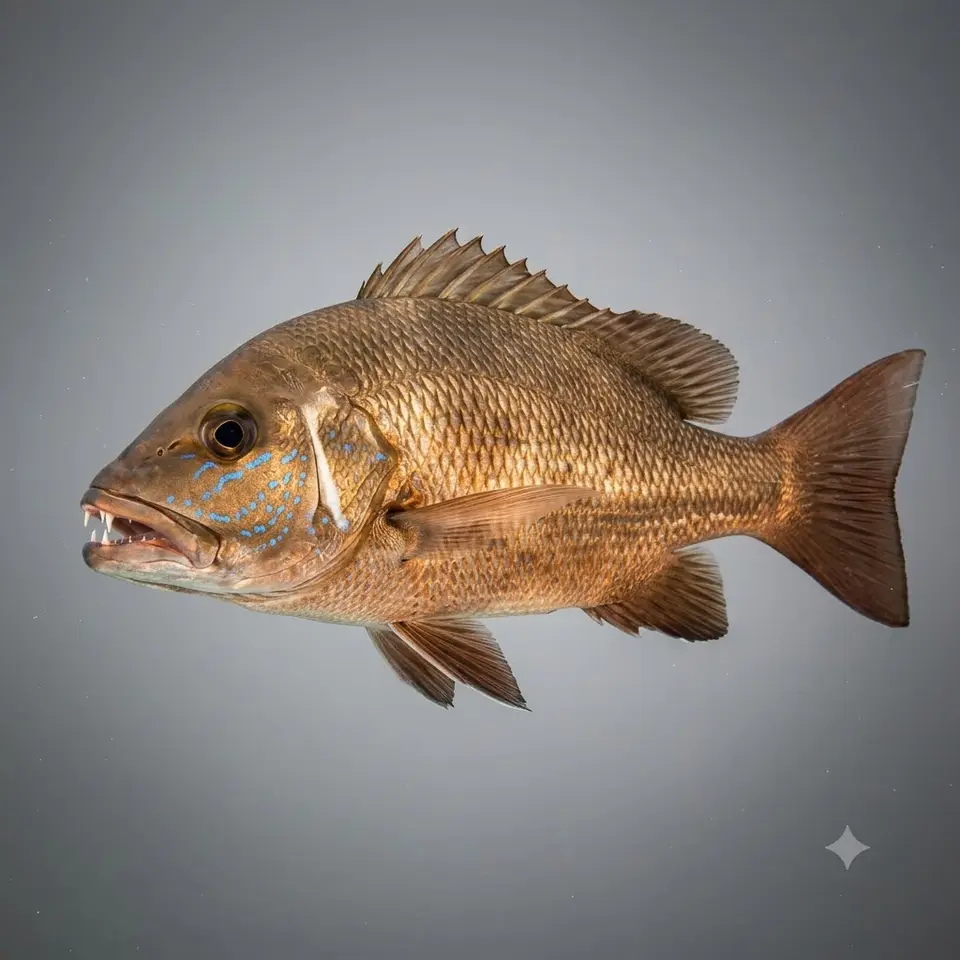 AI illustration
 Overview
The Dog Snapper is a large, hard-fighting reef snapper of the western Atlantic, named for the enlarged canine teeth in the front of its jaw. It is a prized light-tackle and reef target that grows well beyond most other snappers, but larger fish carry a real ciguatera risk that anglers should take seriously.
Identification
Look for a robust, coppery to olive-brown body that often shows a bronze or reddish cast, with a distinctive pale, triangular or crescent-shaped bar below the eye and a pale blue broken line of spots under the eye in adults. The most telltale feature is the pair of oversized canine ("dog") teeth at the front of the upper jaw, prominent enough to show even when the mouth is closed. Fins are often yellowish to reddish, and the body is deeper and heavier than that of a mangrove (gray) snapper, with which small ones are frequently confused.
Range & Habitat
Dog Snapper occur in the western Atlantic from the southeastern US and Bermuda through the Gulf, Caribbean, and down to Brazil. Adults hold on offshore reefs, ledges, wrecks, and rocky bottom, while juveniles use mangroves, estuaries, and even venture into the lower reaches of coastal rivers. In US waters they are most common around South Florida and the Keys, and around Puerto Rico and the US Virgin Islands in the Caribbean.
Behavior & Diet
This is a wary, largely solitary ambush predator that hunts most actively at dawn, dusk, and after dark. It feeds on fish, shrimp, crabs, and other crustaceans, and larger fish rely heavily on smaller reef fish. Big dogs are cautious and line-shy, making them a genuine challenge to fool.
Best Seasons
In the US they can be caught year-round in warm reef water, but fishing is generally best in the warmer months from late spring through fall. Night trips and low-light periods consistently produce the biggest fish.
How to Catch Them
Fish structure directly - reef edges, ledges, wrecks, and rocky bottom - and present baits near the bottom where the fish hold. Live or fresh-cut baitfish, whole shrimp, and small live pinfish or grunts are all effective, and stealth matters: light leaders and quiet presentations fool more of the big, wary ones. Anchoring uptide and chumming lightly to draw fish out of the structure works well, as does slow-trolling or drifting live baits along the reef line at night.
Tackle & Rigs
A medium to medium-heavy spinning or conventional outfit with 20-50 lb line handles most fish, scaled up near heavy structure where you must turn them fast. A simple knocker rig or fish-finder rig with a fluorocarbon leader and a strong live-bait hook is standard. Because they bolt straight for cover on the strike, favor abrasion-resistant leader and lock the drag enough to stop that first run.
Landing, Handling & Release
Turn the fish's head early and keep steady pressure to keep it out of the rocks. Support larger fish horizontally, avoid touching the gills, and use a dehooker or long pliers to stay clear of those canines. If venting or descending is needed for deep-caught fish showing barotrauma, use a descending device to improve release survival.
Table Quality
Small to mid-size Dog Snapper are excellent eating with firm, white fillets. However, large individuals - especially in tropical reef areas - are a well-documented ciguatera risk, and the safest practice is to release big fish rather than eat them. Check local advisories, and when in doubt, do not consume large reef-caught dogs.
What Costs Anglers Bites
The biggest mistakes are fishing too heavy and too noisy for such a wary fish, and giving a hooked fish slack so it reaches structure and cuts you off. Anglers also routinely confuse small dogs with mangrove snapper and, more dangerously, eat large dogs without regard to ciguatera.
Regulations & Conservation
Dog Snapper are managed within the reef snapper-grouper complex, with size and bag limits that vary by state and federal jurisdiction, so check current Florida (FWC) and NOAA/Gulf and South Atlantic Council rules before keeping any. Population data are limited - the IUCN lists the species as Data Deficient globally (and Near Threatened on Brazil's national list), with localized overexploitation and loss of juvenile mangrove habitat in parts of its range. Big fish are also old and slow to replace, so releasing large ones is the responsible choice.
FAQ
Q: Are Dog Snapper safe to eat? Small to medium fish are excellent, but large ones carry a real ciguatera risk and are best released.
Q: How do I tell a Dog Snapper from a mangrove snapper? Look for the pale bar and blue-spotted line under the eye, a deeper body, and the prominent canine teeth.
Q: What is the best way to catch a big one? Fish live or fresh bait near reef structure at low light or night with a stealthy, light-leader presentation.
Tackle for dog snapper
As an Amazon Associate we may earn from qualifying purchases - at no extra cost to you. We link gear types, not sponsors' picks: you choose the exact product. The partner-store link may earn us a commission too.