Bull Shark
The bull shark is a stocky, powerful inshore shark famous for tolerating fresh water and pushing far up rivers and into coastal lakes.
Last reviewed: October 2026
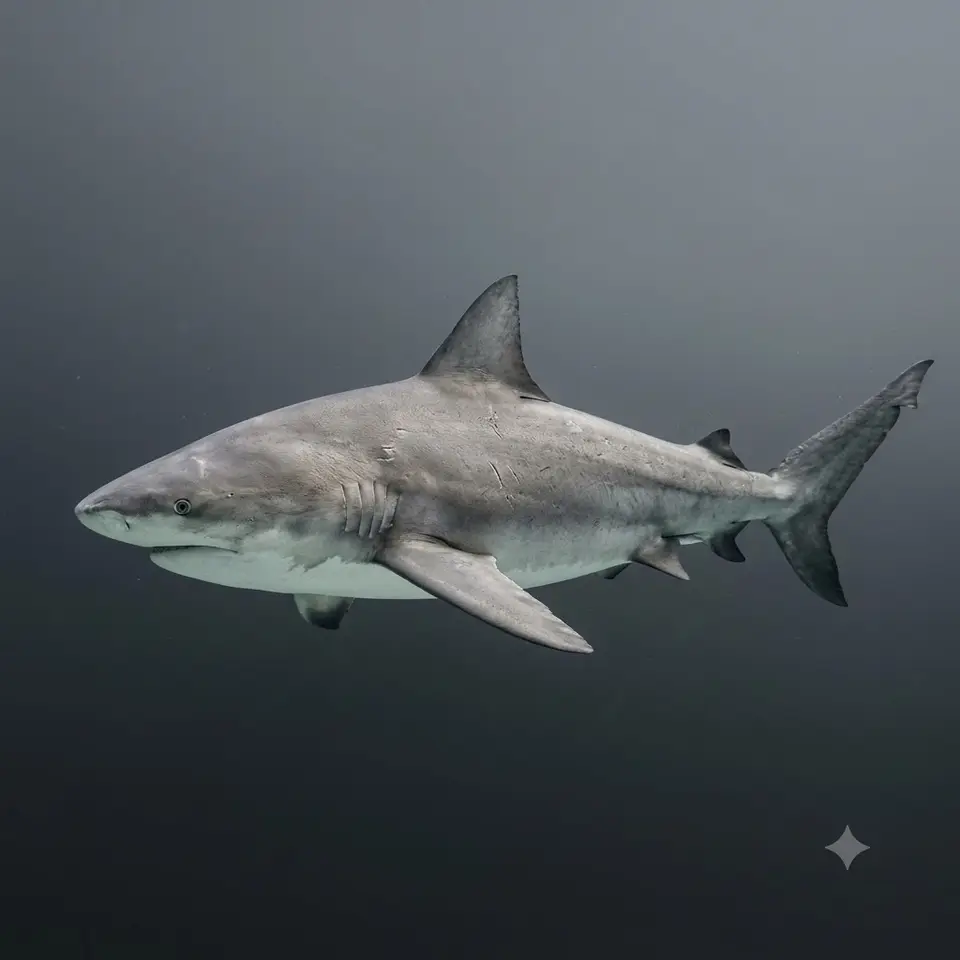 AI illustration
 Overview
The bull shark is a stocky, powerful inshore shark famous for tolerating fresh water and pushing far up rivers and into coastal lakes. For US anglers it is a reliably encountered big shark across the Gulf of Mexico and the Southeast Atlantic and a hard-pulling catch-and-release target. The IUCN lists it as Vulnerable, so careful handling matters.
Identification
Look for a heavy, thick body, a short, broad, bluntly rounded snout, and small eyes. It is gray above and white below, with a large triangular first dorsal fin, a much smaller second dorsal, and no ridge between the two dorsals. The upper teeth are broad, triangular, and heavily serrated.
Range & Habitat
Bull sharks are common through the Gulf of Mexico and up the warm-season Atlantic coast, favoring shallow, murky inshore water: bays, estuaries, passes, river mouths, and surf zones. Unlike almost all other sharks, they osmoregulate well enough to travel far up rivers, including the Mississippi, and juveniles use low-salinity estuaries and river mouths as nurseries.
Behavior & Diet
These bold, opportunistic apex predators hunt in dirty water where visibility is poor. They eat bony fish, rays and smaller sharks, crustaceans, sea turtles, and occasionally birds and marine mammals. Their aggressive reputation is earned, and they are among the sharks most often involved in incidents with people.
Best Seasons
Action peaks from late spring through fall as the water warms, usually best in summer. They follow bait migrations like the fall mullet run and move south or offshore as water cools in winter.
How to Catch Them
Bottom fishing with fresh cut bait is the classic method from surf, piers, bridges, jetties, and boats near passes and inlets. Oily baits such as mullet, ladyfish, bluefish, or bonito work well, especially on moving tides at dawn and dusk. A chum slick helps concentrate fish in a channel or estuary.
Tackle & Rigs
Use heavy conventional gear: a stout rod, a 6/0 to 14/0 reel, and 50 to 100 pound line sized to the sharks expected. Rig a large non-offset circle hook (roughly 8/0 to 16/0) on a wire bite leader to beat their teeth, using a fish-finder (sliding sinker) rig with a strong barrel swivel.
Landing, Handling & Release
Keep large sharks in the water; do not drag them onto sand or the deck. Use a de-hooker or long pliers, stay clear of the head, and cut the leader close to the hook on big or deeply hooked fish. Circle hooks and minimal air exposure greatly improve survival.
Table Quality
Bull shark is a poor table choice: as a long-lived apex predator it carries high mercury, and tropical specimens can pose a ciguatera risk. The urea-rich flesh must be bled and iced immediately, then soaked, or it turns ammonia-tainted. Between mercury, ciguatera, and the Vulnerable listing, release is the better call.
Mistakes That Cost You Fish
Fishing light leader or mono that the teeth shear through, and undergunned tackle that exhausts a shark to death during a long fight. Dragging big sharks up the beach for photos and delaying release also kill fish that would otherwise survive.
Regulations & Conservation
Rules vary by state and by federal HMS (NOAA) waters; a shark permit is commonly required, with minimum sizes, tight bag limits, and often mandatory non-offset, non-stainless circle hooks for shore-based fishing. Confirm current local regulations before targeting them, and given the Vulnerable status, treat this as a release fishery.
FAQ
Q: Can bull sharks really live in fresh water? Yes, they osmoregulate well enough to survive in rivers and lakes and can travel far upstream, though they still breed in salt or brackish water.
Q: Are bull sharks good to eat? They are edible but not recommended, due to high mercury, possible ciguatera in the tropics, and conservation concerns.
Q: How big do they get? Adults commonly run 7 to 8 feet, and the largest can exceed roughly 11 feet and several hundred pounds.
Tackle for bull shark
As an Amazon Associate we may earn from qualifying purchases - at no extra cost to you. We link gear types, not sponsors' picks: you choose the exact product. The partner-store link may earn us a commission too.