Bar Jack
The bar jack is a small, hard-fighting reef jack of the western Atlantic and a favorite light-tackle and fly target across Florida, the Keys, and the Caribbean.
Last reviewed: October 2026
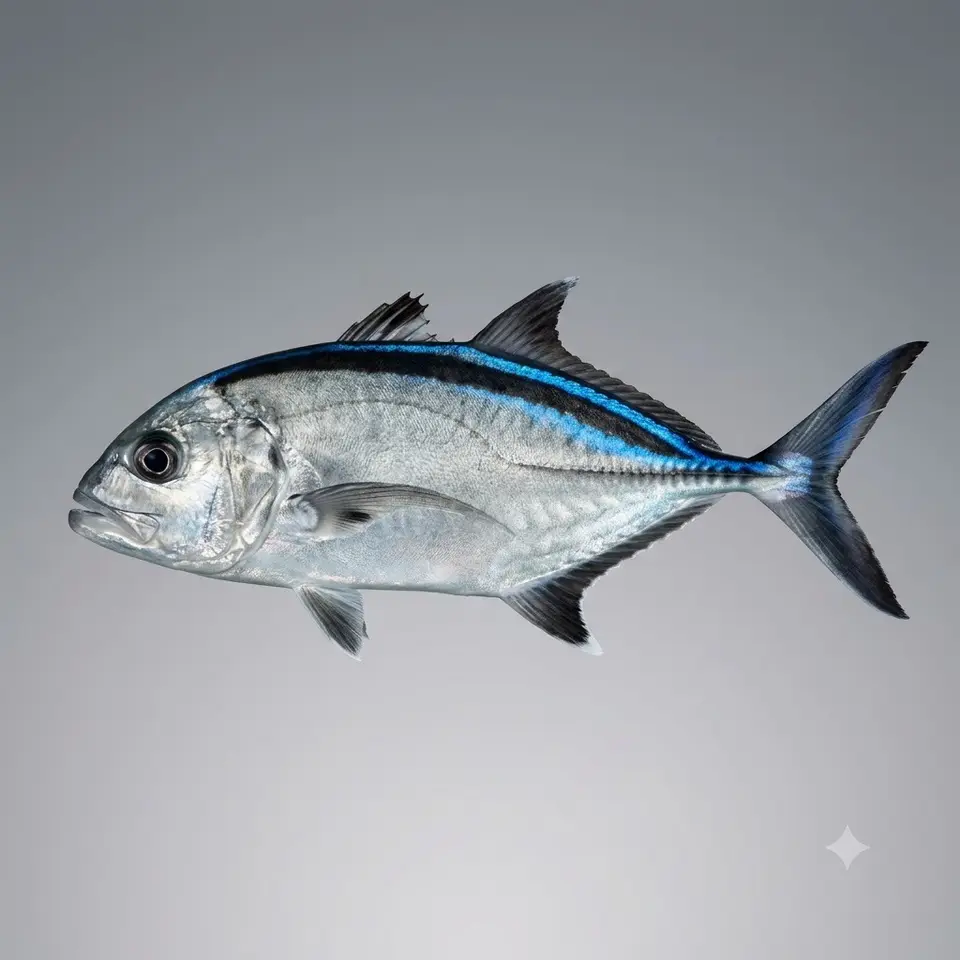 AI illustration
 Overview
The bar jack is a small, hard-fighting reef jack of the western Atlantic and a favorite light-tackle and fly target across Florida, the Keys, and the Caribbean. Most run under a couple of pounds, but they make up for size with blistering runs and a willingness to eat a fly or small lure. Anglers often hook them by accident while bonefishing or working reef edges.
Identification
Slender and silvery, it is best told apart by the dark blue-black bar that runs the length of the back and drops into the lower lobe of the tail - a mark no other Atlantic jack shares. An electric-blue line often traces just below the dark bar. Feeding or excited fish can flush almost black over the reef, which sometimes gets them mislabeled as "black jack."
Range & Habitat
Found from Florida and the Bahamas through the Gulf and the Caribbean south to Venezuela and possibly Brazil, straying north along the US coast in warm months (Wikipedia gives New Jersey and Bermuda as the northern edge). They favor clear water over coral reefs, drop-offs, channel edges, and shallow flats. Juveniles ride floating sargassum offshore.
Behavior & Diet
Bar jacks are schooling, sight-feeding predators that chase small fish, shrimp, and crabs. They famously shadow southern stingrays and bottom-grubbing fish, darting in to grab prey stirred off the bottom. Schools move fast and feed opportunistically, so the bite can turn fast and furious once you find them.
Best Seasons
They can be caught year-round in the tropical parts of their range, with the warmest months (late spring through fall) putting the most fish onto US flats and reef edges. Warm, calm, clear-water days on a moving tide tend to fish best.
How to Catch Them
Sight-cast to cruising fish or blind-cast around reef edges, channels, and drop-offs. Small flashy flies, jigs, spoons, and soft plastics worked with a quick retrieve draw hard strikes; live or fresh shrimp and small baitfish also produce. Keep the lure moving - they chase.
Tackle & Rigs
Light spinning gear (roughly 7-15 lb) or a 6-8 wt fly rod handles them well and keeps the fight fun. A short length of 20-30 lb fluorocarbon leader guards against their raspy mouths and the occasional reef contact. Downsize hooks and lures to match their modest mouths.
Landing, Handling & Release
Expect several sizzling runs before you can lead one to hand. Support the fish, avoid the sharp scutes near the tail, and use wet hands or a rubber net. They revive quickly - point them into the current and let them swim off.
Table Quality
Firm and edible, bar jack is eaten across the Caribbean, best bled and iced immediately and cooked fresh. The serious caveat is ciguatera: reef-feeding jacks in tropical waters can carry the toxin, and the risk climbs with fish size and locale. Check local advisories, and when in doubt, release.
Where Anglers Go Wrong
Fishing too heavy is the biggest error - oversized tackle kills the sport and can spook wary fish on clear flats. Retrieving too slowly gets ignored, since these are chase predators. Anglers also underestimate ciguatera and eat large reef fish from high-risk areas.
Regulations & Conservation
The bar jack is common and listed as Least Concern, not overfished. It usually falls under general "unregulated species" rules rather than its own size or bag limit - in Florida that means an aggregate cap - so always confirm current state and federal regulations before keeping any.
FAQ
Q: Is a bar jack safe to eat? Smaller fish usually are, but larger reef-caught bar jacks can carry ciguatera in tropical zones, so heed local advisories. Q: Why does my bar jack look almost black? Feeding and excited fish darken dramatically over the reef; it is normal color-flushing, not a different species. Q: What is the best way to catch one? Light tackle or fly with small, fast-moving flashy lures cast to reef edges and flats.
Tackle for bar jack
As an Amazon Associate we may earn from qualifying purchases - at no extra cost to you. We link gear types, not sponsors' picks: you choose the exact product. The partner-store link may earn us a commission too.