Taimen
The taimen is the world's largest salmonid and one of the ultimate bucket-list gamefish, a giant, ancient river predator of Siberia and Mongolia.
Last reviewed: October 2026
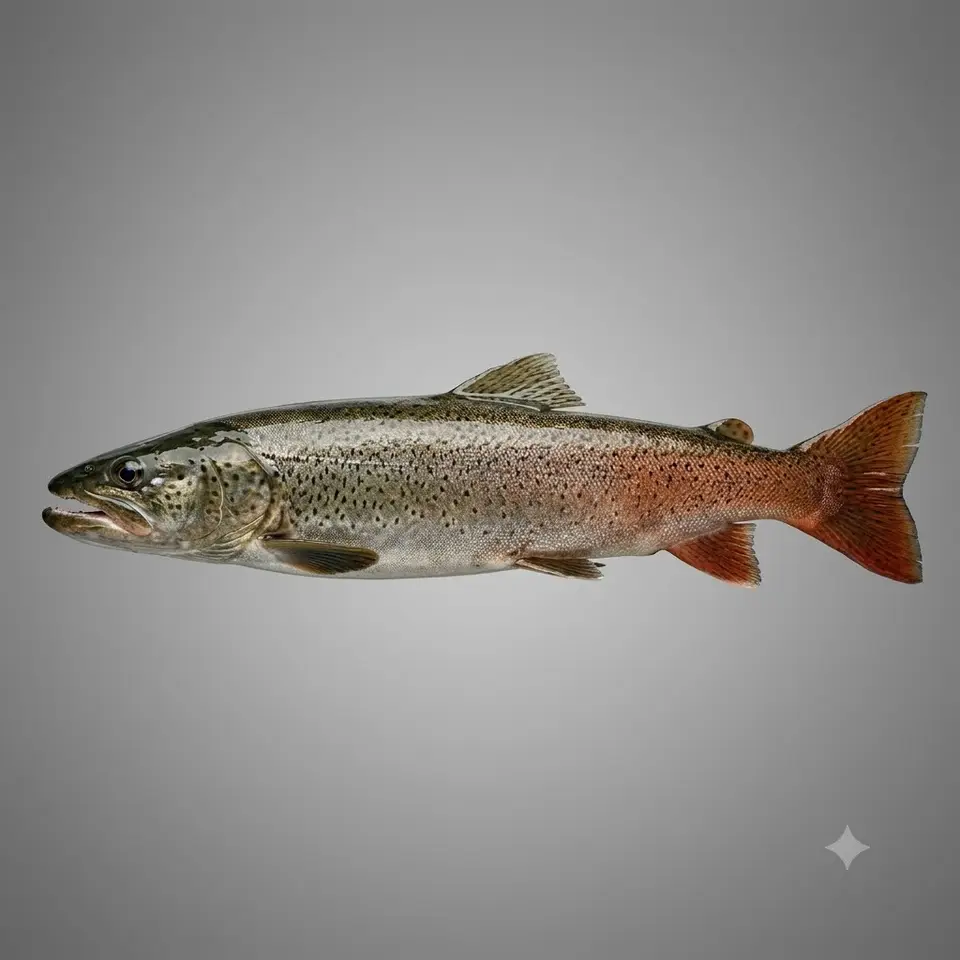 AI illustration
 Overview
The taimen is the world's largest salmonid and one of the ultimate bucket-list gamefish, a giant, ancient river predator of Siberia and Mongolia. For a US angler this is pure international travel angling: there is no domestic fishery, and every legitimate trip runs through licensed guides and permits. Treat it as a strict catch-and-release species from the first cast - the population is in long-term decline and every fish matters.
Identification
Long, torpedo-shaped body with a broad, flattened head and a large mouth that extends well past the eye. Coloration runs olive to brownish-green over the back, fading to a silvery belly, with a scattering of small dark spots and a distinctive coppery-to-reddish tail and anal fins that deepen during spawning. Its sheer length and thick, muscular build separate it from any trout or char you have caught.
Range & Habitat
Native to cold, fast, well-oxygenated rivers across Mongolia, Siberian Russia, Kazakhstan, and parts of China, spanning the Arctic and Pacific drainages (Yenisei/Selenga, Lena, and Amur basins). Mongolia is the premier destination, with famous guided fisheries on rivers like the Eg-Uur and Onon. Look for them in deep runs, pool tailouts, and current seams where they ambush prey.
Behavior & Diet
Taimen are apex ambush predators that hold in prime lies and attack anything they can overpower - baitfish, grayling, lenok, and famously small mammals like voles and lemmings swimming across the river. This rodent-eating habit is why "mousing" with surface patterns is a signature technique. Strikes can be explosive and violent, especially in cold water.
Best Seasons
Autumn (roughly September into October) is prime time in Mongolia, when cooling water triggers aggressive pre-winter feeding. Late summer and early fall also produce the best topwater mousing action. Spring after ice-out can fish well, but many operations focus on the fall window.
How to Catch Them
Cover water and target structure: swing or strip large streamers through deep runs, and skate mouse patterns across the surface at dawn and dusk for heart-stopping eats. On conventional gear, big glidebaits, jerkbaits, and oversized swimbaits work. Set hard and keep steady pressure - these fish are strong and bulldog deep.
Tackle & Rigs
Fly anglers use 8-10 weight rods, floating or sink-tip lines, stout leaders, and articulated streamers or foam mouse patterns. Conventional anglers run heavy baitcasting or spinning gear with 40-65 lb braid and a strong shock leader. Always pinch barbs and use single hooks where required to protect the fish.
Landing, Handling & Release
Catch-and-release is mandatory and taken seriously. Use a large rubber net, keep the fish fully in the water, support its body horizontally, and minimize air exposure to seconds. Never hold a big taimen vertically or drag it onto gravel; revive it facing into the current until it swims off strongly.
Table Quality
Not applicable - do not eat taimen. As an IUCN Vulnerable species under strict catch-and-release management, harvest is prohibited or heavily discouraged throughout its range. The value of this fish is entirely in releasing it alive.
Mistakes That Cost You Fish
Under-gunning your tackle and losing fish to break-offs is common, as is stripping too fast on the mouse. The biggest error is careless handling - lifting a giant vertically, over-exposing it to air, or rushing the release, all of which can kill an irreplaceable fish.
Regulations & Conservation
Listed as Vulnerable on the IUCN Red List (assessed 2012), with populations declining from overfishing, illegal harvest, and habitat loss. Access is tightly controlled through licensed outfitters and permits, with mandatory catch-and-release, barbless hooks, and gear restrictions common. Always confirm and follow the specific rules of your host country and operator.
FAQ
Q: Can I fish for taimen on my own in the US? No - taimen are not found in North America, and trips require guided, permitted access in Mongolia, Russia, or nearby countries.
Q: Why is mousing so effective? Taimen routinely eat swimming rodents, so a skated surface mouse mimics natural prey and triggers aggressive topwater strikes.
Q: Can I keep one to eat? No - taimen are a Vulnerable species managed as strict catch-and-release; releasing every fish is essential to their survival.
Tackle for taimen
As an Amazon Associate we may earn from qualifying purchases - at no extra cost to you. We link gear types, not sponsors' picks: you choose the exact product.