Cut Shad
Fresh shad chunked into oily, scent-leaking pieces - the number-one catfish bait across much of the country, matching the local forage with a scent trail cats home in on.
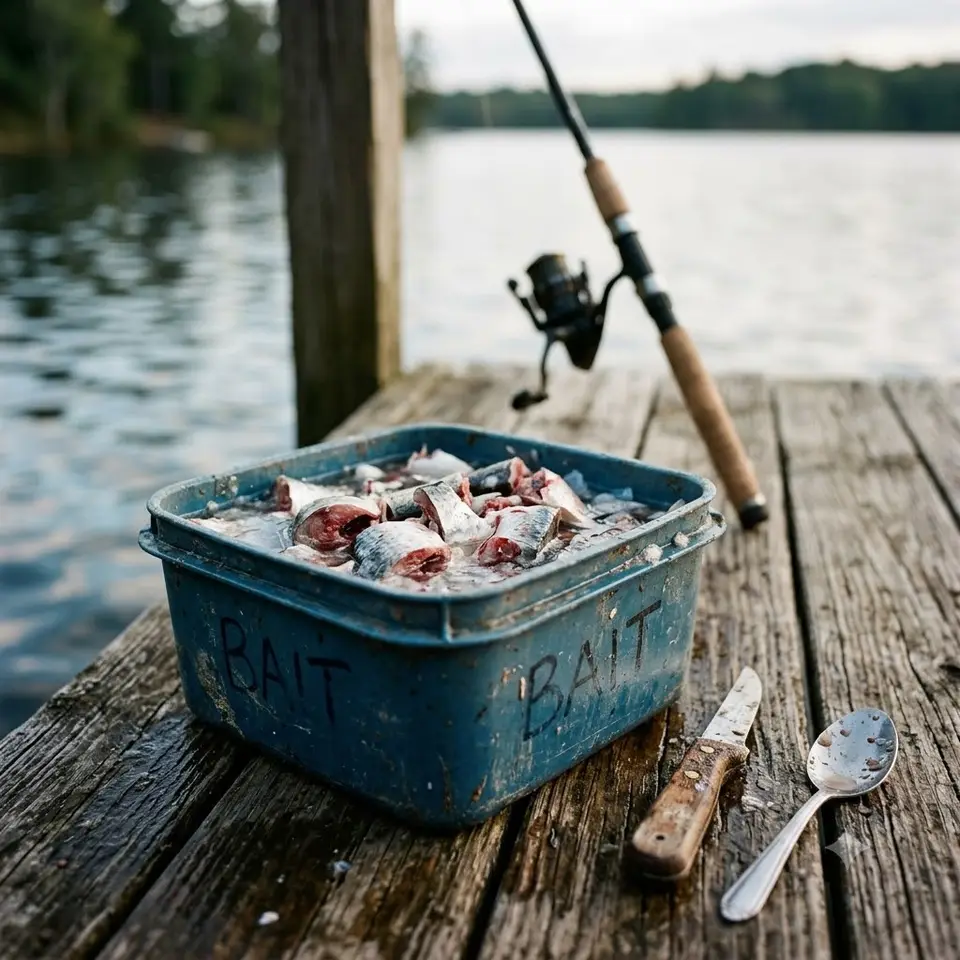
Cut shad is the workhorse catfish bait of countless rivers and reservoirs, and for good reason: it's exactly what the catfish already eat, cut into bite-sized, blood-and-oil-leaking pieces that broadcast scent through the water. Where live shad demands a tank and constant care, cut shad just needs to be fresh. A chunk of shad on a bottom rig, releasing its oils into the current, pulls channel and blue cats from a distance. When shad are the local forage, freshly-cut shad is hard to beat.
What it catches
Channel and blue catfish above all, plus freshwater drum, striped bass and other scent-feeders. Blue cats in particular relish oily cut shad; flatheads will take a very fresh cut shad occasionally, but they strongly prefer live bait. It matches the primary forage in most shad waters, so it's a top choice anywhere catfish and shad share a lake or river.
Getting & keeping it
Catch shad fresh with a cast net where your state allows one (freshness matters most - the fresher and oilier, the better). Use them soon, or keep them iced or frozen; fresh generally out-fishes frozen, but frozen shad still works when fresh isn't available. Keep a cutting board and knife handy, and cut pieces as you fish so the bait stays fresh and juicy rather than drying out.
How to rig it
Cut the shad into chunks, steaks or fillets sized to the catfish you're after, and hook a piece firmly on a stout circle hook so it stays on through a cast and a bite. Fish it on a slip-sinker or three-way bottom rig, on the bottom where the scent pools and cats cruise. Larger baits and the head (oily and tough) for big blues; smaller chunks for channels.
When it shines
Prime catfishing seasons in rivers and reservoirs, especially for blue and channel cats, and any time shad are the dominant forage. It shines fished on the bottom in current or around structure, where the scent trail draws fish to the bait. Cooler months, when cats key on shad, are especially productive.
Field tips
Cut it fresh and often so each bait leaks scent, and match the piece size to the fish - big oily chunks for trophy blues, smaller for channels. Use the head for big cats since it's tough and oily. Fish where current or structure concentrates the scent, and rebait with a fresh piece once a chunk has soaked out its oils.
What wastes good bait
Fishing dried-out, scent-spent bait instead of a fresh chunk, using a piece too big or too small for the catfish present, a hook not stout enough to hold the bait and land the fish, and ignoring current - cut bait works by scent, so placement where the scent spreads matters.
Bait-fishing kit
As an Amazon Associate we may earn from qualifying purchases - at no extra cost to you. We link gear types, not sponsors' picks: you choose the exact product.