Fishing the Surf
The beach is not uniform - troughs, cuts and sandbars channel fish within casting range. Learn to read the water at low tide and surf fishing becomes targeting, not hoping.
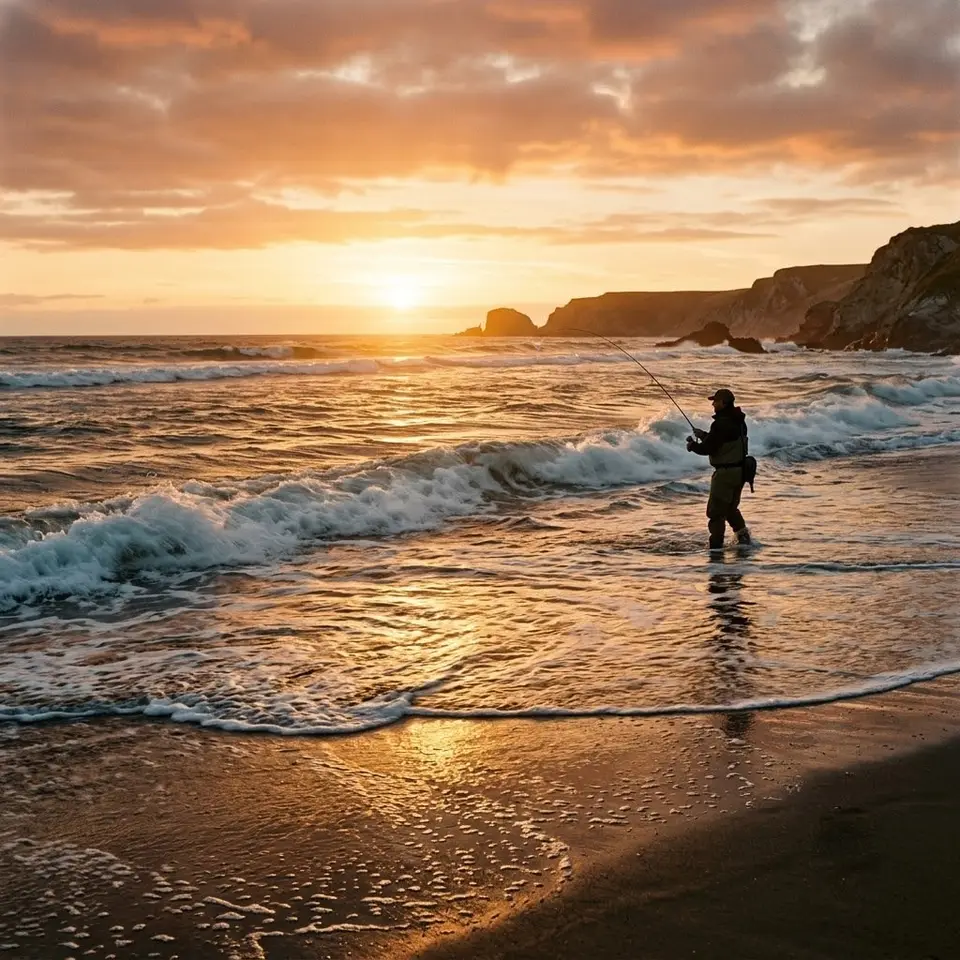
To a beginner the surf looks like undifferentiated waves; to a surf angler it's a landscape - a deep trough running parallel to the sand, an outer bar where waves break, and the cuts through that bar where water (and bait, and every predator) funnels in and out. The entire craft is reading this from the wave patterns: where waves DON'T break is deep; where they break then reform is the bar; the calm gap in a breaking line is the cut. Walk the beach at low tide once and the code becomes obvious forever.
What defines it
Open sand beach with wave-built structure: parallel troughs ('the ditch' at your feet is often meters deep), outer bars, rip cuts, points and jetty pockets - all rebuilt by every storm, all readable from wave behavior and low-tide walks.
Reading the water
Waves break over shallow and roll over deep: a gap in the breakers = a cut (fish highway - and, per the National Weather Service, the deeper channel through a sandbar where a rip current runs, so fish it from the sand rather than wading into it), calm dark water inside breaking waves = trough (fish live there, often at your boots), foam-and-churn against a jetty = washing machine full of feeding. Ten minutes of watching beats an hour of blind casting.
Tactics that work
Bait the structure: fish-finder rigs with fresh bait soaked in cuts and troughs, rod in a sand spike. Lures for the active: metal spoons and plugs cast past the bar at dawn, walked through the cut. Follow birds and bait showers - the surf telegraphs its blitzes.
Season by season
Spring: migrations arrive beachside - big fish in the wash. Summer: dawn/dusk and night soak the heat away; whiting and pompano-style light-tackle days. Fall: THE run: bait streams south with stripers/blues/reds crashing troughs. Winter: quieter; the hardcore soak baits deep in the cuts.
Who lives here
By coast: striped bass and bluefish north, red and black drum plus pompano and whiting south, corbina and perch west - plus rays and sharks reminding you the ocean starts here.
Mistakes on this water
Casting to the horizon over fish feeding in the first trough, ignoring the low-tide scout walk, fishing dead flat featureless beach when a cut sits 200 m away, and turning your back on waves while landing fish - the ocean's oldest trick.
Gear that reads any water
As an Amazon Associate we may earn from qualifying purchases - at no extra cost to you. We link gear types, not sponsors' picks: you choose the exact product.