Fishing Small Streams
Water you can cast across holds trout and creek bass that see few anglers - small-stream fishing is stealth, short casts and reading pockets the size of bathtubs.
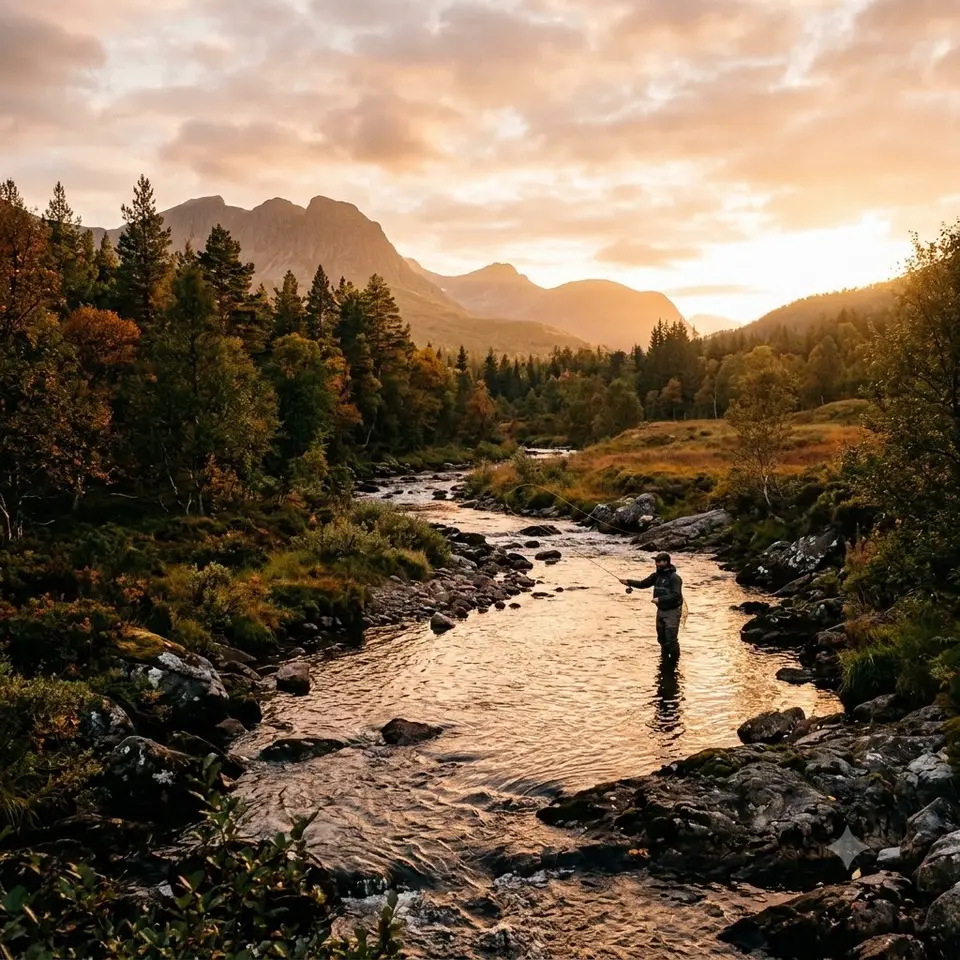
A stream you can step across in places is fishing at its most distilled: every fish-holding spot is visible, every cast is short, and the fish - wild trout, creek smallmouth, chunky panfish - are wherever the water gives them depth, cover and delivered food. The skill is stealth. On water this intimate, the angler who kneels catches double the one who strides.
What defines it
Castable-width flowing water: riffle-pool-run sequences repeating every few dozen meters, shallow enough that structure IS visible, small enough that you - your shadow, footsteps, silhouette - are the biggest variable.
Reading the water
Fish hold where current delivers food next to shelter: the head and tail of every pool, the seam beside every riffle, undercut banks, and any 'bathtub' pocket with 30+ cm of depth near cover. If a spot looks fishy on water this size, it is.
Tactics that work
Approach from downstream, stay low, cast upstream and let flies/baits/micro-spinners drift back naturally. One or two good casts per pocket, then move - small-stream fishing is hiking with a rod. UL spinning or a 3wt fly rod is the whole arsenal.
Season by season
Spring: fish spread everywhere post-runoff. Summer: dawn/dusk, shaded runs and spring seeps as water warms - handle trout fast in heat, or rest them entirely. Fall: aggressive pre-winter feeding, gorgeous. Winter: the deepest, slowest pools only.
Who lives here
Wild brook, brown and rainbow trout in cool country; creek smallmouth, rock bass and green sunfish warmer; chubs and dace keeping everyone honest.
Mistakes on this water
Walking the bank upright (fish felt you 20 m ago), overgunned tackle, flogging one pool for an hour (the next hundred meters held your fish), and skipping 'too small' water - the best stream fishing hides above where most anglers park.
Gear that reads any water
As an Amazon Associate we may earn from qualifying purchases - at no extra cost to you. We link gear types, not sponsors' picks: you choose the exact product.