Offshore & Blue Water Fishing
Past the sight of land, structure turns invisible - temperature breaks, weedlines, ledges and birds - and the fish become tuna, mahi and billfish. An orientation to the big league.
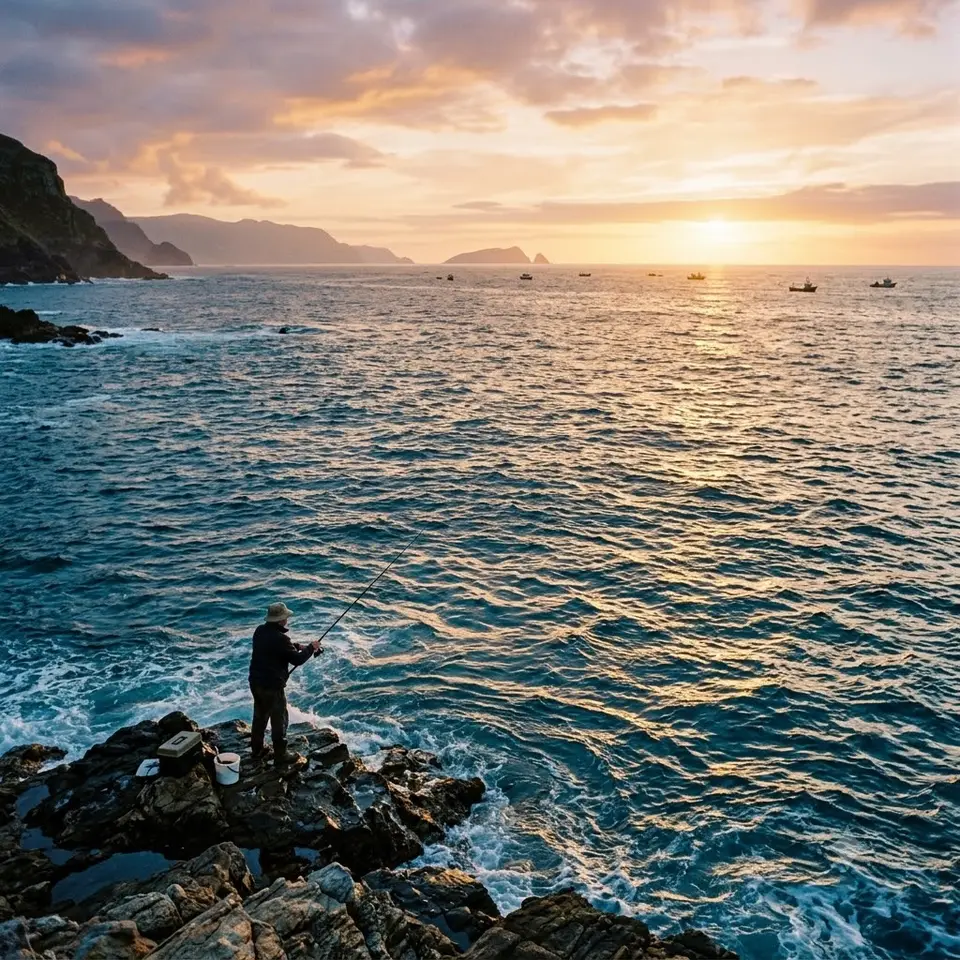
Offshore fishing trades every familiar reference for open ocean: no bank, no visible structure, water kilometers deep - and yet it's still structure fishing, just with structure you can't see from the deck: temperature breaks where currents collide, floating weedlines sheltering entire ecosystems, underwater ledges and canyons, and birds marking bait from a kilometer up. This is an orientation for the deckhand-curious: most anglers meet blue water on a charter, which is exactly the right classroom.
What defines it
The water past the reefs: pelagic species following temperature and bait rather than addresses, trolling spreads as the search tool, safety and navigation as real disciplines, and days measured in fuel and forecast windows. Charter captains exist because this knowledge is a profession.
Reading the water
Structure goes fluid: temperature breaks (satellite sea-surface charts sell the treasure map), color changes from green to cobalt, floating weed and ANY floating object (mahi hotels), depth ledges and humps, and always, always the birds - frigates over big fish are the ocean's neon sign.
Tactics that work
Trolling spreads of skirted lures and rigged baits cover water until something goes off; live-baiting and chunking anchor the tuna game; jigging and deep-dropping work the ledges. On a charter your job is simpler and still thrilling: listen, wind when told, and keep the rod tip up.
Season by season
Deeply regional, but the rhythm holds: warm-season currents push pelagics near (mahi/marlin summer), spring and fall runs move tuna, and winter sends effort deeper or south. The forecast window rules all - blue water is fished when the ocean permits.
Who lives here
The famous names: yellowfin and bluefin tuna, mahi-mahi under anything floating, wahoo slashing through, marlin and sailfish as the crown, plus kings and bonito escorting everyone. Regulations here are serious and specific - know them or fish with a captain who does.
What costs you fish here
Underestimating the ocean (small boats, big forecasts - don't), buying gear before buying charter days, staring at rods instead of the horizon for birds and weed, and skipping seasickness prep - the fish bite hardest exactly when the boat moves most.
Gear that reads any water
As an Amazon Associate we may earn from qualifying purchases - at no extra cost to you. We link gear types, not sponsors' picks: you choose the exact product.