Wetsuit & Weight System
The freediving wetsuit keeps long sessions possible; the weight belt makes the suit's buoyancy workable - and getting the weighting honest (light) is one of the biggest safety decisions you'll make.
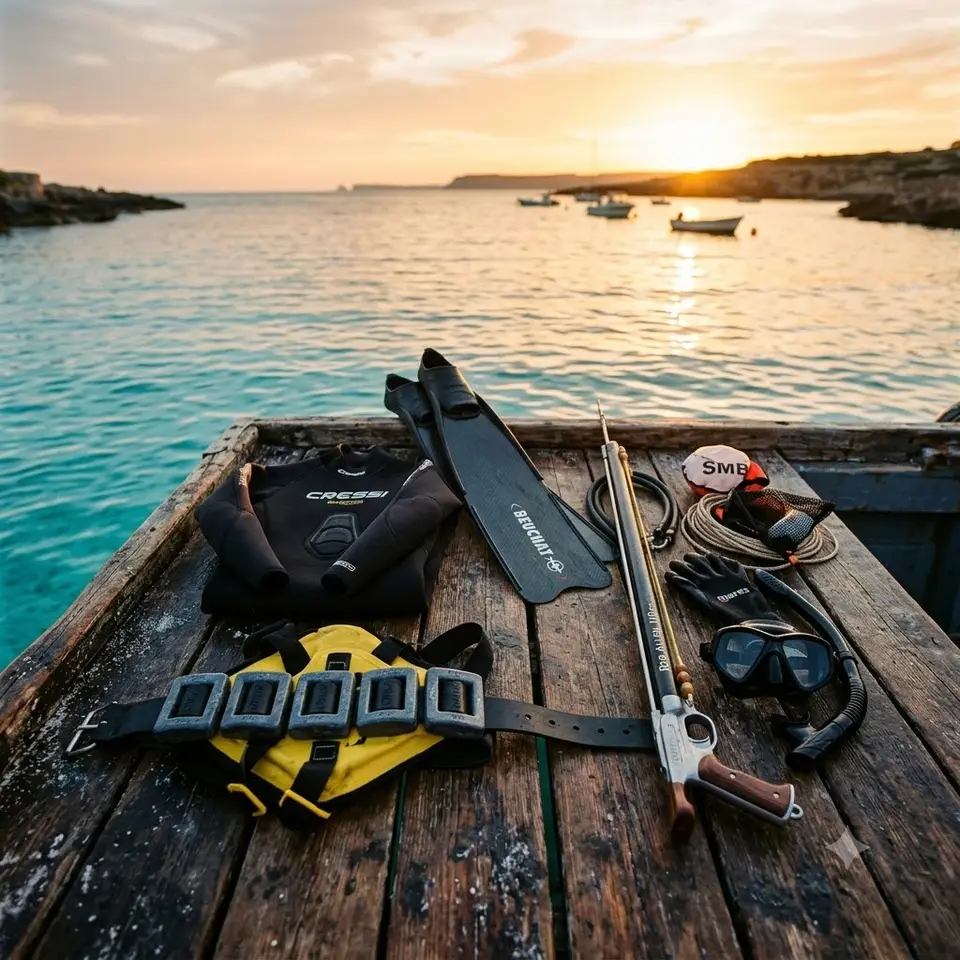
A spearfishing session is hours of surface swimming punctuated by dives, and cold ends it faster than anything - so the open-cell freediving wetsuit, warm and flexible beyond any surf suit, is core equipment. But neoprene floats, so the suit brings its counterpart: the rubber weight belt. Here is the safety crux of the whole sport: overweighting turns a blackout into a drowning, because a diver weighted to sink at the surface has no buoyancy reserve when consciousness gets marginal. Weight yourself to float at the surface, settle the depth of neutral buoyancy with your freediving instructor, and keep every gram instantly ditchable.
Spearfishing is freediving - and freediving has real risks. Shallow-water blackout can strike experienced divers without warning: never dive alone (one diver up watching, one down - always), never hyperventilate before a dive, and get formal freediving training before pushing depth. Tow a float with a diver-down flag - it's legally required in many waters and it's what keeps boats off you. Load a speargun only in the water, never point it at anyone, and know your local rules: spearfishing is restricted or prohibited in many fresh waters and marine areas, and species, size and season limits apply. We describe gear and technique for education only - we don't give legal or medical advice; check your local regulations and train with qualified instructors.
What it is
A two-piece open-cell neoprene suit (high-waist pants + hooded jacket, typically 3-7 mm by water temperature) plus a silicone/rubber weight belt worn on the hips with a quick-release buckle - some divers add a neck weight.
Where it shines
Every session longer than a token swim: warmth is endurance, and correct weighting is both diving efficiency and your buoyancy reserve when things go wrong.
How to use it
Lubricate to don open-cell (soapy water), wear the belt on the hips so it doesn't squeeze your breathing, and verify weighting: with lungs full at the surface you should float; exhaled, you should sink slowly. Re-check when you change suit thickness or add layers.
Choosing & sizing
Suit thickness by water: ~3 mm tropical, 5 mm temperate, 7 mm cold. Fit matters more than brand - open-cell seals at the skin. Rubber belts stay put on the hips; distribute small weights rather than one block.
Strengths & weaknesses
Warmth extends sessions and judgment; hip belts keep breathing free - the entire risk is in the numbers: too much lead is the classic, quiet, fatal shortcut to easier descents.
Where divers go wrong
Overweighting to make the drop easy (the single most dangerous habit in freediving), a belt that can't be ditched one-handed, wearing it on the waist where it splints the diaphragm, and tearing open-cell by donning it dry.
Freediving and safety gear
Check the local rules before you dive: where and what you may spear differs from one water to the next.
As an Amazon Associate we may earn from qualifying purchases - at no extra cost to you. We link gear types, not sponsors' picks: you choose the exact product.